
The Mad Agriculture Journal
Seeds, the Alchemy of Life
Published on
October 12, 2026
Written by
Alejandra Bautista
Art courtesy of
A Growing Culture
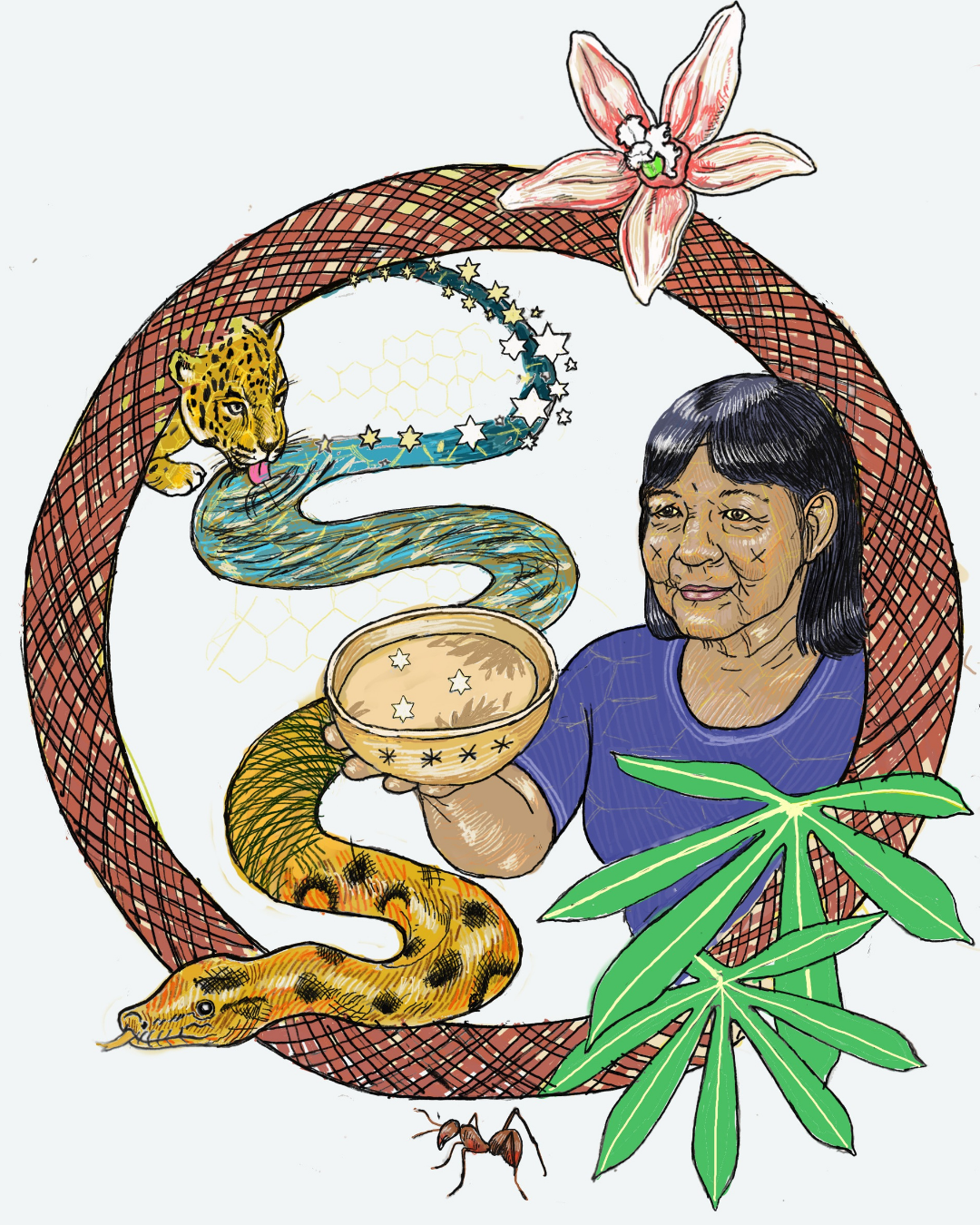
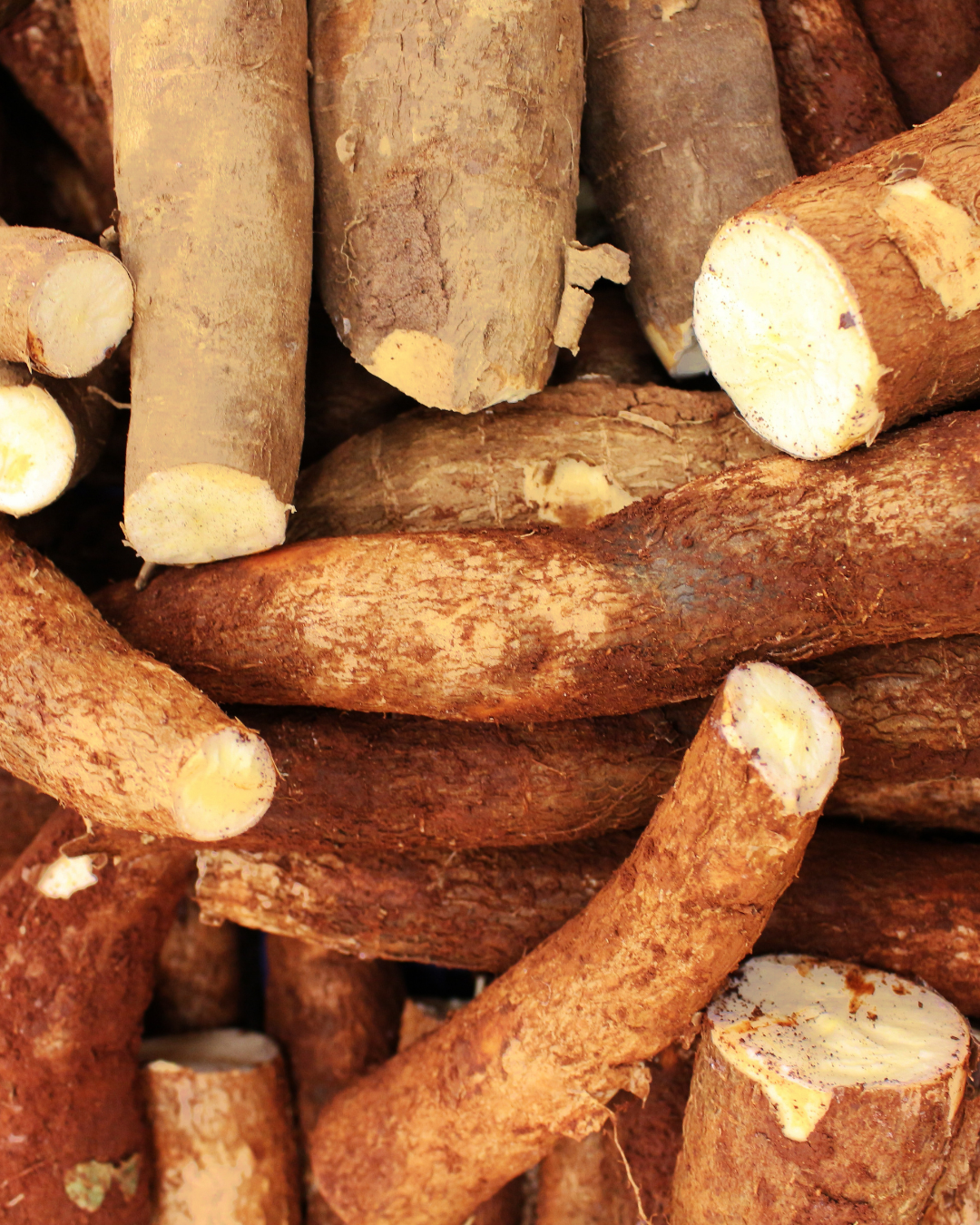
Birthed in the depths of the Amazon, yuca (Cassava/Manihot esculenta) grew as a divine gift for the rainforest’s communities more than 10,000 years ago. Present in the foundational myths of several Indigenous groups, yuca is usually referred to as a symbol of fertility and abundance, a sacred body destined for the nourishment of territories that, in its bitter varieties, can also close the gap between life and death. The domestication of poisonous yuca brava is one of the most fascinating stories about how the intricate relationships between plants and humans ultimately lead to their collective evolution. What conditions allow such alchemy to happen? And why is this relevant in the struggle for peoples’ rights to seed?
Transforming the lethal concentrations of cyanide present in yuca brava begins and ends with the sacred act of weaving. Using vegetable fibers, Indigenous men learn to thread baskets and tools used for harvesting and cooking, while women learn how to plant, pick and prepare foods. Through weaving, men do not merely represent the intertwining of masculine and feminine energies in and out of the chagra (small orchard), they materially produce the tools of sustenance—baskets, strainers, trays—without which nourishment would be impossible.
Once women harvest yuca brava they peel and grind it before stuffing the pulp into a snake-like strainer called matafrio. Through carefully twisting and squeezing, poisonous juices separate from the pulp, each is then transformed through different preparations. Casabe and mañoca are the most common transformations of ground yuca, while manicuera and tucupí are the result of slow-cooking and fermenting the liquids from sweet yuca and yuca brava respectively.
Then comes the offering. Across the globe, yuca plants have historically been under the care of women. For the Indigenous Uitoto in the Colombian Amazon, sharing the fruits of their labor is also an act of sharing their Uai (words).
“When one produces food or ritual substances and offers them, these substances are one’s Uai and the plant’s Uai. When a woman shares the drink she has prepared with effort and hard work (her breath), she says: “be Hue uai”—“here is my word”.
—La Gente del Centro del Mundo, Juan Alvaro Echeverri
This Uitoto worldview reveals the journey from fields to plates as an ever-evolving conversation between the Uai of seeds, humans, and the environment. An intimate exchange with the moon, soil, water and sun. To plant a seed (or a stem, in the case of yuca), demands we listen to it, and the ecosystem it thrives on.
What is tucupí if not the outcome of centuries-old dialogues between Indigenous women and yuca brava? Biological diversity does shape cultural diversity. It nourishes language, just as much as it nourishes the body. It shapes the stories we tell and the societies those narratives build. The domestication of seeds and the biodiversity of our food systems directly mirrors how we honour, or degrade, our relationships with the living world.
It’s impossible to separate yuca from the Amazon—just as it is impossible to separate yams from Africa, rice from Asia or corn from Mesoamerica. Each of these crops has set the foundations for the cultural evolution of their stewards and, in return, thrived and reproduced across the globe thanks to their knowledge and labour. The transformation of seeds inevitably transforms societies. And vice versa.
For millenia, farmers have selected, saved and exchanged their best seeds to ensure a bountiful harvest each season. Hundreds of these varieties are optimally adapted to specific environments and needs. Yet, BigAg has systemically discredited the sophisticated richness of peasant seeds by pushing false narratives in favour of genetically-modified (GM) seeds. In reality, these so- called “high-yielding” “improved” seeds have proven to be a scam for farmers, forcing them to buy expensive seeds and inputs, while posing a threat to human and planetary health through their dependence on agrotoxics.
While food access is highly unequal, peasant food webs feed at least 70% of the world’s population. But corporations still want you to think they feed you. And this is where the framing matters; it has never been about feeding the world, it’s about controlling food production, seizing and profiting from the very basis of a people’s autonomy and self-sufficiency—seeds.
Imagine a corporate agribusiness representative visits a woman’s farm in the Colombian Amazon to take yuca brava seeds so they can try to plant it elsewhere. Imagine that not only they succeed, but also minimally tweak the genetic code of the newly grown plant. They register this modified yuca brava as a ‘new’ variety and claim plant breeder rights over it. Then they go back to the woman’s farm, claiming they discovered a new variety of yuca brava, and inform her that because her ancestral seed is considered too similar to their protected variety, she can no longer freely save, exchange, or replant it. The same seed which has been carefully stewarded by her Indigenous ancestors in the Amazon for 10,000 years. Instead, the woman will have to buy seed from the certified seed from the company, along with the accompanying “technological” package of agrotoxics.
This is the logic behind the International Union for the Protection of New Varieties of Plants, also known as UPOV. A global mechanism for the privatisation of seeds that enforces corporate intellectual property rights over living beings extracted through biopiracy and genetic manipulation. Since its conception in 1961 UPOV has been imposed into the food systems of 80 countries through trade agreements and intellectual property laws. Centuries-old wisdom passed on through generations has allowed peasant and Indigenous peoples to select and adapt seeds from neighbouring microclimates to ocean-apart continents. Still, farmers are not considered plant breeders under UPOV’s 1991 Act, claiming their traditional practices, those that give seeds their ability to evolve and be resilient, prevent their genetic code from meeting the uniformity and stability required.
UPOV 91 not only disregards farmer’s rights to seeds; it criminalises them for saving, reproducing, sharing or commercialising them, with punishments as severe as up to 10 years in prison. While the fight can feel overwhelming, communities have and continue to fiercely resist against this blatant attack on their sovereignty. Some have succeeded in overturning seed property laws that were silently added in public policies, inspiring farmers globally to fight back.
What would be the Uai of a corporate controlled seed? What would it tell us? The ruins of Green Revolutions across the globe reveal how pre-existing ecosystemic dialogues were violently silenced by the shots of their silver bullets. “Protected” seeds do not serve the evolution of the cultures they grow in, but rather strip their autonomy and radically change diets, identity, stories.
If seeds became a commodity, what would feed our liberation? Where would our collective memory rest? The myths that shape our realities, the words that name the world around us, how could any of it hold substance if the living beings that birthed them were sealed in sterile vaults, owned by corporations, instead of engaging with the wind, insect, and mycelium?
Seed privatisation feeds on the erosion of our interconnectedness, but it fractures at the face of solidarity. Just as women alchemise cyanide into nourishment, peasant communities across the globe continue to turn violence into life—overturning laws, defending territories and refusing inclosure. Entire regions have shielded themselves from GM seeds, like the Zapatistas did in Chiapas, Mexico. Our organised rage, rooted in care and memory, remains the greatest terror of any oppressor.
Yuca still grows, still listens, still remembers. In every chagra, every exchange, every shared word, seeds continue their conversation with those who refuse to forget to hear them. The question is not whether seeds will survive—but whether we will choose to survive with them.
*This article was originally published in the A Growing Culture x Mad Agriculture limited-print zine. for the launch of Free the Seed Alliance, which is bringing together the natural products industry, non-profits and aligned organizations in solidarity with peasants and farming communities saving their own seeds. This material also supports StopUPOV, a growing global movement of over 500 farming organizations defending seed sovereignty and resisting the privatization of life. It is republished here to extend that conversation beyond print and into a wider, shared space.