
The Mad Agriculture Journal
The Rivers Keep Moving: Part 3
Published on
October 06, 2026
Words and art by
Madison Sankovitz
Photos courtesy of
Off Beat Farm
The River Keeps Moving is a three-part series exploring how queer farmers are building new relationships with land, labor, and community across the American West. Part III features the visual story of Off Beet Farm in Boulder, Colorado, alongside the voices of farmers at Ashokra Farm and Solar Punk Farms. Originally published in the Mad Agriculture Journal Issue 15
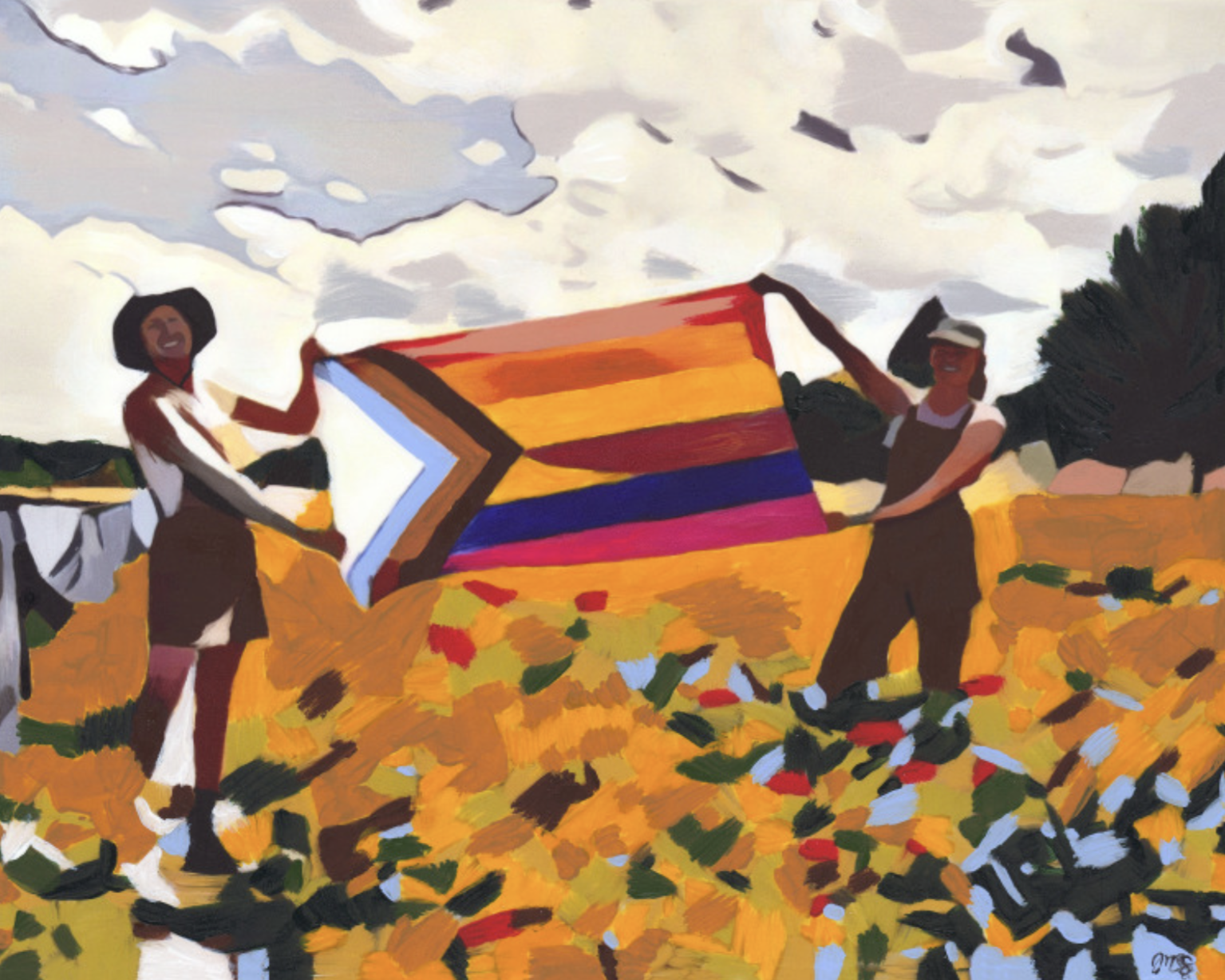
ART BY MADISON SANKOVITZ
Ashokra Farm in Albuquerque, Solar Punk Farms in Sonoma County, and Off Beet Farm in Boulder sit along three different rivers and within three very different landscapes. Yet all three are built around the same fundamental understanding: farming is a negotiation with the land, ongoing, without a guaranteed outcome.
At a moment when American agriculture is still largely framed by scale and extraction within commodity systems, these farms offer something else. Their farmers are building models shaped by their identities as queer people and by a shared commitment to land, labor, community, and the possibility of doing things differently.
Perhaps nowhere is that more visible than in how they respond to uncertainty.
Planting through uncertainty
Ask these farmers what keeps them going and the answers are deeply individual.
Anita says she has never lost the thrill of watching a seed sprout. She describes a trick from the brutal harvests of her farmworker years: when she was pulling beets in 25-degree weather, she would think about the person who would cook those beets, who would sit down at a table and eat a nourishing meal. “Every time you put a seed in the ground, you are planting hope,” she says, “because you can’t not.” She also says, quietly, that there is grief in this work. The grief of creating spaces you didn’t have, of knowing that young farmers who learn under a queer, brown farmer will have an experience she never did. “You have to reckon with that,” she says.
Kyle’s answer involves a kind of strategic acceptance. The snowpack is thin, the summer water situation is unknown, and sitting around worrying doesn’t change any of it. So you go out and do some work, or you go do something completely unrelated, and you come back. He credits his non-farmer friends as an essential resource. They distract him. They make him leave the farm. They remind him that the farm is not the whole of his life, and that this is healthy.
Nick talks about running toward something rather than running from something, the animating philosophy of Solar Punk Farms and of the broader solarpunk movement. “The doom and gloom of it and the do-this-or-else mentality has created this idea that we are running from something bad,” he says of the mainstream climate narrative. “We have not yet really concretized this idea that it’s actually much better and more enjoyable and ultimately more successful to be running towards something good.” The farm is his evidence. The drag show, the brunch, the woman whose parents moved their retirement savings: these are the proof that the other approach works.
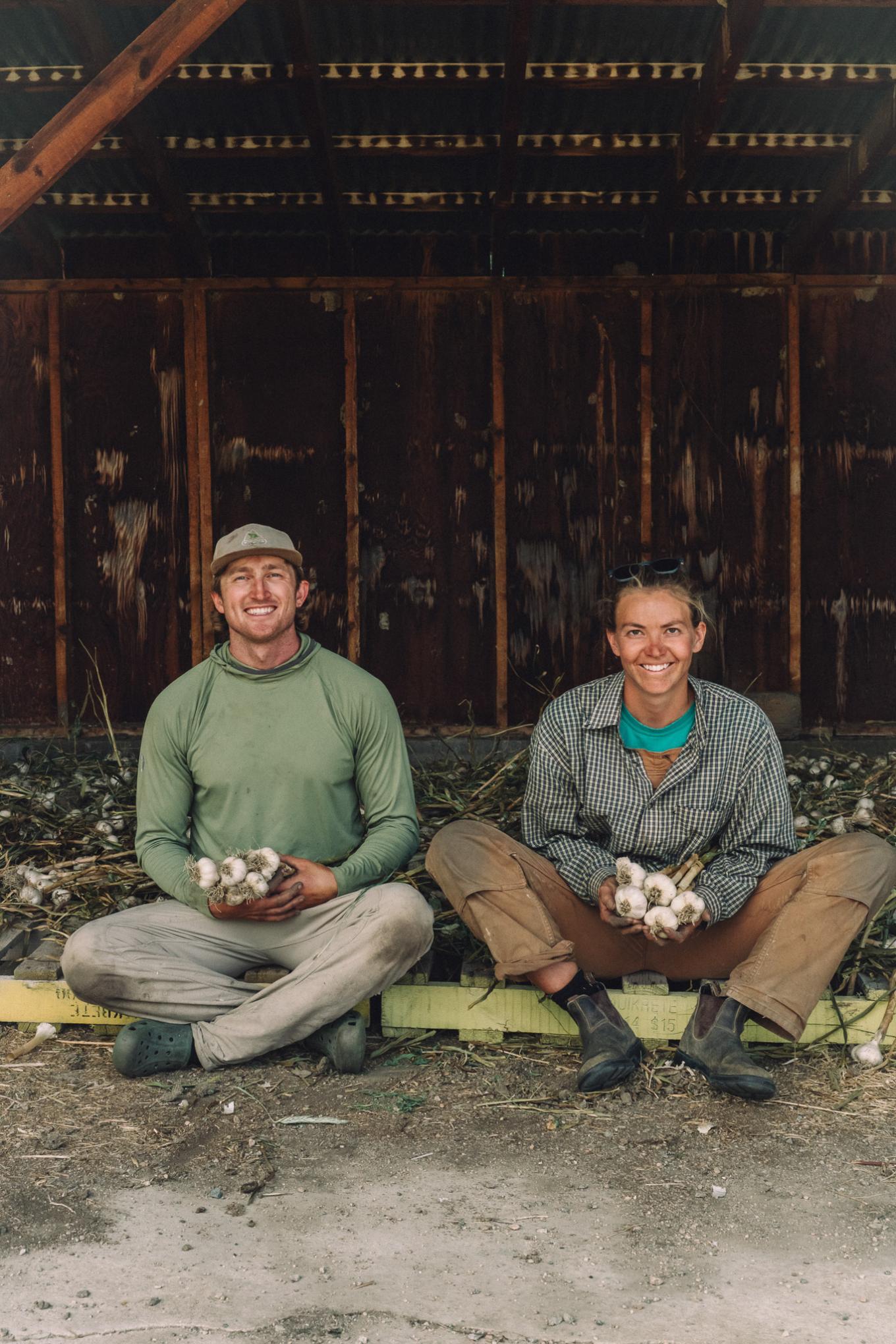
Kyle’s answer involves a kind of strategic acceptance. The snowpack is thin, the summer water situation is unknown, and sitting around worrying doesn’t change any of it. So you go out and do some work, or you go do something completely unrelated, and you come back. He credits his non-farmer friends as an essential resource. They distract him. They make him leave the farm. They remind him that the farm is not the whole of his life, and that this is healthy.
Nick talks about running toward something rather than running from something, the animating philosophy of Solar Punk Farms and of the broader solarpunk movement. “The doom and gloom of it and the do-this-or-else mentality has created this idea that we are running from something bad,” he says of the mainstream climate narrative. “We have not yet really concretized this idea that it’s actually much better and more enjoyable and ultimately more successful to be running towards something good.” The farm is his evidence. The drag show, the brunch, the woman whose parents moved their retirement savings: these are the proof that the other approach works.
Following the current
I ask Anita what she would want other queer people considering farming to know. She thinks for a moment and then offers a metaphor that feels like the truest description of this whole movement: “We’re kind of like mycelium. We’re here, we’re underground, waiting for you. And once you start digging, you’re gonna see us.”
There is something riverlike about that image. Mycelium and water both move underground, through channels that are invisible until you know where to look. They connect things that appear separate on the surface. They keep moving, finding the path of least resistance, feeding what they pass through.
The network Anita describes—queer farmers moving between operations, volunteering at each other’s farms, building invisible webs of mutual support across the country—functions the same way. It doesn’t require a manifesto. It just requires people willing to put their hands in the soil and start following the current.
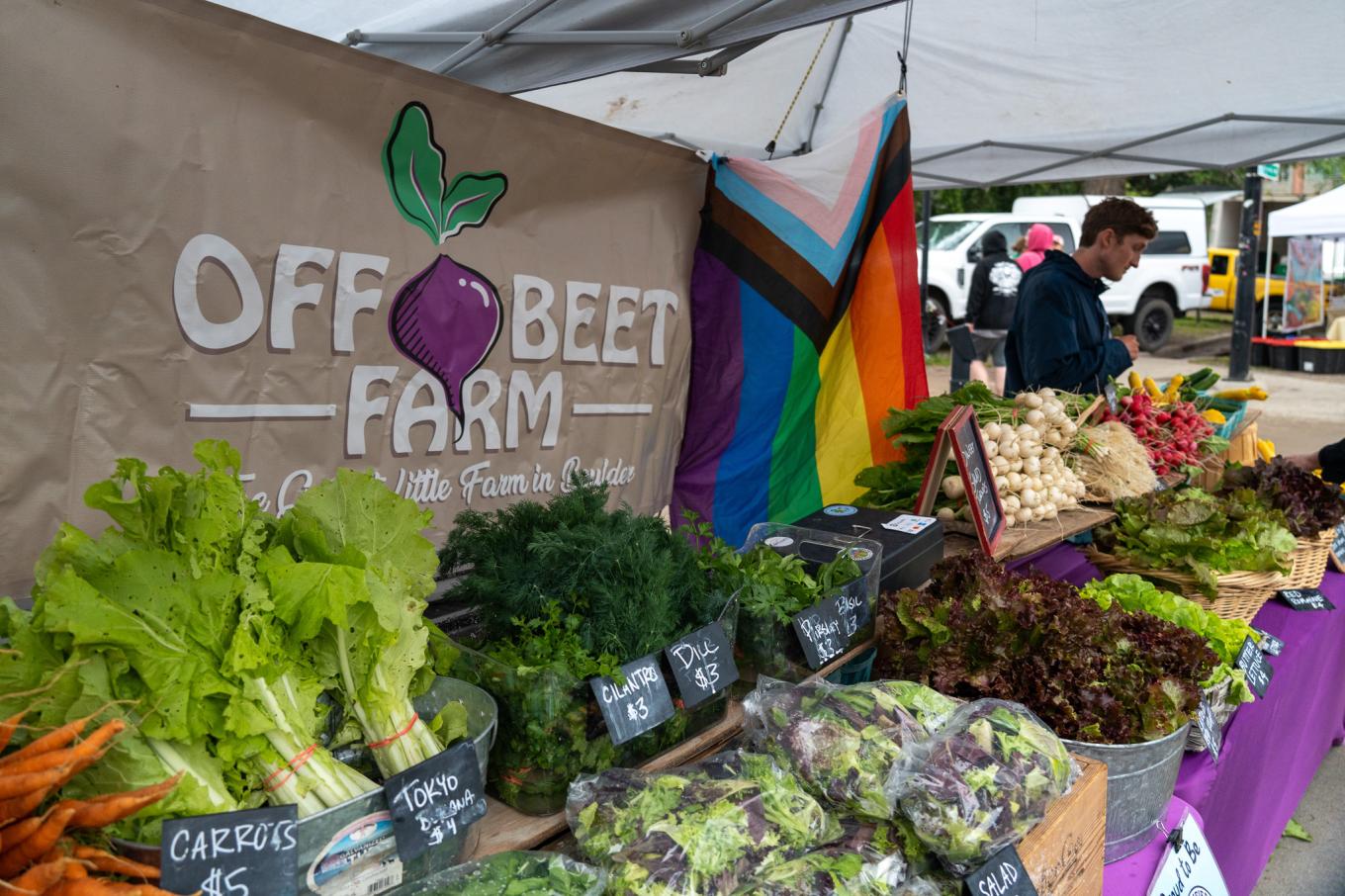
Nick describes a future in which Solar Punk Farms inspires kindred spirits: land-based climate inspiration centered in communities everywhere, each one adapted to its own watershed, its own people. Kyle sees it in the Boulder farmers’ market, in the small-scale sustainable agriculture community that competes with no one and shares with everyone. Anita sees it in the okra seed she’s saving season by season, slowly shifting the plant toward the conditions it will actually face, a form of hope that is also a form of preparation.
What these farms are building collectively, without coordination, out of the same impulse toward dignity and belonging and something-better, is not easily named. It is more like what happens when people who have never fit the dominant model stop trying to fit it and start building their own. It looks like thirteen varieties of okra bred for a changing river. It looks like a drag show that moves money out of oil. It looks like two friends who decided to grow vegetables together because neither of them wanted to farm alone.
The rivers keep moving. The farmers keep planting. The seeds go into the ground carrying, as they always have, more than anyone can guarantee.
This is the third and final part of The River Keeps Moving. Read Part I and Part II to follow the full story of Solar Punk Farms, Ashokra Farm, and Off Beet Farm.