
The Mad Agriculture Journal
Tonkotsu Ramen for Le Cuvier Malbec
Published on
October 01, 2026
Introduction by
Mika Selkirk
Photography by
Slava Narozhnyi
At Le Cuvier Winery, we don’t start the pairing journey with the dish. We start with the main character, the wine. We taste it first, try to understand where it sits, and then we build everything around that. It can take three or four meetings of the minds to get there, and with the Malbec, sometimes five or six. “Wine-food-wine” is our magic formula. You taste the wine to assess the profile, then you experience the food, and then the wine again to see how the food changes your initial perception of the wine.
A lot of people will try to deter you from pairing wine with ramen. Nonbelievers might say ramen is meant only for sake. But we’re in California. We break the rules. If you love what you do, that love comes through. Our Malbecs have often resonated really well with Asian flavors. The 2022 vintage leans into those profiles in a way that makes it fun to work with.
For us, the broth is where the pairing magic really happens. We enjoy pushing the boundaries with liquid pairings, going beyond basic food and wine concepts. Liquids paired with liquids have been some of the most memorable wine and food matches we’ve crafted. The broth, the fat, the acidity, those are all interacting with the wine congruently. Our wines are quite unique. Between the dry-farming, the wild yeast and long barrel aging, they are alive and constantly evolving. Thus the food has to match the wine’s complexity of terroir.

Tonkotsu Ramen works because of that same layered multiplicity. The broth is built from pork bones that are broken down and brought back together through heat and motion. You’re not just cooking it, you’re patiently building flavor over time. You’re creating something where the component of the broth are bound together. That’s what gives it texture, weight and the ability to hold everything else in harmony.
When we’re developing pairings, we’ll often add elements like citrus zest because the acids in our Malbec tend to be really receptive to that. We employ multiple fundamental pairing concepts and a dash of experience in each crafted bite to find the perfect notes that make each vintage sing. After the pairing is finalized, we’re constantly performing quality control (a dirty job, but someone’s got to do it!). You taste the wine, then the food, then the wine again, and you see what resonates. That’s truly the fun part of the process.
By the time it all comes together, it doesn’t feel like a pairing in the traditional sense. It’s the result of knowledge, love, trial and error, all coming together to ensure the dish and the wine are in harmony.
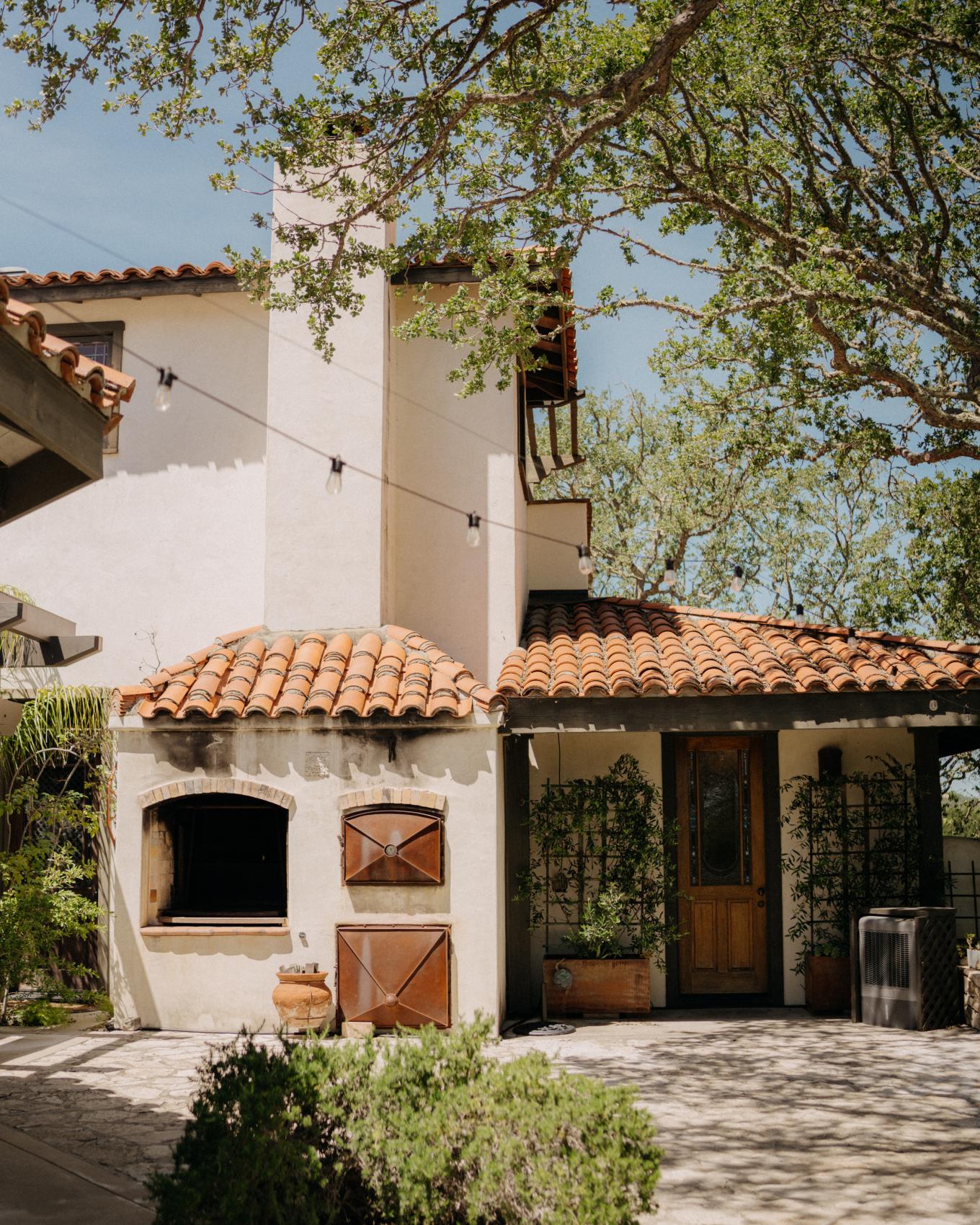
Sidebar: The Wine
Clay Selkirk, Winemaker and General Manager, Le Cuvier Winery
Malbec just loves to grow. In our dry-farmed vineyard, the shoots and canes of the vine reach upward in the shape of an inverse cone, with tendrils latching onto one another, and in the winds that whip at the top of the vineyard, we were experiencing a lot of breakage. The regrowth was making the plant too bushy, closing off pathways for airflow and sunlight penetration. It took more than a decade to build proper strength in the vine, to support arm and spur placements, allowing the vigor to calm down enough to achieve our desired spacing.
For a long time, I considered the resultant wine a problem child. It would often exhibit green peppercorn and caper berry characteristics. Now that the vines have matured, we are seeing expressiveness with darker black and red fruits, earth and leather. That’s what I like about it. It’s still big, it’s burly, but it’s balanced and grounded now.

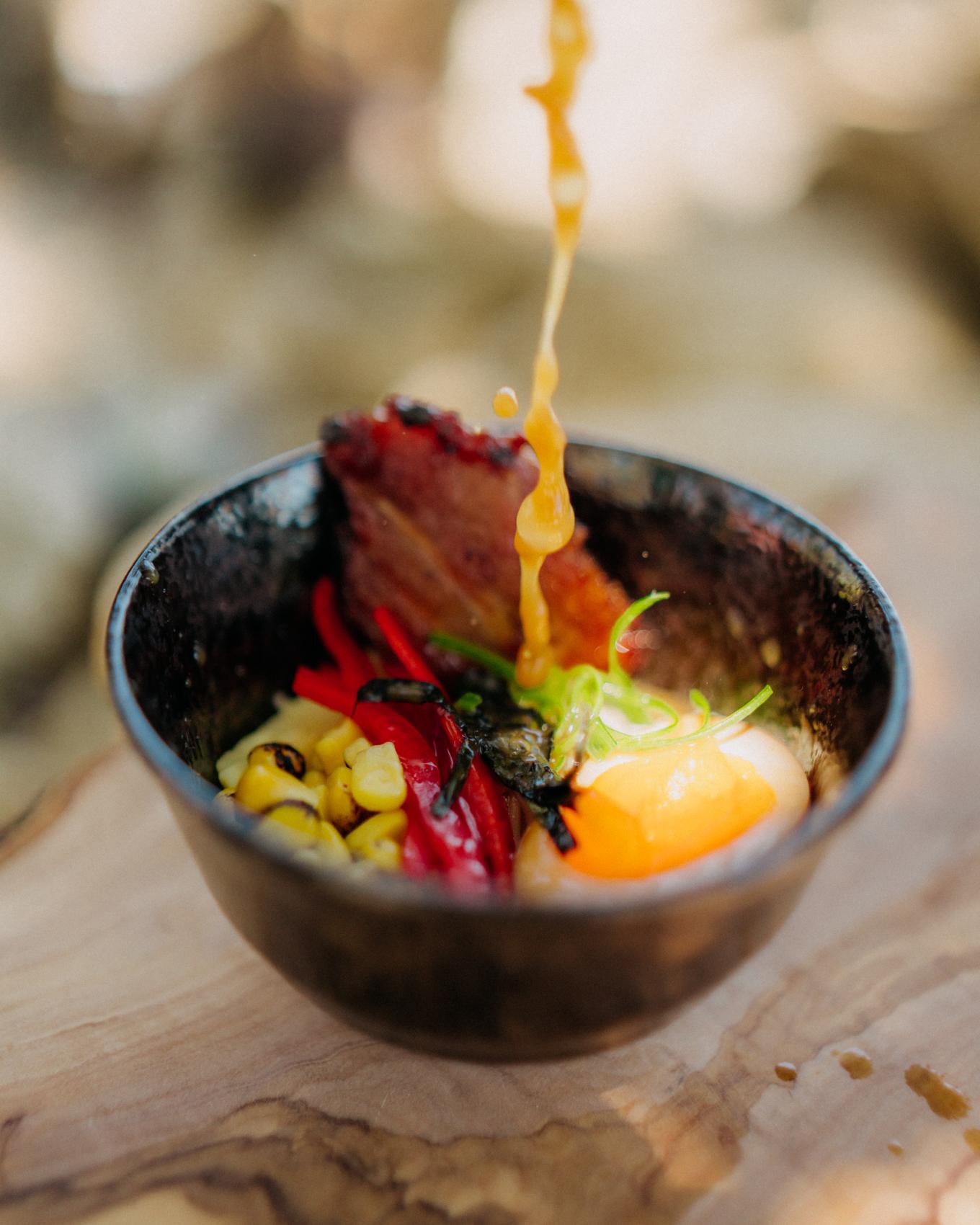
TONKOTSU RAMEN
Paired with 2022 malbec 100% estate, organic, dry-farmed
serving size 1 cup (mini ramen/rice bowl)
yield 4 servings
total time * approx. 4 hours
Ingredients
Ramen Broth
5 lbs pork bones (neck, femur, trotters) | cut crosswise into 1-inch disks
1 rack of pork ribs | chopped in half
1.5 gallons water | plus extra for parboiling and cleaning the bones
2 yellow onions | cut in half (optional: charred on the cut side to add depth)
1 head of garlic | smashed
1.5 oz ginger root | roughly sliced
1 dozen scallions | white parts only (reserve greens for garnish)
1 cup shiitake mushrooms | dried
In a large pot, cover bones with cold water and bring to a boil for 10 minutes. Drain and scrub bones under cold water to remove bone broth marrow impurities. This ensures a white broth rather than a brown/grey one. Place cleaned bones and ribs into the pressure cooker with 1.5 gallons of water. Secure lid and hold at 15 psi for 90 minutes, then allow to depressurize naturally (approx. 45–60 mins). Strain the liquid into a clean large pot. Add the onions, garlic, ginger, scallions, and shiitake. Bring to a vigorous, rolling boil for 45 minutes. This high-kinetic energy is what binds the fat and water into a creamy emulsion. Strain through a fine-mesh sieve (chinois) and add tare to taste (recipe below).
Store Bought Substitute: Daisho Japanese Tonkotsu Concentrated Ramen Soup Base
Vegan Substitute: Ocean’s Halo Organic & Vegan Ramen Broth
Ajitsuke Tamago
make 24 hours in advance
4 large eggs | cold, straight from the fridge
1/2 cup soy sauce
1/2 cup water | filtered
1/4 cup mirin
2 TBSP sake
1 TBSP sugar
Prepare the marinade: Combine soy sauce, water, mirin, sake, and sugar in a small saucepan. Bring to a boil over medium heat. Once boiling, simmer for 1 minute to cook off the alcohol. Remove from heat and cool completely to room temperature.
Bring a large pot of water to a rolling boil. Use a spoon to gently lower cold eggs into the water. Immediately start a timer for 6 minutes and 45 seconds. Lower the heat slightly to a gentle boil to prevent the shells from cracking against the bottom. When the timer goes off, immediately move eggs to a bowl filled with ice and water. Let them sit for at least 15 minutes. Gently crack the shells all over. Peel under cold running water or submerged in the ice bath.
Place peeled eggs in a narrow container. Pour the cooled marinade over them. Refrigerate for 4 hours (minimum) to 24 hours. Remove from marinade after 24 hours to prevent the eggs from becoming over salted and rubbery.
Shoyu Tare
make 24 hours in advance
1/4 cup soy sauce | recommended: Yamasa
2 TBSP sake
1 TBSP mirin
1 TBSP sugar
4 shiitake mushrooms | dried 1 inch square kombu | recommended: Emerald Cove Pacific Kombu
Combine soy, mirin, sake, and sugar in a small saucepan. Bring to a simmer over medium heat for 2 minutes to evaporate the alcohol. Pour into a container and add shiitake and kombu. Cover and let sit at room temperature for 12–24 hours. Strain before using.
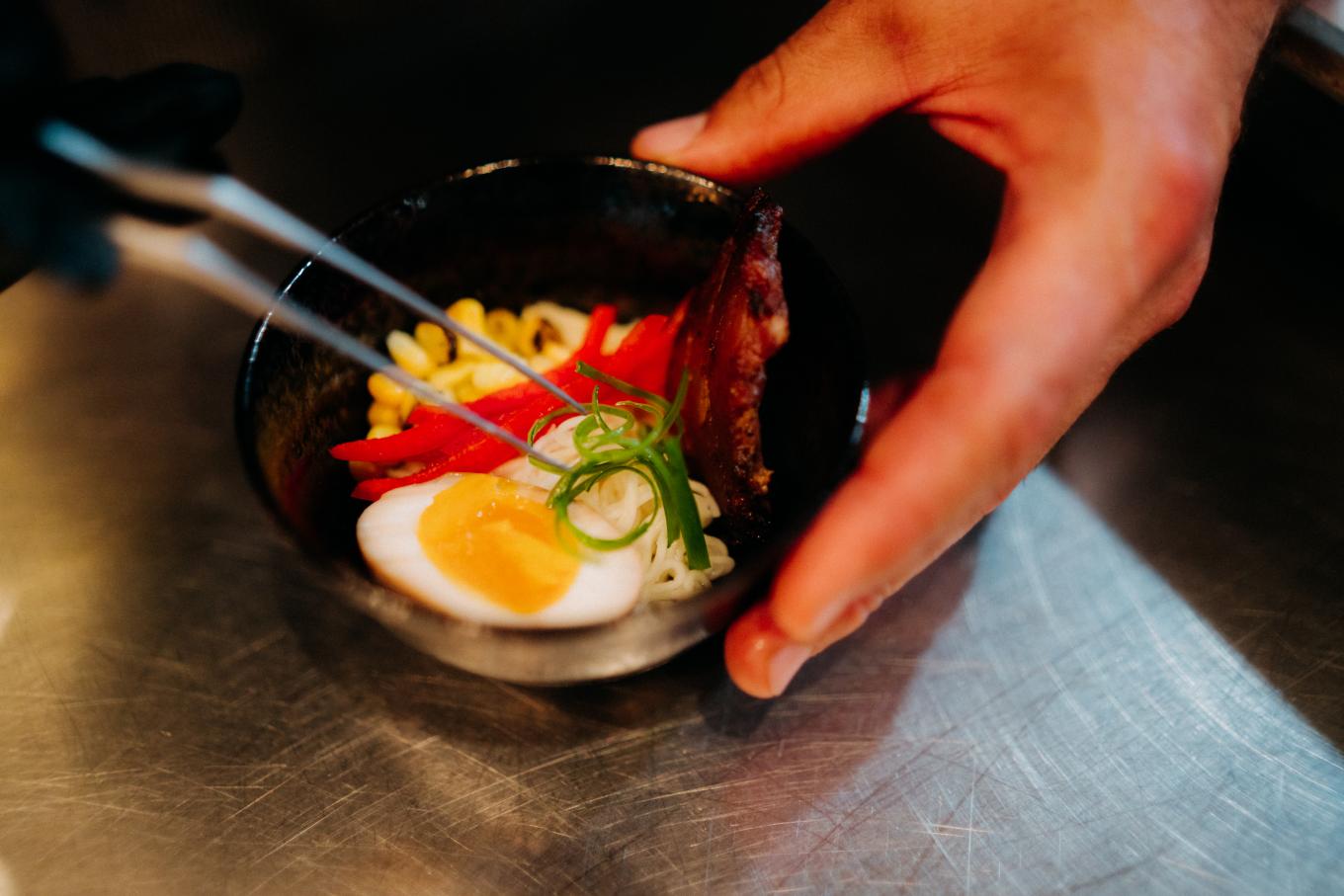
Crispy Pork Belly
1 lb pork belly | skinless, whole slab
1 tsp salt
1/2 tsp pepper
1/2 tsp brown sugar
Season pork belly with salt, pepper and sugar. Allow to sit for one hour. Cut it into a ¼ inch slice. In a medium pan over medium heat, sear until crispy on both sides.
8 oz ramen noodles | recommended: Ocean’s Halo Organic Ramen Noodles
Cook according to package instructions.
Toppings
1/2 cup fire roasted corn kernels
1/4 red bell pepper | julienne
8 bamboo shoots
8 broccoli florets | steamed
reserved green parts of the scallion | sliced lengthwise into long, thin strips
1 sheet of nori | shredded kizami style
To Serve: Pour hot tap water into your ramen/rice bowls for 2 minutes, then dump it out. Divide the ramen noodles evenly between the 4 cups, add pork belly, a shoyu egg sliced in half (yolk facing up), 2 broccoli florets, 1/8 cup roasted corn, 2 bamboo shoots and gently pour the hot broth and tare emulsified mixture. Garnish with thinly sliced scallion and nori and serve immediately.