
The Mad Agriculture Journal
The Rivers Keep Moving: Part 2
Published on
September 09, 2026
Words and art
Madison Sankovitz
Photography courtesy of
Ashokra Farm
The River Keeps Moving is a three-part series exploring how queer farmers are building new relationships with land, labor, and community across the American West. Part II features the visual story of Ashokra Farm in Albuquerque, New Mexico, alongside the voices of farmers at Solar Punk Farms and Off Beet Farm. Originally published in the Mad Agriculture Journal Issue 15
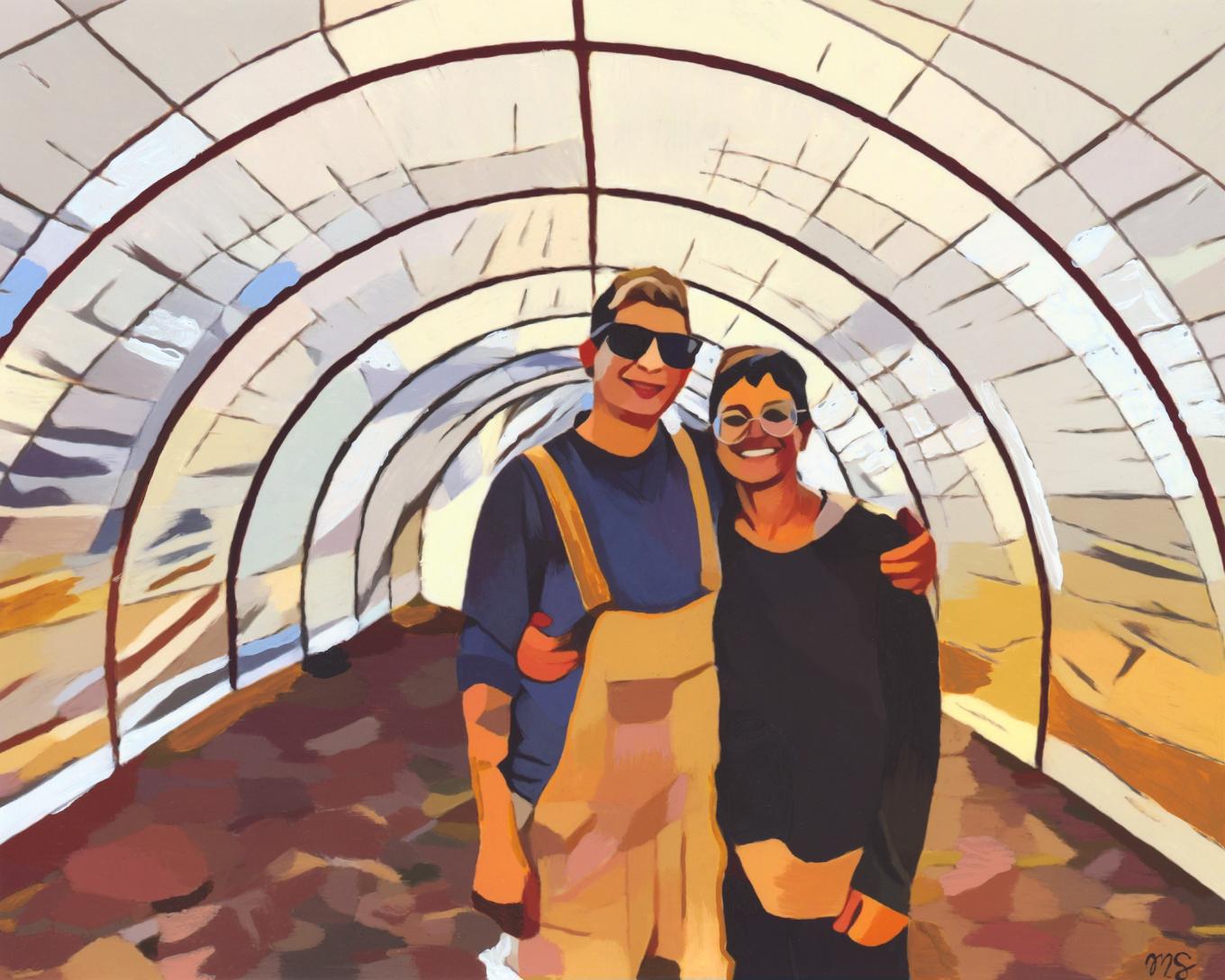
Art by Madison Sankovitz
Ashokra Farm in Albuquerque, Solar Punk Farms in Sonoma County, and Off Beet Farm in Boulder are three very different operations connected by rivers and by a shared understanding that farming is a negotiation with the land, ongoing, without a guaranteed outcome.
Rivers are democratic in a way that farmland rarely is. They don’t recognize property lines. They rise and recede on schedules that don’t cater to anyone farming the banks. They sustain and threaten in equal measure. They are, in the language of ecology, classic ecotones: the richest, most generative zones that arise precisely where two ecosystems blur into each other and new things become possible.
It is not a coincidence that these three farms are also operating in that kind of in-between space. Different in scale, geography, and method, they share a set of values about land and labor and community that grows directly out of their farmers’ identities as queer people.
Land, water, and the geography of access
All three farms have navigated the question of land–who owns it, who can access it, what it means to work ground that isn’t yours–with considerable creativity.
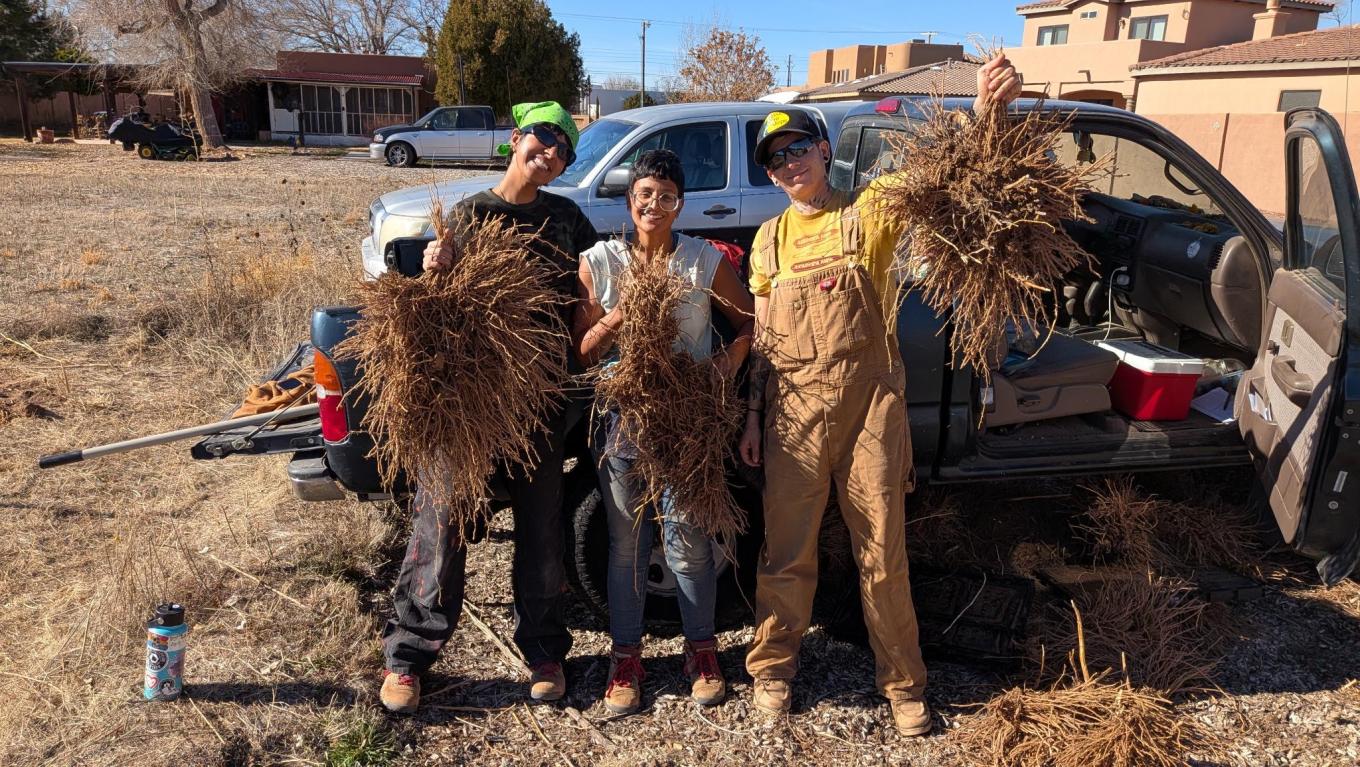
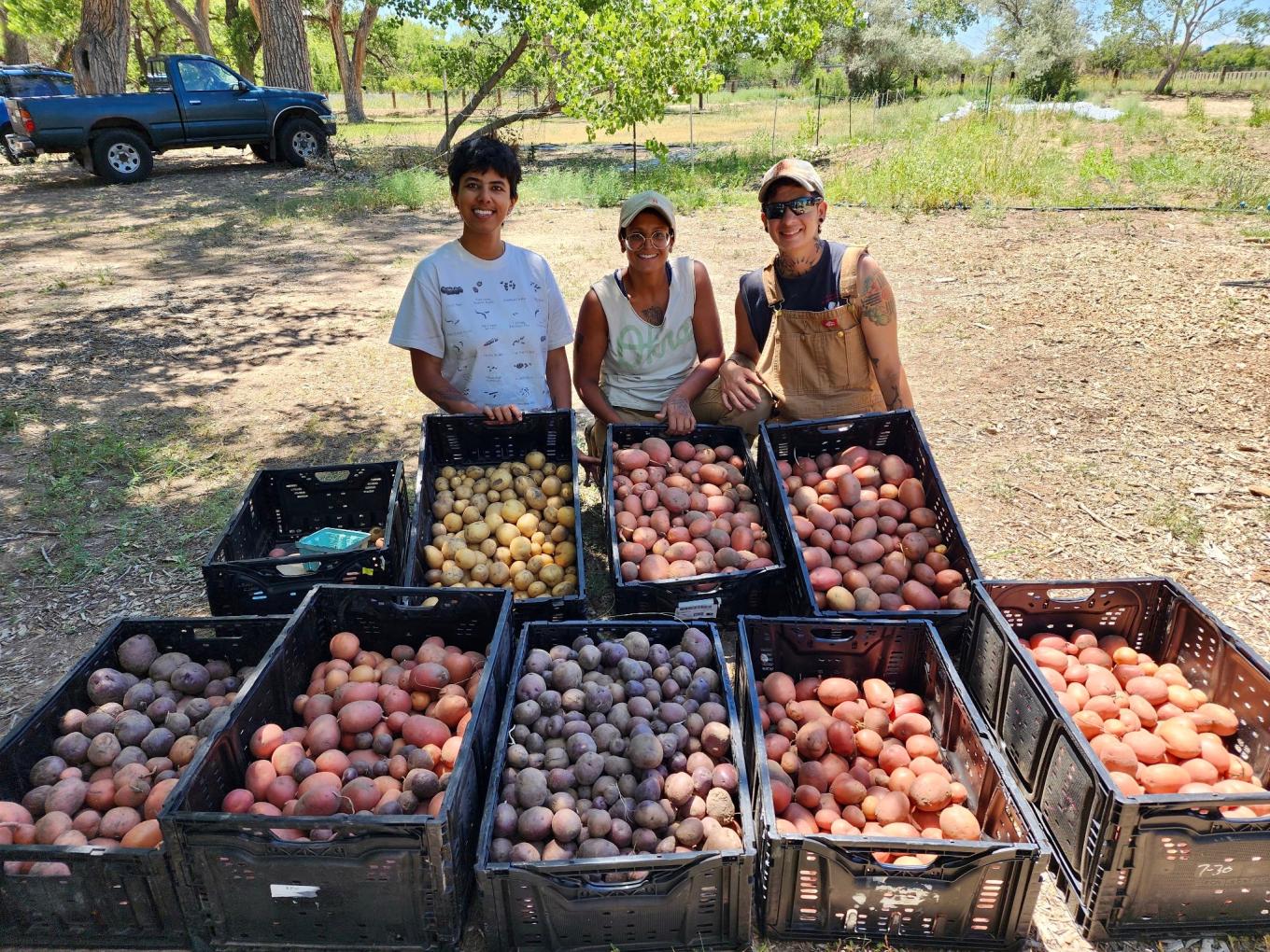
Ashokra leases three separate fields from three separate landowners in Albuquerque’s North Valley, served by the acequia system that has moved Rio Grande water across this valley for centuries. Anita describes it as a “patchwork farm.” The produce flows into a food distribution program that circulates food across New Mexico and into Tribal communities throughout the state. “We feel really strongly about our food feeding people,” Anita says, “not just going to rich people who can pay top dollar.” The patchwork arrangement means no pressure to turn a profit by a fixed date. They are farming on terms they chose.
Ashokra’s relationship to water runs deeper than irrigation. Okra, the farm’s specialty, with thirteen varieties, plus a line of dehydrated okra crisps in masala, red chili, and salted flavors, thrives in New Mexico’s heat but drinks deeply. The Rio Grande, which has watered this valley since before there was a city here, has run dry in multiple recent years. So Anita and her partners are doing what farmers have always done when the water changes: they are saving seed, selecting each season for plants that need less of it, slowly bending the crop toward the landscape they actually have rather than the one they wish for.
Ashokra Farm
Off Beet’s situation is different but similarly unconventional. The land is owned by the city of Boulder, which buys up agricultural land and leases it to farmers at affordable rates. Kyle and Emmy share their property with a dairy operation; cows graze most of the acreage while the vegetable farm occupies a five-acre plot. The irrigation water comes from snowpack in the mountains above the city, meltwater that makes its way down to the fields through a system as old as Colorado settlement. This year, with a dry and warm winter, farmers across the region are watching those mountains with worry. Kyle acknowledges the anxiety straightforwardly and then sets it aside: you keep planting.
Kyle is clear-eyed about Boulder’s particular culture. It is, he says, a bubble. Calling Off Beet “the gayest little farm in Boulder” has never felt risky. But drive half an hour north and the landscape shifts: the agricultural supply companies, the irrigation dealers, the broader infrastructure of farming in Colorado exists in a more conservative world. There is still a low-grade anxiety when he gets on the phone with an equipment supplier. Will this person give him a worse deal when they figure out he’s queer? It hasn’t happened. But the worry hasn’t disappeared either. The bubble has edges.
Nick and Spencer confronted the geography of safety before they ever planted a seed. When they were looking for land, queer-friendliness was a non-negotiable criterion alongside soil quality and water access. Even as two white men who could, in Nick’s phrase, “be straight-passing,” they found that requirement narrowed the map considerably. “The world is not our oyster,” he says. “We actually have to be pretty strategic about where we’re going to do this if we’re going to be comfortable.” They landed in Guerneville, which carries its own long history as a queer refuge, a town that has welcomed people who needed somewhere to be themselves since long before solarpunk was a word.
Ashokra Farm
Community as infrastructure
The word “community” comes up in every conversation with every one of these farmers, and it means something specific and structural.
At Ashokra, community shows up in the work parties where queer and trans BIPOC farmers learn small engine repair together and build caterpillar tunnels with circular saws, some of them for the first time. It shows up in the okra dinners that raise money for the farm and bring people into a relationship with a crop that carries deep meaning for both Anita and her co-farmer Mallika. It shows up, painfully, when a white woman on horseback blocks the farm’s access to an acequia road and the community responds with hundreds of letters of support. “More people want us here than the ones that don’t,” Anita says, and the letters were the proof.
At Off Beet, the community is the farmers’ market itself: the weekly ritual of seeing the faces of people who eat your food, of being told by someone that your carrots made their dinner. Kyle describes it as a reset, a reminder of why the physical work of farming is worth doing. He also points to the informal network of small farms in the Boulder area, a community bound by an email list and a culture of lending; if you need a tool, you ask, and someone almost always has it. Off Beet has graduated, he notes, from borrowing to lending; in their fourth year, they finally have enough of their own equipment to give back.
Solar Punk Farms sees community as a design principle. The intergenerational Pride brunch, which began when the neighboring senior center asked them to host a meal and has now become one of the most beloved events at Guerneville Pride, is a perfect expression of their ecotone philosophy: put two groups together who wouldn’t normally share a table, step back, and see what becomes possible. Nick gets visibly moved talking about it. “The spark of creativity and people getting out of their comfort zone and starting to talk about what could happen in different ways,” he says. “It’s just so magical to see.” An event that creates an ecotone rather than a vacuum; the phrase is Nick’s, and it applies well beyond brunch.
The River Keeps Moving continues in Part III, following these farmers into the uncertainty of a changing climate and asking what it means to keep planting toward something better.