
The Mad Agriculture Journal
A Container for Time and Energy
Published on
September 02, 2026
Written by
Jonnah Perkins
Photography by
Colton Cools
Slava Narozhnyi
Long before wine was traded, collected, or evaluated, it existed as something closer to an accident that people learned how to repeat. In the South Caucasus, where some of the earliest evidence of winemaking has been found dating back more than 8,000 years, clay vessels buried in the ground held crushed grapes that began to ferment on their own, skins and seeds collapsing under their own weight, yeast already present on the fruit converting sugar into alcohol without intervention. The process did not require precision so much as attention. Someone had to notice what was happening, had to return to it, and recognize that under certain conditions, temperature, containment, time, the fruit would transform and remain stable long enough to be consumed later. What was being preserved was not just liquid, but a set of relationships between plant, microbe, soil, seasons, humans, and the landscape they found themselves in. Those relationships were not abstract. They were observed and adapted to be carried forward across generations, continuing in different forms across landscapes that would come much later, including places like Paso Robles on California’s Central Coast.
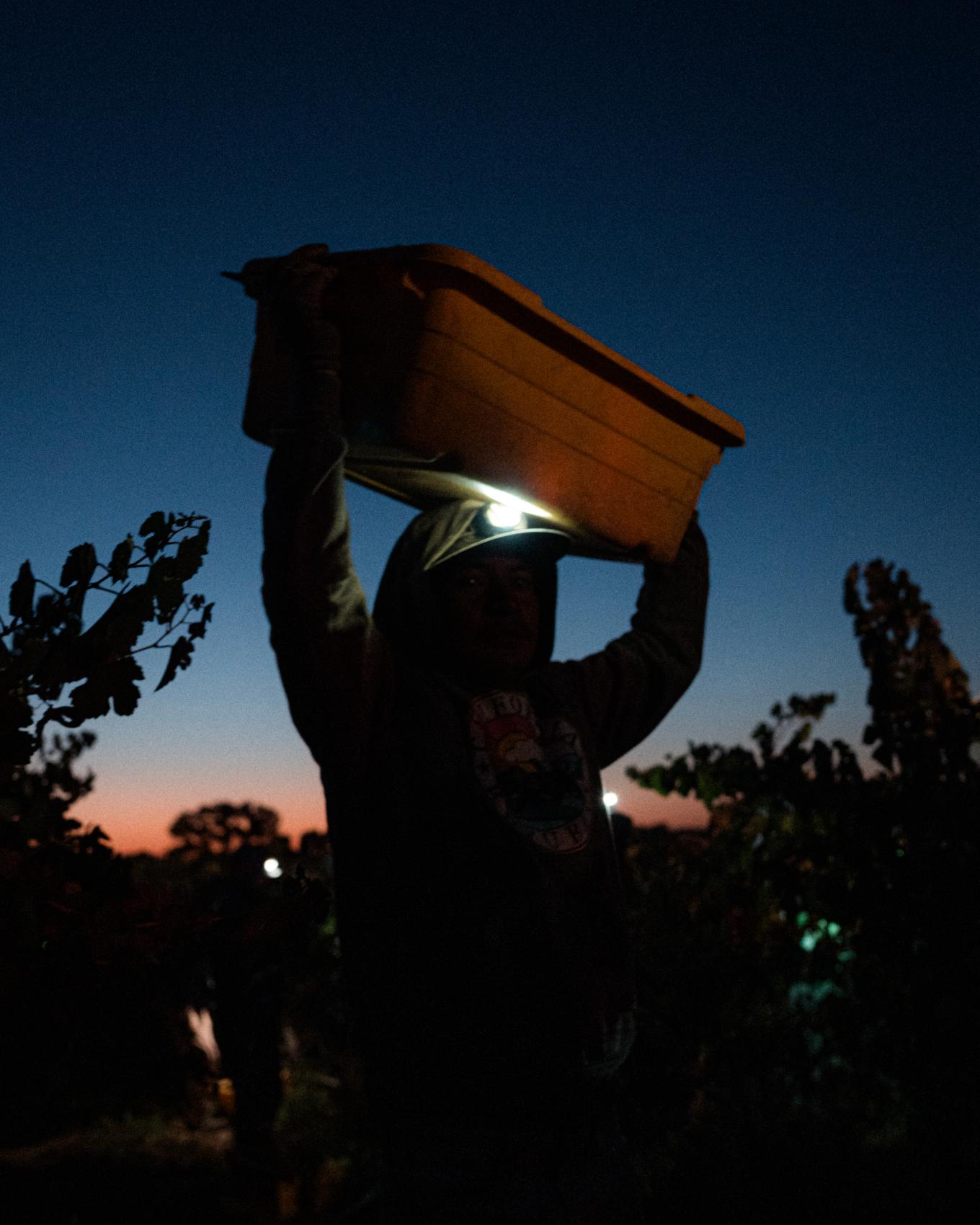
Across cultures, that relationship did not remain purely practical. It moved into ritual, stories, and systems. In the Mediterranean, wine became inseparable from the figure of Dionysus, a god not only of intoxication, but of transformation, excess, and the dissolution of boundaries between human and natural worlds. In Roman tradition, Bacchus carried similar associations, tied to celebration and loss of control, but also to cycles of growth and decay that mirrored the vine itself. These were not abstract symbols. They reflected an understanding that wine operated differently than other agricultural products. It was alive in a way that required stewardship but resisted complete control, changing in the vessel, evolving over time, shaped by conditions that extended beyond a single season. In other parts of the world, fermentation carried similar weight, from early Near Eastern practices to later monastic traditions in Europe where wine became embedded in spiritual life and daily ritual. Across these contexts, wine occupied a dual role, both agricultural and cultural, practical yet symbolic, something consumed and something interpreted. What persisted across that span was not just production, but attachment, a recognition that what was held in the vessel was more than liquid. It was a continuity of relationship between land, time, and human attention.
Over time, that relationship became formalized. Regions defined themselves through the conditions that shaped them, not only in the places where wine first emerged, but in landscapes that would come much later, including the inland valleys of California’s Central Coast where Paso Robles now sits. Techniques were refined and passed down. Systems of classification emerged that attempted to stabilize what had always been variable. Wine moved into trade, markets, and structures that required consistency as much as expression. The twentieth century accelerated that shift. Synthetic fertilizers, herbicides, and pesticides allowed for a degree of control that had not previously been possible. Variability could be reduced, yields could be increased, and outcomes could be predicted with greater confidence. For a time, those systems held, producing stability, scale, and a product that was more legible to a global market.
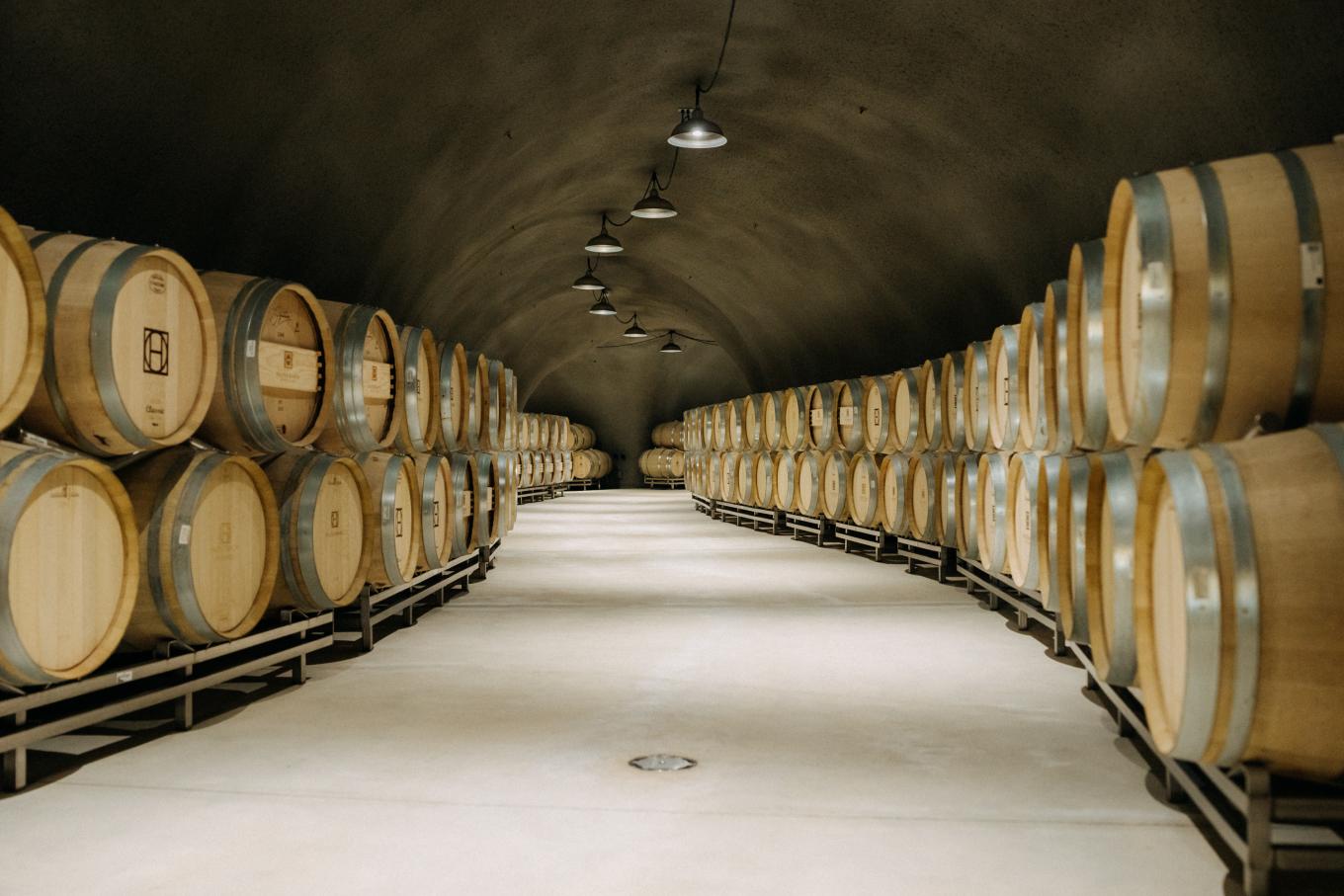
In Paso Robles, those conditions come into sharper focus. The region sits inland from the Pacific, separated by the Santa Lucia Range, where marine air moves through breaks in the hills but does not settle evenly across the landscape. Daytime temperatures rise quickly and hold, while nights cool dramatically. Beneath the surface, much of the region rests on uplifted marine sediment, fractured limestone formed from ancient seabeds that have risen and broken over time. These calcareous soils hold structure but do not always hold water, allowing moisture to move through quickly and requiring vines to draw from depth rather than surface. In this landscape, the limits of control become more visible, as water moves unevenly through the system and soils respond quickly to how they are managed. What once held through external inputs begins to lose coherence, not all at once, but gradually, as relationships between soil, water, and plants require a different kind of attention. Rather than a single solution, a shift emerges toward working within these conditions, recognizing that the system cannot be simplified without consequence.
That shift has taken on a distinct form across the region. Long defined by experimentation and innovation, Paso Robles is now emerging as one of the most concentrated sites of regenerative organic winegrowing in the world. Vineyards including Booker Vineyard, Halter Ranch Vineyard, Maha Estate | Villa Creek Cellars, Le Cuvier Winery, Robert Hall Winery, and Tablas Creek Vineyard are moving into Regenerative Organic Certified® practices, positioning the region at the leading edge of a broader transition that is still taking shape. Rather than converging on a single model, these vineyards are approaching the work from different entry points, some through soil measurement and trial, others through animal integration or reduced intervention, but all responding to the same set of underlying conditions that define the landscape. What connects them is not uniformity, but a shared recognition that the system must be worked with rather than overridden, and that the relationships between plant, soil, water, and time are not constraints to be solved, but the structure within which the vineyard operates.
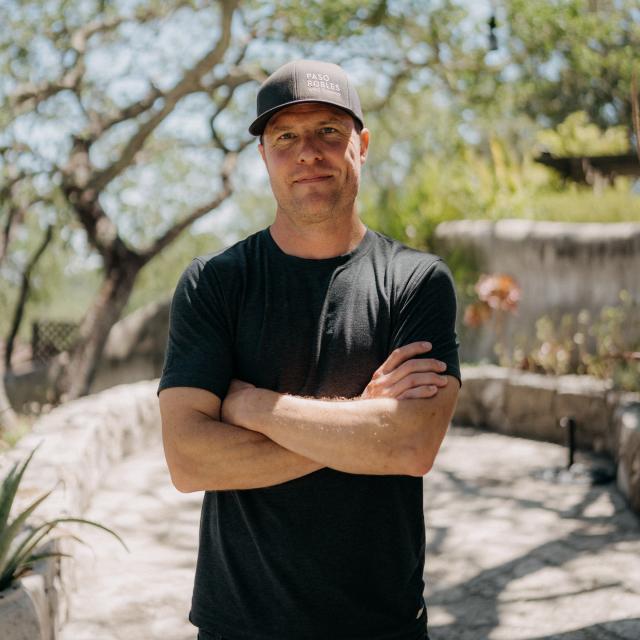
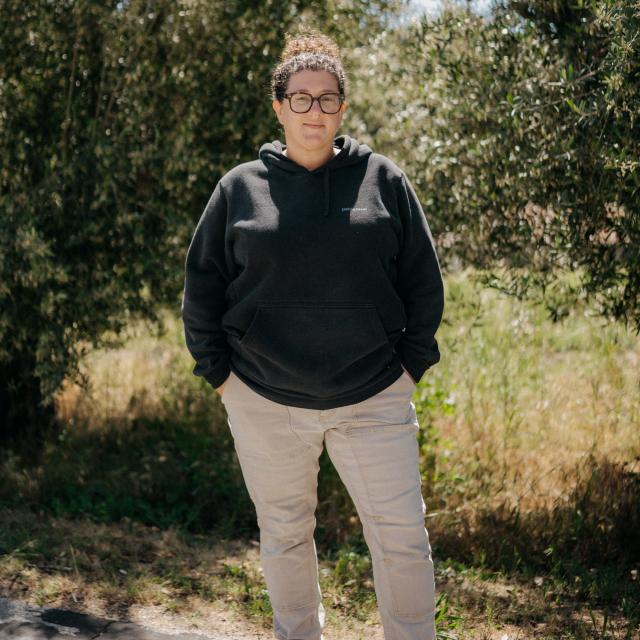
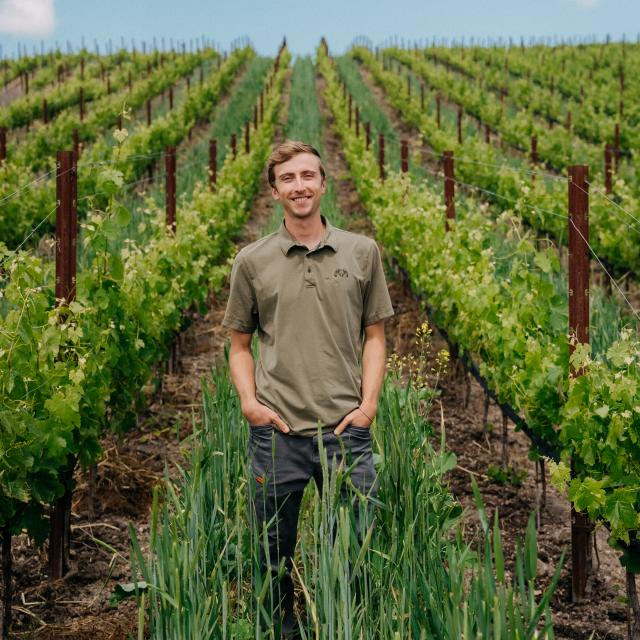
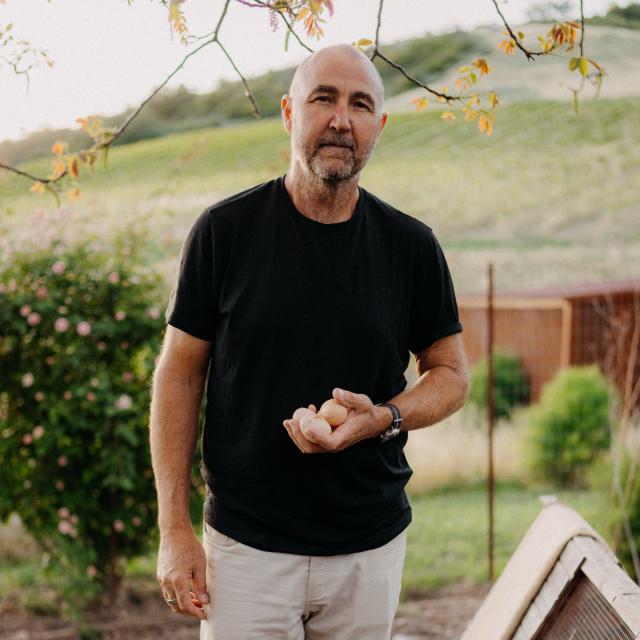
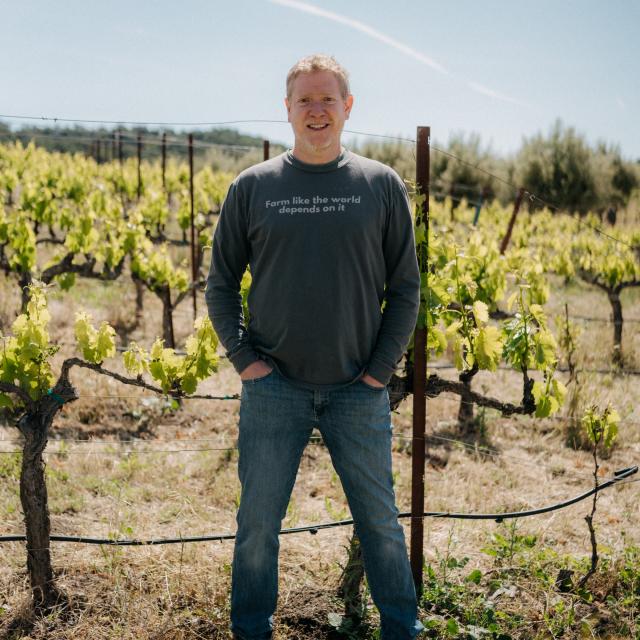
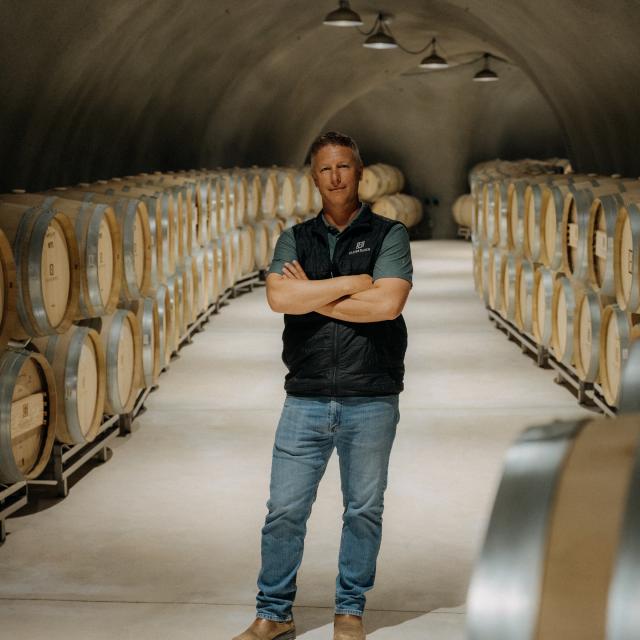
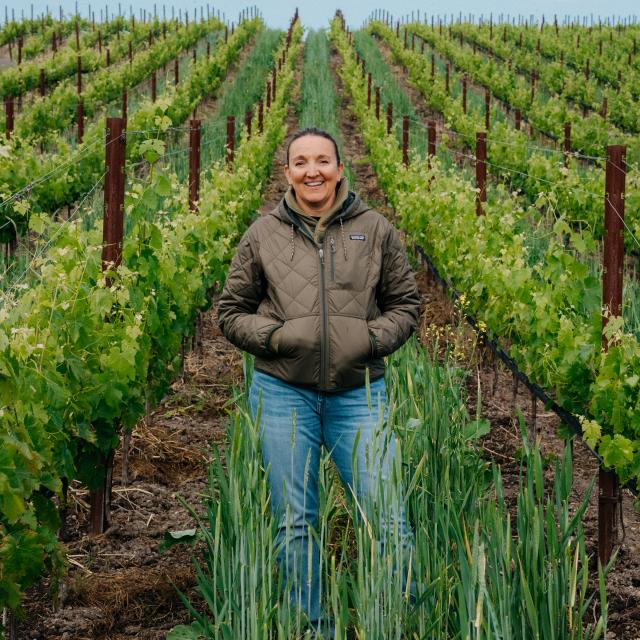
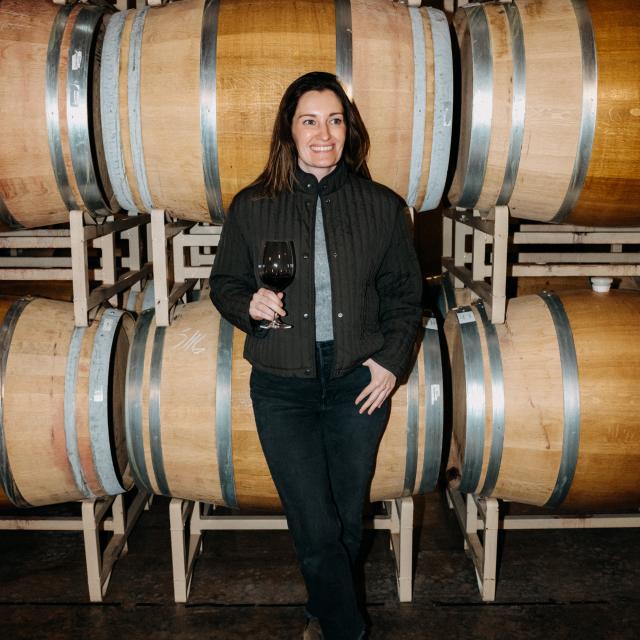
The vineyard, no longer treated as a simplified unit of production, but as a network of relationships that are maintained across time. The work became less about eliminating variables and more about understanding how those variables interacted, how nature and human decision making moved together, or failed to. In Paso, that understanding is not abstract. It is being tested, scaled, and shared in real time, making the region not just a place where wine is grown, but a proving ground for what the future of viticulture can become.
I spent three days in Paso Robles in April with winemakers, graziers, wine industry journalists, sommeliers, and the Regenerative Organic Alliance. As an agriculturalist and food systems storyteller, I was struck by the depth of feeling that wine holds for the people who live inside its rhythms, not just as a product, but as a practice shaped over generations. With millennia of refinement, adaptation, and care, viticulture stands in a rare position: a system rooted in tradition yet still evolving, capable of modeling how agriculture might move forward by preserving complexity rather than simplifying it, and by farming in a way that recognizes the land not as a resource to extract from, but as something to be in ongoing relationship with, as if the future depends on that continuity, because it does.
A system designed for nature
The shift becomes visible first through experience rather than certainty. At Tablas Creek Vineyard, the vineyard has long been certified organic, influenced by practices developed at Château de Beaucastel, where the removal of chemical inputs allowed wines to more clearly express their place. Tablas Creek became the first vineyard in the world to achieve Regenerative Organic Certified® status in 2020, earning Gold level certification and helping establish an early benchmark for what the standard could look like in practice. Over time, however, the limits of even that system became visible. Organic farming removes synthetic inputs, but does not eliminate reliance on inputs altogether, and biodynamics (a holistic system that treats the vineyard as a self-contained ecosystem, using compost-based inputs and timing practices) expands the frame without always providing clarity across different conditions. The question shifts again, from substitution to reduction, from what can be used to what can be removed. As Jason Haas, partner and general manager at Tablas Creek, puts it, “we need another certification like a hole in the head,” a reaction that reflects less resistance than fatigue, and a growing sense that the industry has created systems that claim more than they can consistently verify. What is needed, he suggests, is not another label, but a way to demonstrate that soil, ecology, and labor are actually improving in practice.
The Regenerative Organic Alliance enters as part of that shift, offering a framework that extends beyond inputs toward outcomes, asking whether soil is improving, whether ecological systems are functioning, and if labor conditions are being addressed as part of the whole. It establishes a shared structure for demonstrating progress across systems that have historically been separated. In a category like wine, where scrutiny is high and expectation is built into the product itself, that level of rigor matters. Wine is not only consumed, it is interpreted. It carries with it assumptions about place, care, and integrity, and producers describe a growing need to move beyond trust as a marketing strategy and toward something that can hold up under closer attention, where claims are not just stated but tested, and where the vineyard itself becomes the evidence.
It can be measured, but never fully understood
Attention in the vineyard often begins with soil, but it does not end there. At Tablas Creek Vineyard, Regenerative Specialist Erin Mason moves through blocks asking how much life is present, beginning with what can be seen, worms, insects, the structure of the soil in hand, and extending into laboratory analysis that tracks physical, chemical, and biological indicators. Cover crops are managed differently across adjacent rows. Sensors placed in the ground track temperature and moisture, revealing differences that can be measured but not always explained. The fractured limestone beneath the surface mediates these shifts, holding structure while allowing water to move through, creating conditions that vary even within short distances. What emerges is not a single answer, but a pattern of observation, where the accumulation of data does not resolve the system so much as deepen it, requiring interpretation rather than prescription. As Mason explains, “you can measure all of these things, but you’re still only seeing part of the picture. You collect the data, and then you have to decide what it means, knowing that there’s always more happening below the surface than what you can capture.”
Wine has always existed in tension between control and surrender, and the vineyard reflects that tension directly, offering signals that can be tracked but not fully contained.
The work inside the work
The system does not end at soil. It extends into the people who maintain it. At Tablas Creek Vineyard, labor is treated as part of the system itself, not separate from it. Wages are calculated based on the cost of living in the region, and decision making is distributed across those working in the vineyard, allowing observations to move directly into action. Rather than operating within a rigid hierarchy, the system functions through shared responsibility, where those closest to the work are able to respond to what they are seeing in real time, whether that is a shift in animal behavior, a change in vine growth, or a condition in the soil that requires adjustment. As Mason explains, the structure is intentionally designed so that knowledge does not sit in one place, but moves across the people who are engaged in the work, creating a feedback loop that allows the system to adapt as conditions change. The vineyard, in that sense, operates as a living system not only biologically, but socially, where relationships between people and land are as critical as those between plant and soil.
Nothing is removed, only replaced
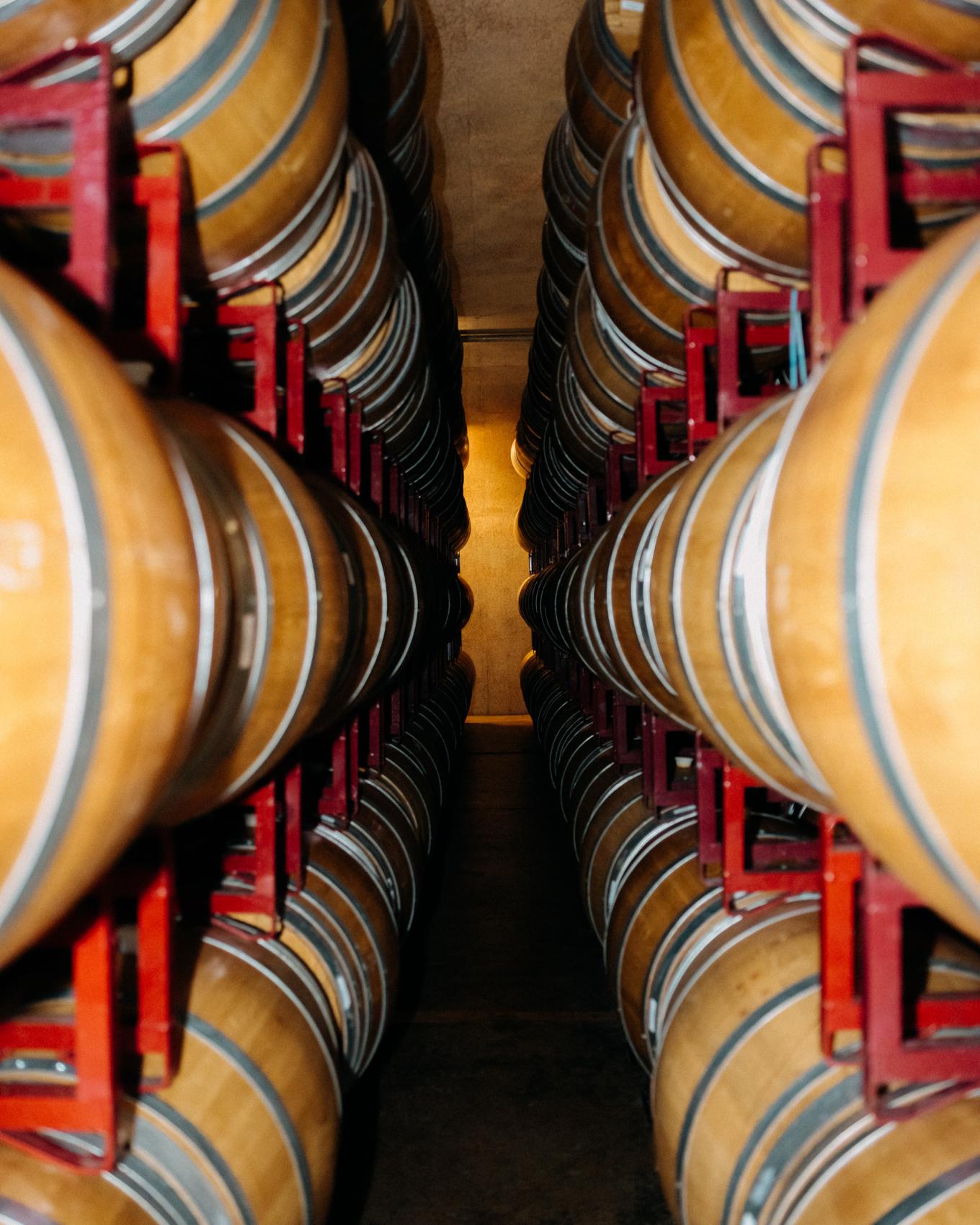
Within the Regenerative Organic standard, intervention does not disappear, it changes form. At Robert Hall Winery, owl boxes are installed across the property to attract predators that control rodent populations feeding at the base of vines, and falcons are flown to deter birds drawn to ripening fruit. As Maeve Pesquera, Chief Marketing Officer, describes it, “we have owl boxes all around the property to bring in predators that help with the rodents at the base of the vines, and we fly falcons to keep birds off the fruit once it ripens. It’s really about letting that system balance itself.” These practices are often described as balance, but the balance itself is constructed, the result of decisions about which relationships to encourage and which to limit. Rather than removing intervention entirely, the work shifts toward systems that allow nature to do more of the regulating, whether that is through predator species or plant diversity, instead of relying on external inputs that simplify the system in the short term but reduce its resilience over time.
When the data doesn’t make sense
The system begins to produce results that do not align with expectation. At Booker Vineyard, water use drops significantly, measured at a fraction of what is considered typical for the region, and soil moisture probes show that vine roots access deeper layers of moisture held within fractured limestone, separating them from surrounding vegetation. The assumption that cover crops compete with vines begins to break down under observation, as growers track irrigation and see clearly that the vine root zone operates at a different depth, allowing for coexistence rather than competition. As John Howell, Associate Vineyard Manager explains, “people think the cover crop is competing for water, but it’s not. The roots are operating at different depths, and you can see that in the data when you track where the water actually goes.” When reported, these numbers are flagged by standard systems as anomalies, falling outside what is considered normal agricultural usage, yet the vineyard continues to thrive, suggesting that the baseline itself may not fully reflect what is possible under different management systems.
Changing the shape of the vineyard
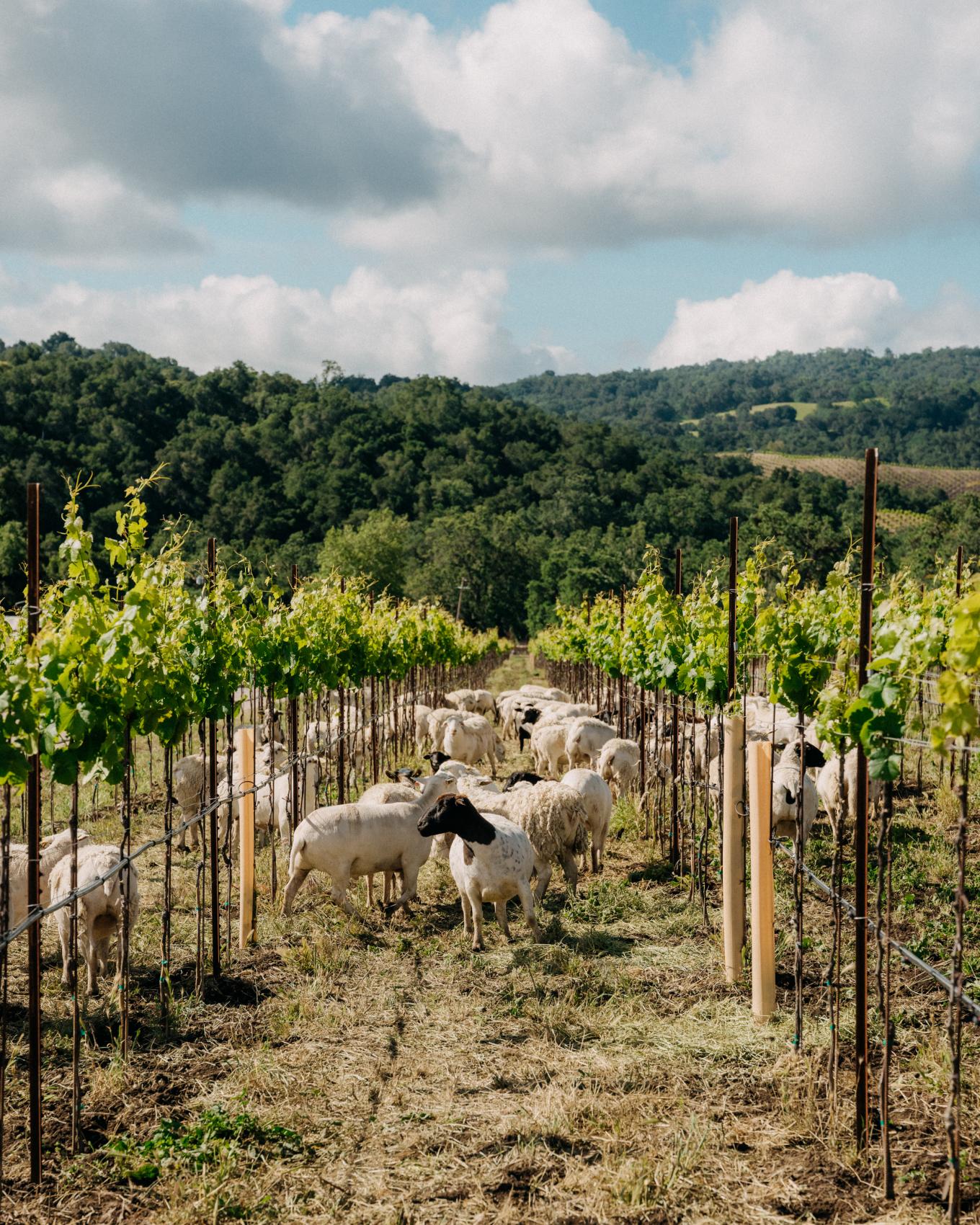
The system reshapes the vineyard itself. At Halter Ranch, sheep move through the vineyard, reducing the need for mowing and fertilization, but also requiring structural adjustments when they begin to graze on the vines themselves. Rather than removing the animals, the vineyard adapts, raising trellising and modifying infrastructure to accommodate their presence. What results is a landscape that appears less uniform, less controlled, and at times unfamiliar to those accustomed to more conventional vineyard aesthetics. As winemaker Kevin Sass explains, “people look at it and think it’s messy or out of control, because it doesn’t match what they expect a vineyard to look like. But the system is actually working more efficiently, nutrients are cycling, we’re using fewer external inputs, and everything is more connected than it appears on the surface.”
A living case study
What happens when everything is held constant except the land? At Robert Hall Winery, two vineyard blocks are farmed side by side, with identical varietals and identical winemaking practices, allowing the farming system itself to become the variable. Over time, differences emerge in canopy development, fruit retention, and water holding capacity, with the regenerative block showing increased shade and reduced dehydration during periods of heat. As winemaker Amanda Gorter explains, “we kept everything the same, same varietals, same winemaking, same picks, and the only difference was how the vineyard was farmed. What we’re seeing is more canopy, better water holding capacity, and less dehydration, especially during heat events. That allows the fruit to hang longer and develop more fully.” The comparison offers a rare opportunity to isolate the effect of farming practice, demonstrating that the differences are not theoretical but present, something that can be seen, measured, and ultimately tasted. In a category defined by discernment, those differences begin to register economically as well, with Regenerative Organic Certified® wines increasingly positioned as higher-value expressions of place, not through branding alone, but through measurable and sensory distinction.
Not pushing, not pulling
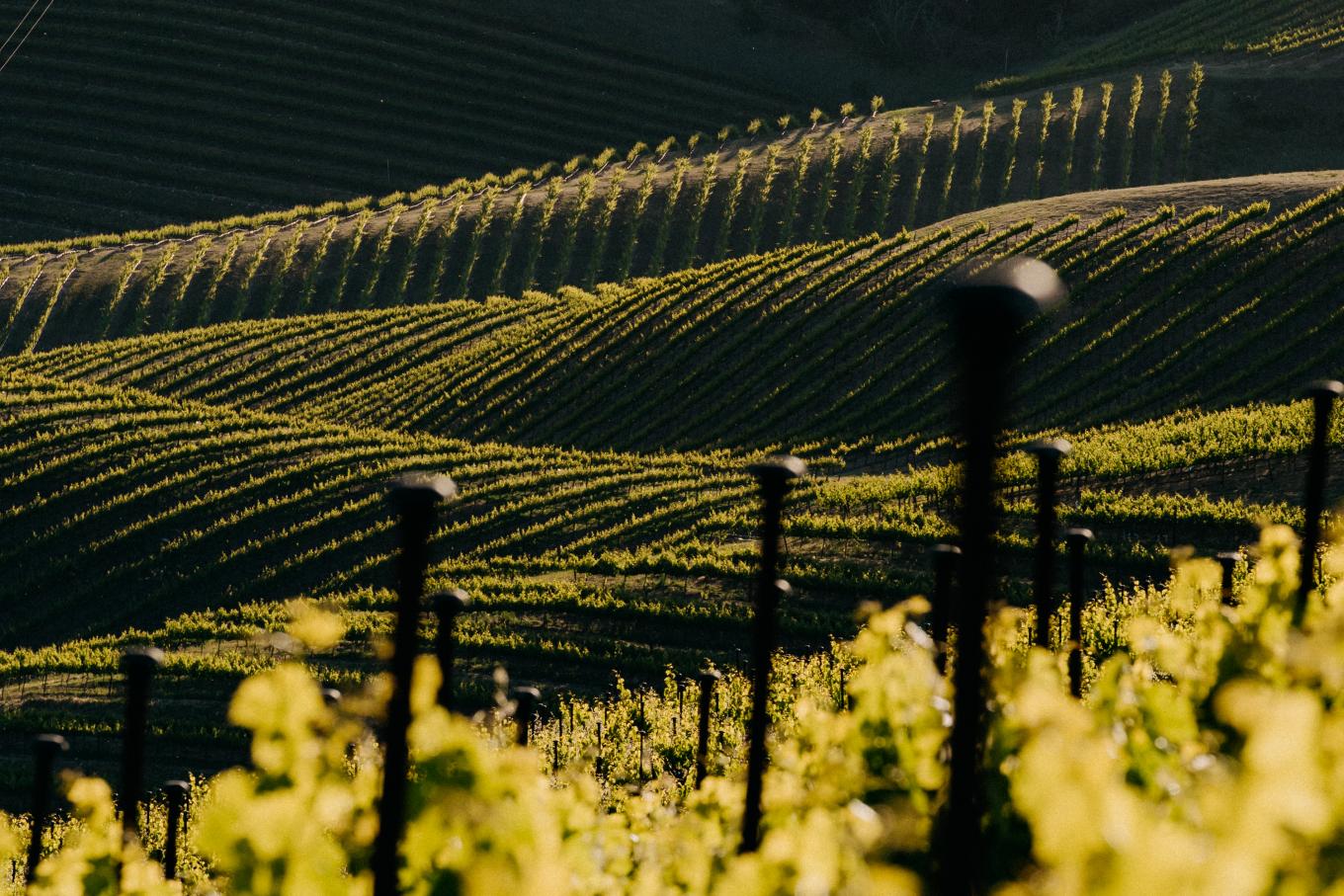
The shift can also be described more simply. At Le Cuvier Winery, winemaker Clay Selkirk describes it as “ushering,” explaining that the work is not about forcing outcomes, but about guiding a system that is already in motion, allowing it to move in the direction it is capable of rather than trying to redirect it entirely. The vineyard is dry farmed, without irrigation, relying on seasonal rains to recharge soil moisture, and the winery operates with minimal intervention, working with the conditions already present rather than those imposed. As Selkirk puts it, “we’re not pushing and pulling, we’re paying attention and stepping in when it’s needed, but a lot of the time the best decision is to do nothing and let the system resolve itself. You’re working with the rains you get, with what the season gives you, and trusting that the vine knows how to respond.” It is a way of working that moves with the system rather than against it, allowing relationships between plant, soil, and seasons to unfold over time.
Selkirk works from the understanding that what wine has always carried does not fully belong to the person making it. The outcome is shaped as much by what is allowed as by what is done, held within the conditions of the land and the decisions made over time, requiring both restraint and responsiveness, and an acceptance that control is never complete.
Across Paso Robles, no single approach defines what regenerative organic agriculture looks like in practice, yet a clear direction is taking shape. Vineyards operate differently, but they move within the same set of conditions that have always defined the region, water, heat, soil, and time. What distinguishes this moment is not uniformity, but alignment, a shared movement toward systems that can hold under pressure while continuing to produce. As Cris Cherry, Co-Founder and Co-founder of The MAHA Estate at Maha Estate | Villa Creek Cellars, puts it, “there isn’t one way to do this, but there is a direction, and it’s about working with the system instead of trying to control it.” Wine has always existed in tension between control and surrender, and in Paso Robles that tension is not resolved, but worked through in real time, across vineyards that are learning how to operate with greater precision, resilience, and care.
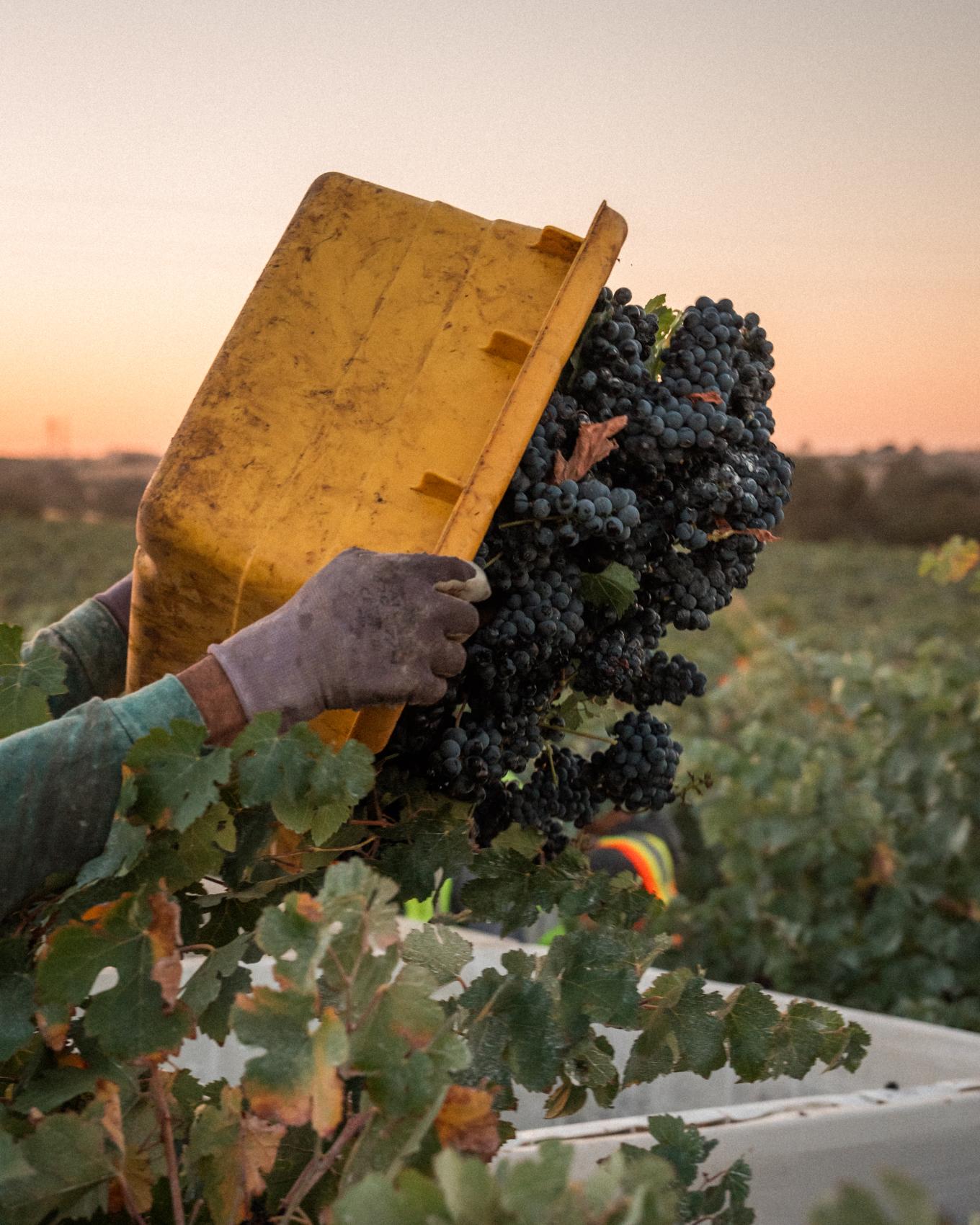
To meet the Regenerative Organic Certified® standard, a farm is required to demonstrate progress across three interdependent areas that build on a strong organic foundation: soil health, animal welfare, and social fairness. In practice, this means building soil organic matter and biological activity through practices like cover cropping, compost application, and reduced tillage, while minimizing synthetic inputs and supporting biodiversity within the system. Where animals are integrated, they must be managed in ways that allow for natural behavior and contribute to the ecological function of the land. At the same time, the certification requires attention to labor conditions, including fair wages, safe working environments, and a structure that recognizes the role of people as part of the system rather than separate from it. The standard is not based on a single practice, but on measurable outcomes, requiring that farms show improvement over time in how these systems function together.
What emerges is not a new model, but a return to something older. Long before wine became a product, it was a process that required attention rather than control, a transformation that could be guided but never fully directed. The earliest vessels held not only fermented fruit, but the conditions that made it possible, temperature, microbial life, the passage of time, and the presence of someone willing to observe rather than intervene. That dynamic has never disappeared. It has only been obscured at times by systems that promised greater control than the process itself could sustain.
In that sense, the work unfolding in Paso Robles is not about restoring a past, but about remembering what has always been true. Wine does not fully belong to the person making it. It emerges from a set of relationships that extend beyond intention, shaped by land, season, and the limits of what can be managed. To farm in a way that allows those relationships to function is not simply an ecological choice. It is a form of reverence, one that recognizes that the value of wine has never been contained solely in the bottle, but in the continuity of attention that allows it to exist at all.
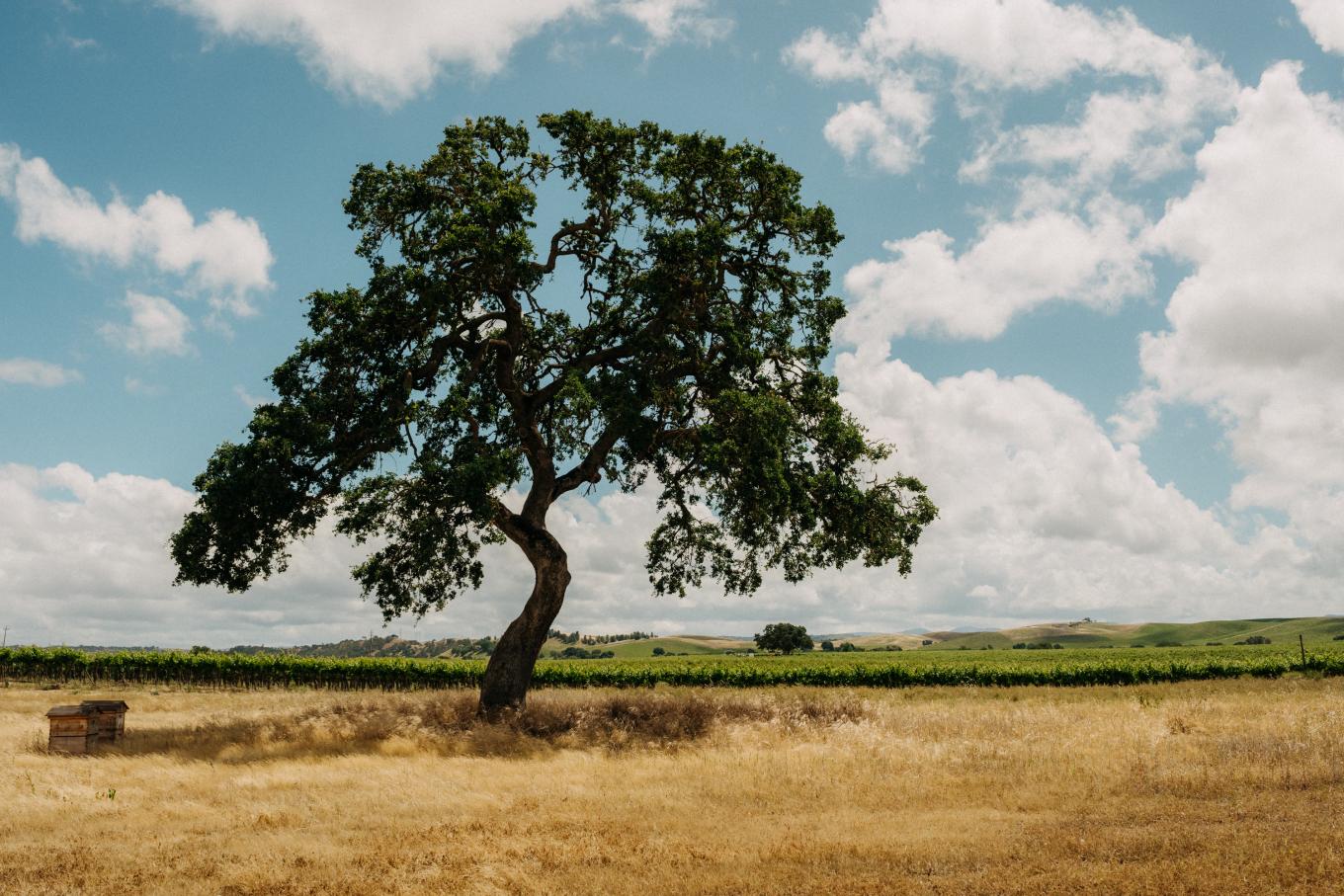
To let the vineyard be more wild is not to abandon it, but to accept that the system it depends on cannot be simplified without losing what makes it distinct. What is being preserved is not only soil health or biodiversity, but a way of working that remains in relationship with uncertainty, that allows transformation to occur without forcing it into uniformity. This is what wine has always carried, not just flavor or place, but a reminder that some forms of value emerge only when control is relinquished, and when the work becomes one of holding rather than directing.
In Paso Robles, that understanding is no longer abstract. It is visible in vineyards that are choosing to work within the conditions they are given, rather than override them, and in doing so, are redefining what it means to produce wine at a high level. The result is not only a shift in practice, but a shift in posture, one that brings the act of farming back into alignment with the forces that have always shaped it. What endures is not certainty, but a network of relationships between plant, microbe, soil, seasons, humans, and the landscape they find themselves in, maintained with enough care and attention to continue forward.