
The Mad Agriculture Journal
The Rivers Keep Moving: Part 1
Published on
August 20, 2026
Words and art
Madison Sankovitz
Photography courtesy of
Solar Punk Farms
The River Keeps Moving is a three-part series exploring how queer farmers are building new relationships with land, labor, and community across the American West. Part One features the visual story of Solar Punk Farms in Sonoma County, California, alongside the voices of farmers at Ashokra Farm and Off Beet Farm. Originally published in the Mad Agriculture Journal Issue 15
Making up New Rules
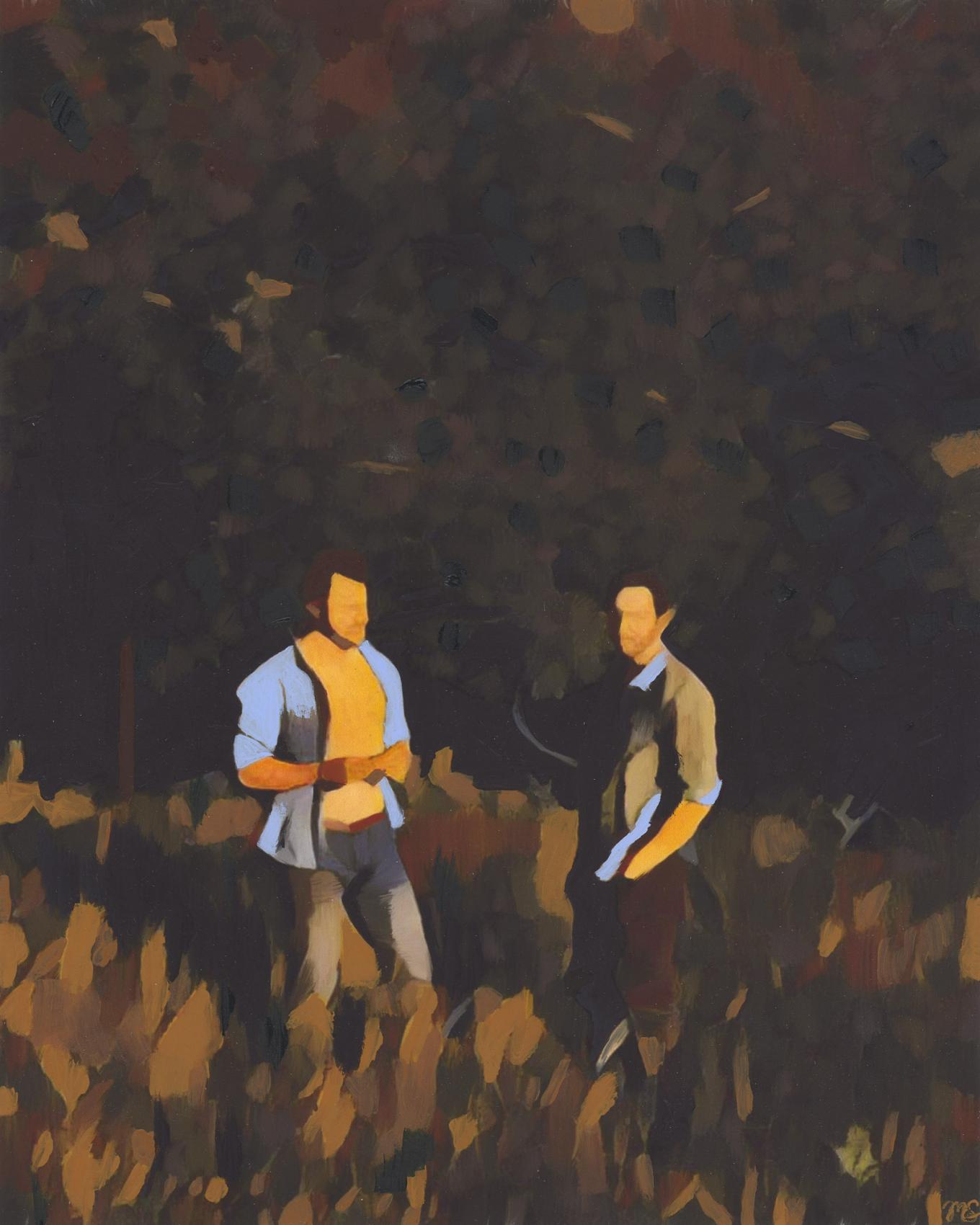
Art by Madison Sankovitz
Rivers run through all of it. In Albuquerque’s North Valley, Anita Adalja farms three leased fields fed by acequias, the ancient irrigation ditches that draw from the Rio Grande, which has now gone dry multiple years running. In the redwood hills of Guerneville, California, Nick Schwanz and Spencer Scott built their farm on land that borders the Russian River’s floodplain, a stretch of watershed that gives generously and, in wet winters, takes back. In Boulder, Kyle Stewart watches the snowpack in the mountains above his fields each winter, knowing that when it comes time to irrigate, those distant peaks that form the headwaters of the Colorado River are what he’s counting on.
Three farms, three rivers, three entirely different relationships to water, and yet the same fundamental understanding: that farming is a negotiation with the land, ongoing, without a guaranteed outcome.
Ashokra Farm in Albuquerque, Solar Punk Farms in Sonoma County, and Off Beet Farm in Boulder are different from one another in scale, geography, and method. What they share is something harder to name, a set of values about land and labor and community that grows directly out of their farmers’ identities as queer people. At a moment when American agriculture is still largely framed by scale and extraction within commodity systems, these farms offer something else. They are, quietly and determinedly, making up new rules.
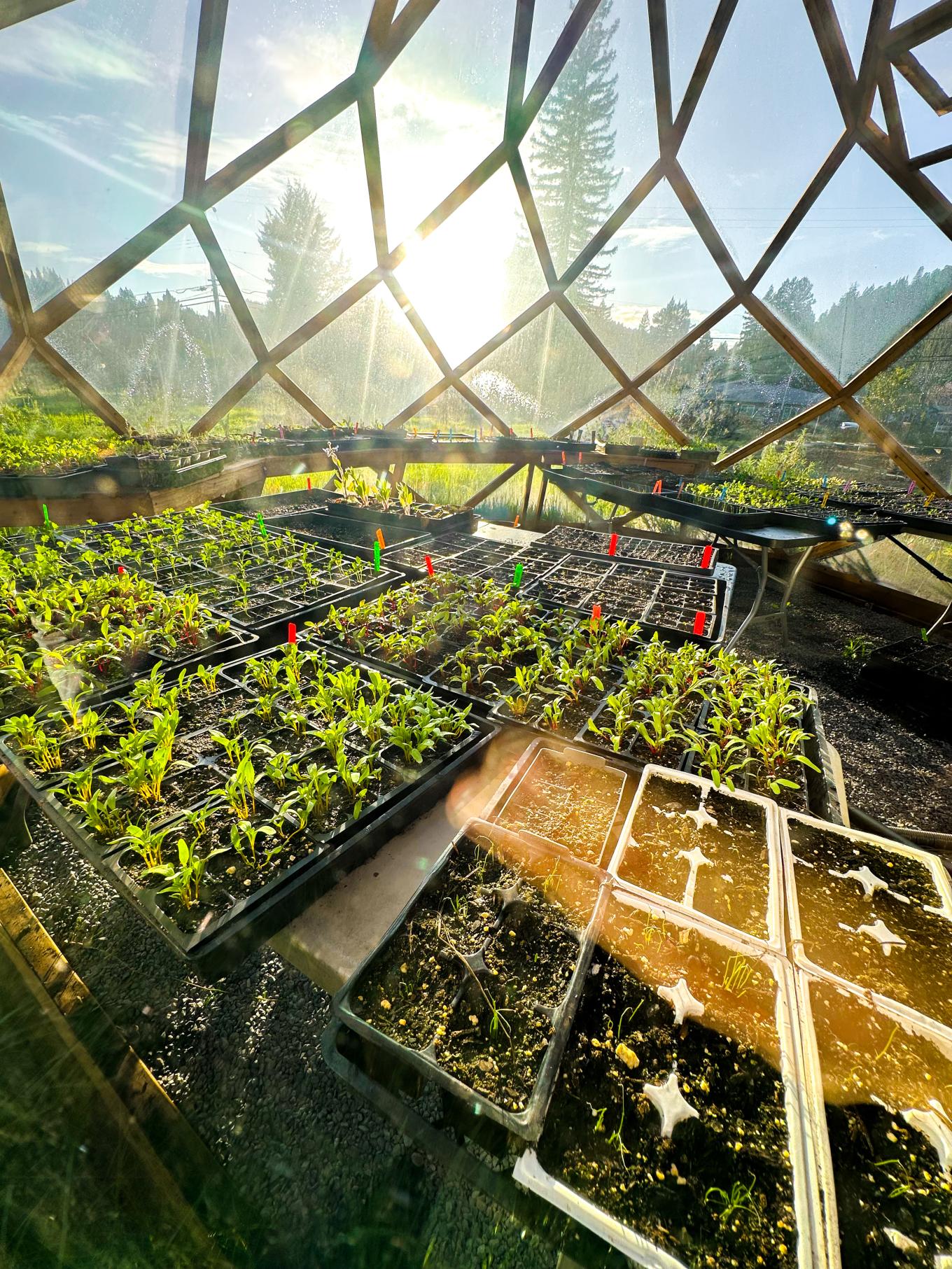
Solar Punk Farms
Unlikely paths to farming
None of these farmers grew up farming. That is, in itself, worth noting; the myth of agricultural inheritance, the idea that farming passes cleanly from one generation to the next like heirloom seed stock, has always excluded far more people than it has included.
Anita grew up in Butler, Pennsylvania, a small town in the western part of the state where her Indian immigrant family was one of the only non-white families around. She describes herself as a kid who stuck out, who couldn’t conform, who never quite felt at home anywhere. She moved to New York City as soon as she could, looking for somewhere to disappear into, to finally just be whoever she was.
It was a coworker, Yemi Amu (now a farmer herself, running Oko Farms in Brooklyn), who changed things. The two of them built a rooftop garden in the building where they worked with formerly unhoused people, using old bed frames from clients who had passed away, planting whatever the residents wanted to grow. “It just changed everything for me,” Anita says. “I was like, wow, this is what I want, how I want to spend my time.” She quit her job, moved to Santa Cruz, started working on farms, and didn’t stop. She farmed in California, Virginia, Washington D.C., Pennsylvania, New Mexico. She managed a 30-acre operation. She became, she says, quite nomadic.
Kyle’s path was more incremental. He was studying industrial design in college, and hating it, when he started learning about sustainable food systems. One summer he went to work on a farm in Vermont, loved it, and has been doing it ever since with his farming partner Emmy Bender. Over a decade of vegetable farming culminated in Off Beet’s fourth year in business. He draws a line, half-joking, between coming out as queer and coming out as a farmer: “Once you’ve come out as queer to your parents, it was kind of easy for me to come out as other things.” First queer, then vegetarian, then vegan, then the summer in Vermont. Each step a little further from their expected script.
Nick and Spencer, the couple behind Solar Punk Farms, came to farming from brand strategy and cancer therapeutics respectively. They fell hard and fast into climate literature like Donut Economics by Kate Raworth and a TED Talk on the solarpunk movement by Keisha Howard. Suddenly they found themselves unable to think or talk about anything else. They had grown a couple of tomatoes in their San Francisco backyard. Next, they started a farm. “We were building the plane as we were flying,” Nick says. But their inexperience was, in a sense, the point. They wanted to demonstrate that you could start something without knowing everything. “Showing that on-ramp was sort of the point.”
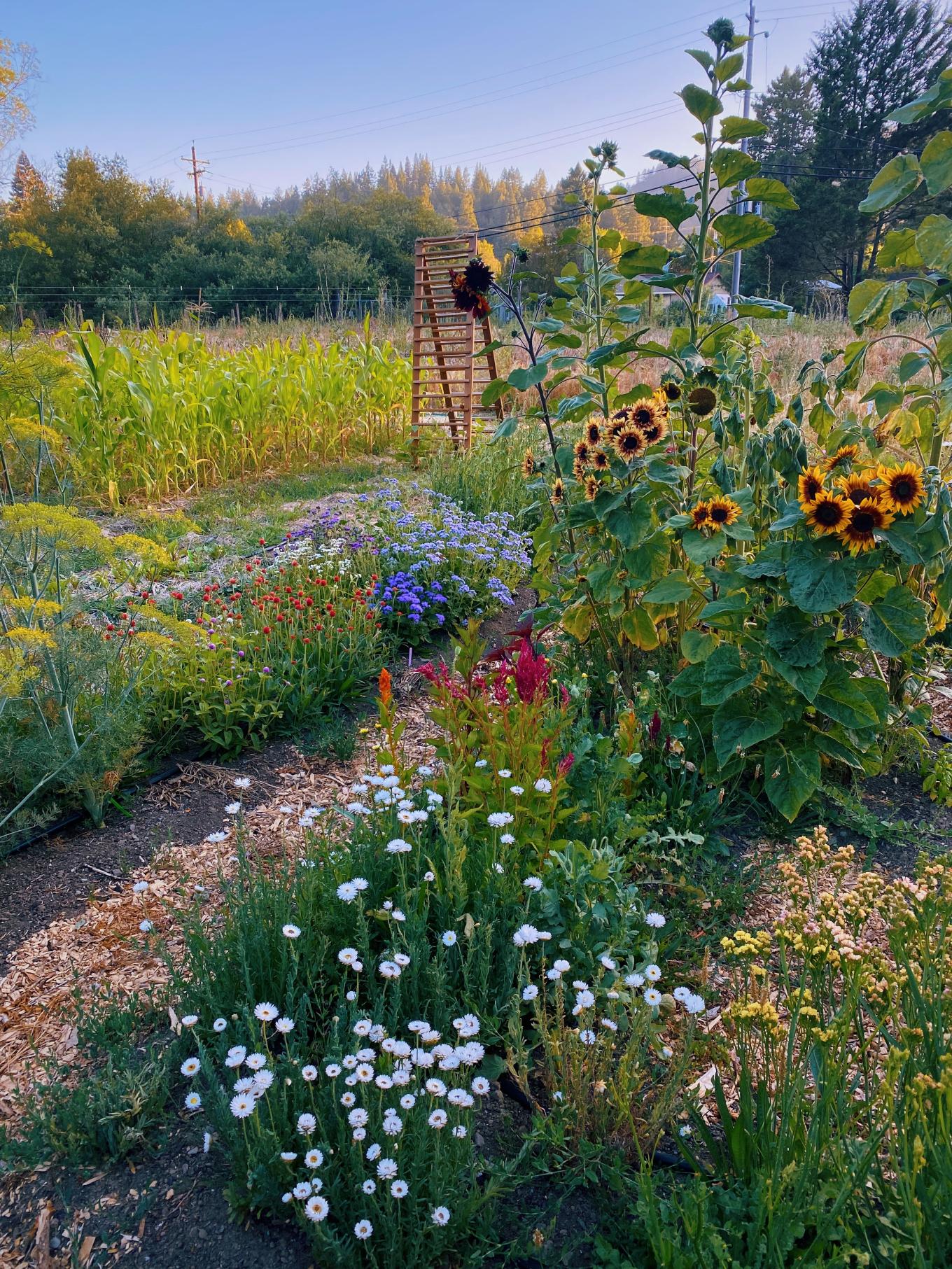
Solar Punk Farms
Queerness as relationship to land
I ask Anita how her queerness shapes her relationship to the land. She talks about reciprocity, about the land as another being that has also been unseen. “I mother the land and the land mothers me back,” she says. “I’ve learned how to be a mother because I am a farmer.”
She describes her queerness as a kind of expansiveness, a freedom from boxes that translates, on the land, into a freedom from fixed expectations of what a farm should produce, how it should operate, who it should serve. And she names something that feels true across all three of these operations: a solidarity between queer people and land that has been pushed to its margins. “As queer people, we’re discarded and we count on each other,” she says. “And you see that with the land – taken for granted or abused or neglected or unseen, especially in conventional or capitalistic agriculture. And as queer people, when you’re working with the land, you’re like, I got you. I know what you’re going through.”
Nick frames it philosophically, through the lens of what he calls ecotones, the ecological term for the place where two systems meet, like the riparian zone where water gives way to land. These are among the most biologically diverse and generative places on earth precisely because they resist clean boundaries. It is, he argues, a way of thinking about queerness itself. The refusal of the binary, the embrace of the in-between, the strange fertility that comes from the collision of unlike things. “Binary thinking is really limiting to life’s creativity,” he says. Nick has been on what he calls a “riparian obsession” lately, reading about beavers and river ecology, finding in the science of watersheds a confirmation of the philosophy he’s already living. Solar Punk Farms tries to inhabit those intersections deliberately: young and old, technology and nature, science and art, queerness and the broader community.
Kyle’s answer is quieter and more practical. He points to his business partnership with Emmy; two friends who started a farm together, neither romantically involved, neither related. In an industry still dominated by husband-and-wife operations, it is genuinely unusual, and it gives them something most small farms don’t have: flexibility, coverage, the ability to be two separate people with two separate lives who also happen to run a farm together. Queerness, for Kyle, has meant learning early that your life doesn’t have to match the template, and that lesson scales.
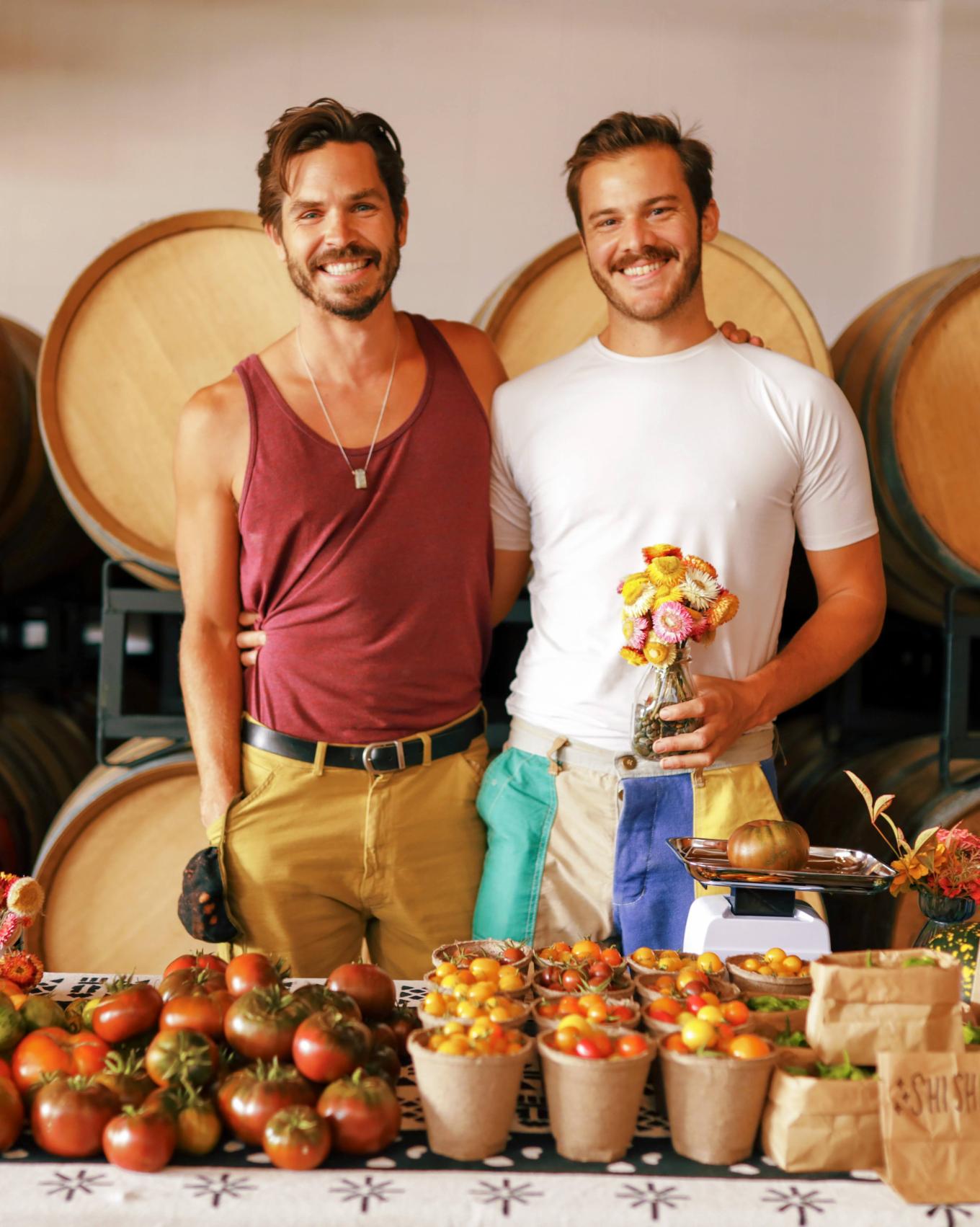
Solar Punk Farms
Beyond profit, toward dignity
One of the most striking things about these farms is what they are not trying to do. None of them are principally in the business of maximizing yield or profit.
Ashokra Farm, which Anita runs with her partners Ash Abeyta and Mallika Singh (all of them former farmworkers who met working on other people’s land), explicitly measures success by different standards. Are they a space where people can show up as their authentic selves? Are they feeding their community? Are they still farming together? Everything the farm earns goes back into the farm. All three farmers hold other jobs. Ashokra is, as Anita puts it, “a nights and weekends farm,” and that is a choice.
This rejection of profit as the primary metric is inseparable from their histories as farmworkers. Anita spent years working on production-focused farms where you couldn’t have a bad day, couldn’t be sick, couldn’t be tired. Working six days a week, twelve hours a day. She experienced racism, sexism, sexual harassment, homophobia. She has frostbite on her feet from one farm she worked on. When she and Ash started Ashokra, they were explicit about what they were building: the farm they had never been able to find. One with a composting toilet, “a healing experience,” she says, because it meant centering dignity. One where visitors receive the farm’s values in advance, where pronouns are asked rather than assumed. “We want this farm to be the farm of our dreams,” she says simply.
Solar Punk Farms operates from a different but adjacent set of ideas. Nick describes their work as existing on the “cultural front” of the climate movement: a place that is critically important but chronically underfunded and misunderstood. Their theory is that people don’t change their behavior because of obligation or fear; they change because they have been genuinely moved, delighted into caring. So the farm frames everything as fun. Volunteer days are “work-play days” with themes and music. Fundraisers become drag shows. The annual divestment happy hour is a party first, a call to action second. And it works. Nick describes a woman who attended one year, went home, shared the presentation with her parents, and watched them move their savings out of oil stocks to a community credit union. “That’s not just education,” he says. “That’s inspiration.”
He draws an explicit parallel between the AIDS crisis and the climate crisis: queer people, he argues, have deep institutional knowledge about how to face an existential threat that mainstream institutions won’t address, how to build community in the face of neglect, how to inject radical joy into a movement that could easily become paralyzed by its own terror. “All of those things can be translated from the AIDS crisis to the climate crisis in really powerful ways,” he says. “It is not the most obvious framing for a farm, but Solar Punk Farms has never been interested in obvious framings.”
The River Keeps Moving continues in Parts II and III, exploring land and water access, community as infrastructure, and what it means to keep planting through uncertainty.