The Mad Agriculture Journal
The West Is
Published on
January 23, 2026
Photography and words by
Ian Warren
Introduction and interview by
Jonnah Perkins
At Mad Agriculture, we believe stories carry the weight of place, memory, and imagination. They reach us in ways that numbers, data, or facts alone never could. Story penetrates deeper, shaping how we feel, how we relate, and how we choose to act. In the work of regeneration, stories are what tether us to the land and remind us that ecological change is also cultural change. They allow us to see the land and the people who shape it through new eyes.
For this interview, I sat down with Denver-based photographer Ian Warren, whose work explores the meaning of community through the lens of rural life and rodeo culture.
Ian’s photographs are not simple documents; they are invitations. His family history, rooted in rodeo and the ranching traditions of Colorado, gives him a rare kind of access and credibility. What emerges in his work is both intimate and expansive: portraits that reveal grit and tenderness, landscapes charged with memory, and moments that capture the essence of the American West as it continues to evolve.
This conversation follows the threads of Ian’s upbringing, his time with the Magnum Photography mentorship program, his forthcoming published work with Gost Books, and his pursuit of rodeo as a subject that is both personal and mythic. It offers a window into the ways photography can hold community, risk, and beauty all at once.
Jonnah Perkins, Director of Media
Ian Warren on his photo essay, The West Is
My name is Ian Warren and I am a photographer based in Denver, Colorado. My professional work is centered on interiors, home accessories, and furniture, but my personal work pulls me elsewhere. I am drawn to documentary photography, to human stories that are especially rooted in rural communities. That fascination with community, I suspect, comes from my own family history.
My great-grandfather was a rodeo cowboy, and my grandfather followed the same path until his mid-twenties, riding to pay his way through medical school. Later, he owned a ranch in Parker, Colorado where he bred and boarded racing horses. My childhood is stitched together with images of that place: my grandfather in a cowboy hat, driving across open land to check the horses, teaching me how to ride. In the late 1990s and early 2000s, Parker still felt like wide-open plains, mountains in the distance, yellow grasses and orange sunsets. Those colors, and the figure of my grandfather in his weathered hat, became the palette of my imagination.
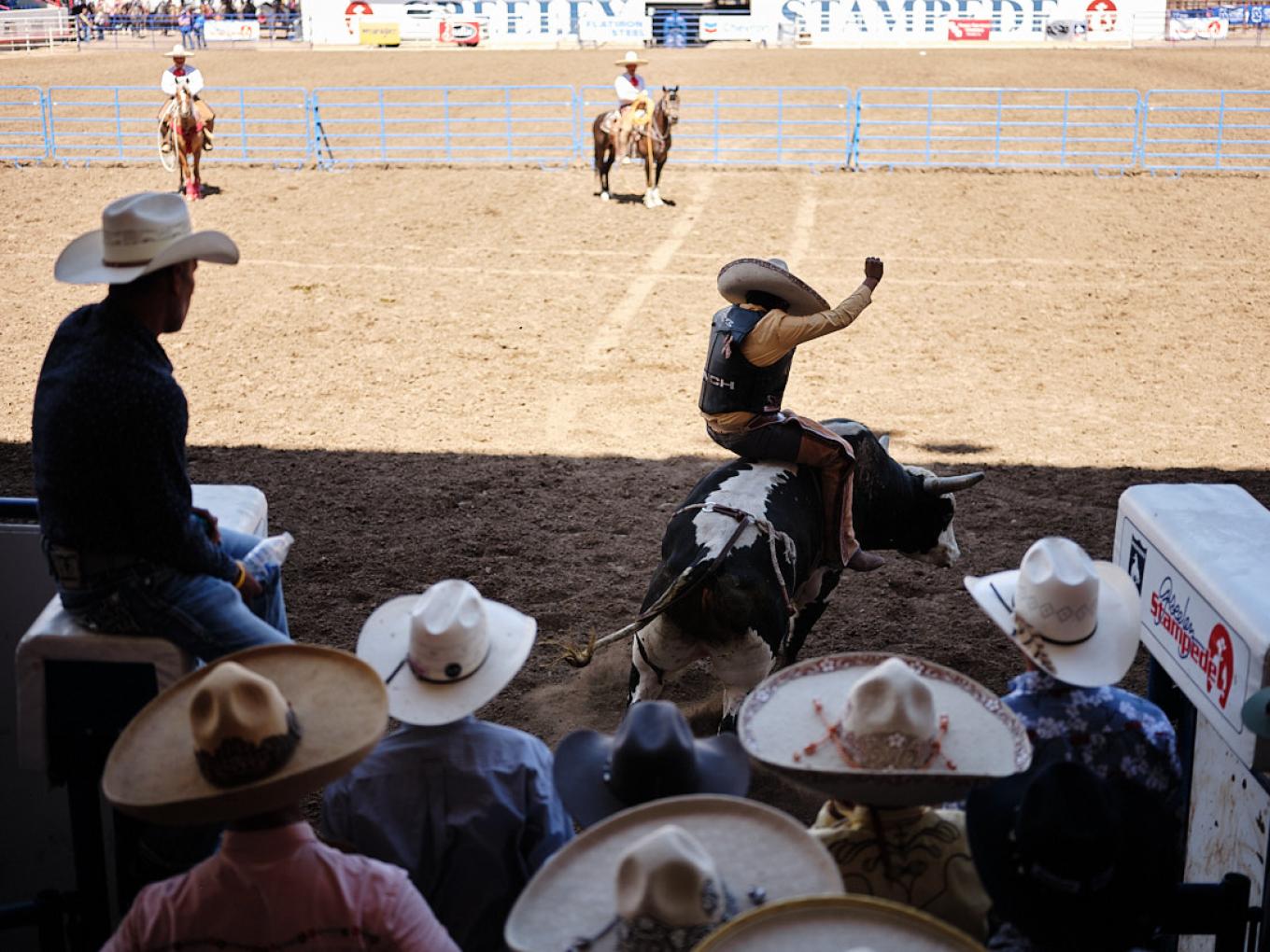
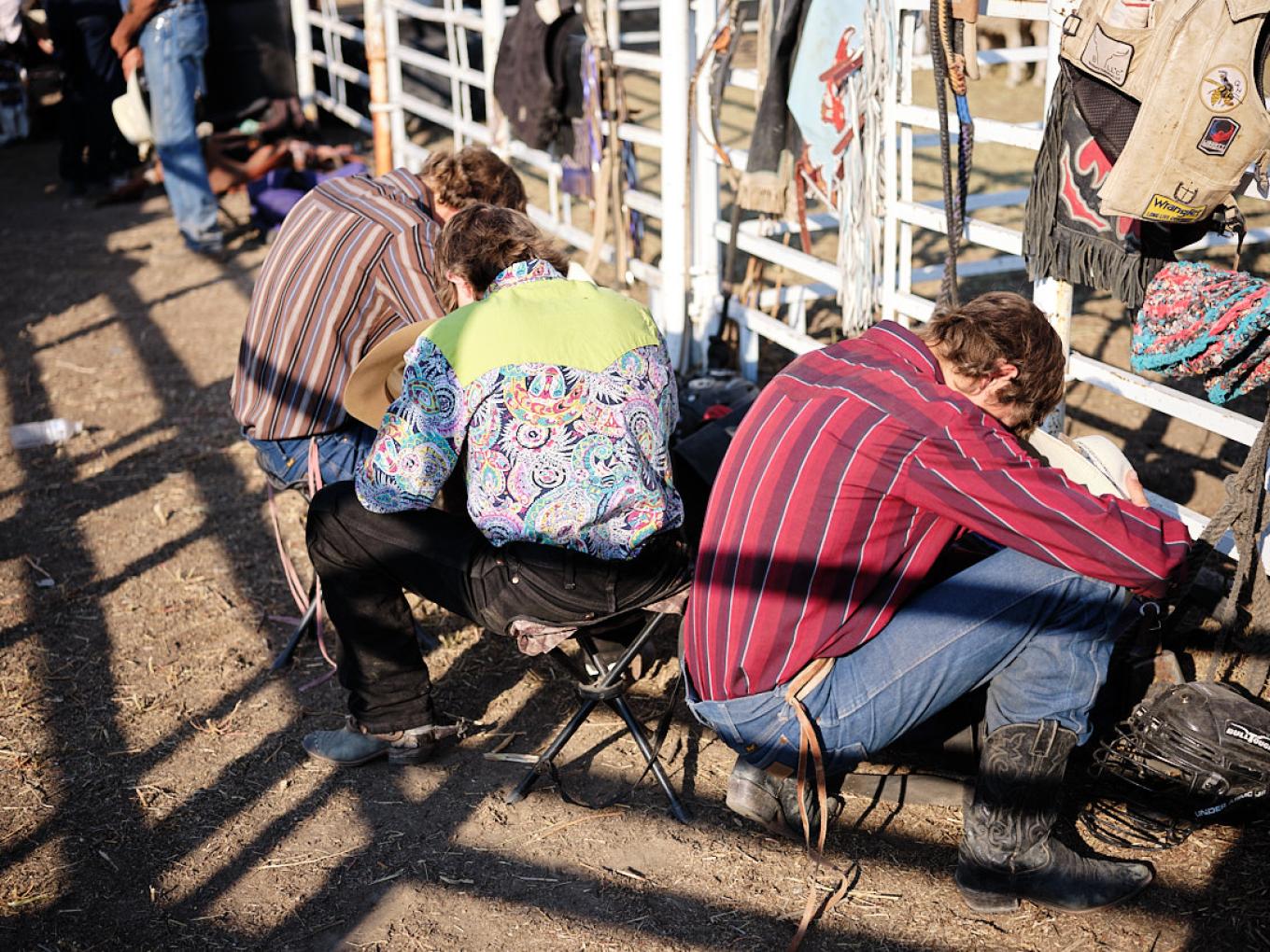
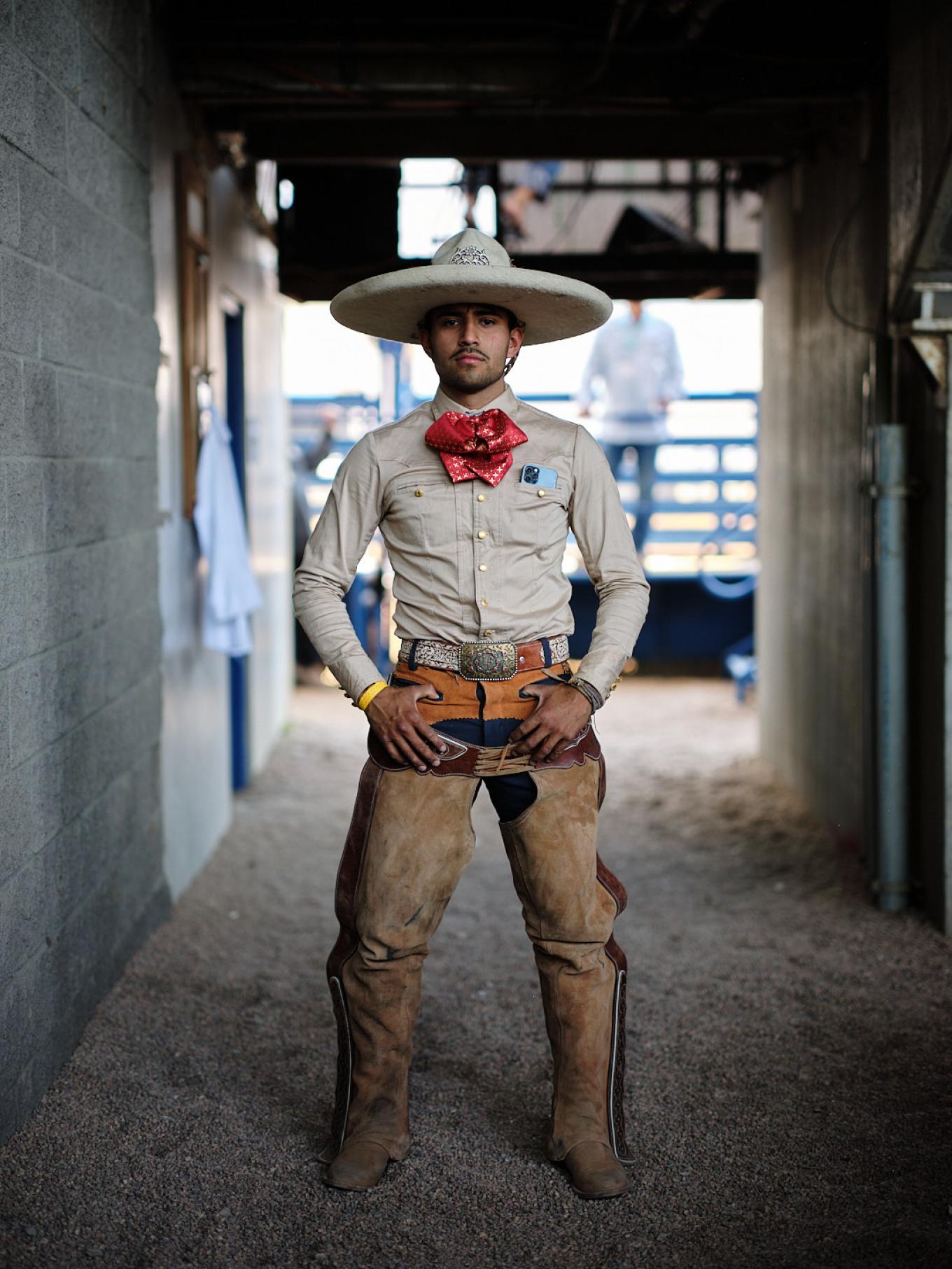
When I began photographing rodeos, it felt like returning to something deeply familiar. The images I’ve shared come from several events, but most of my best work emerged at the Deer Trail Rodeo on Colorado’s eastern plains. Deer Trail claims to be the site of the first rodeo with a cash prize. It’s a small town, and the annual rodeo is its highlight. Everyone from the surrounding countryside gathers, yet the event remains resolutely local, unpolished by outsiders. I had planned to attend for one night, but after the first evening I knew I had to return. The crowd, the light, the intensity of the arena—all of it embodied what I imagine when I think of rodeo.
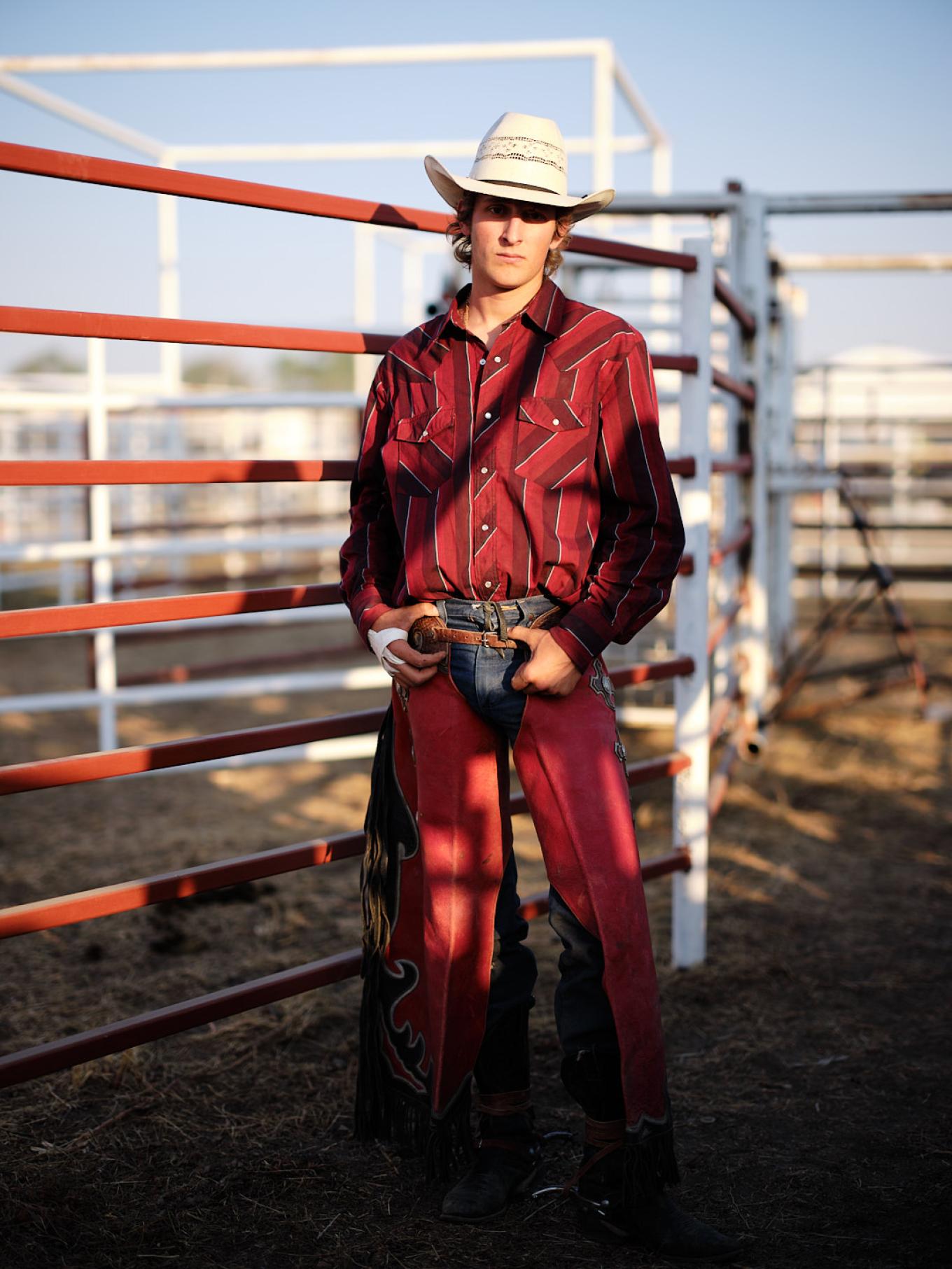
Three photographs from Deer Trail define my vision of the West. The first is of two young women in matching outfits at sunset. The light made their presence luminous, and one of them carried a serious, weathered expression that seemed to anchor the entire frame. The second is of a cowboy dressed entirely in red—chaps, shirt, hat—standing before a red fence. For a brief moment, everything aligned: the colors, the light, and his posture that declared, without words, that he was a real cowboy. I photographed him again as he rode a bull, creating a sequence that felt complete. The third image shows that same cowboy mid-ride, the American flag behind him, dusk light streaming across the arena, and a blurred hand in the foreground that brings intimacy into the chaos. For me, it captured the essence of rodeo in a single frame.
My intention is not strict journalism. I crop, edit, and frame the images in ways that heighten their romantic qualities. The West I am building through these photographs is both energetic and mythic, something rooted in lived experience but shaped by imagination. I want viewers to feel that they have stepped into a rodeo and experienced its vitality for themselves.
I also hope to spark curiosity in those who might dismiss rodeo as outdated or “redneck.” Perhaps they will sense the grit and camaraderie, perhaps even empathy for the athletes who risk so much in a sport considered among the most dangerous. Behind the chutes, before the bulls explode into the arena, I have watched riders huddle, pump each other up, and confront the risk together. When the gate swings open, there is always a breath-holding moment. I once saw a cowboy badly trampled. I also felt my own adrenaline spike as I leaned in close with my camera, almost inside the chute, aware of the danger.
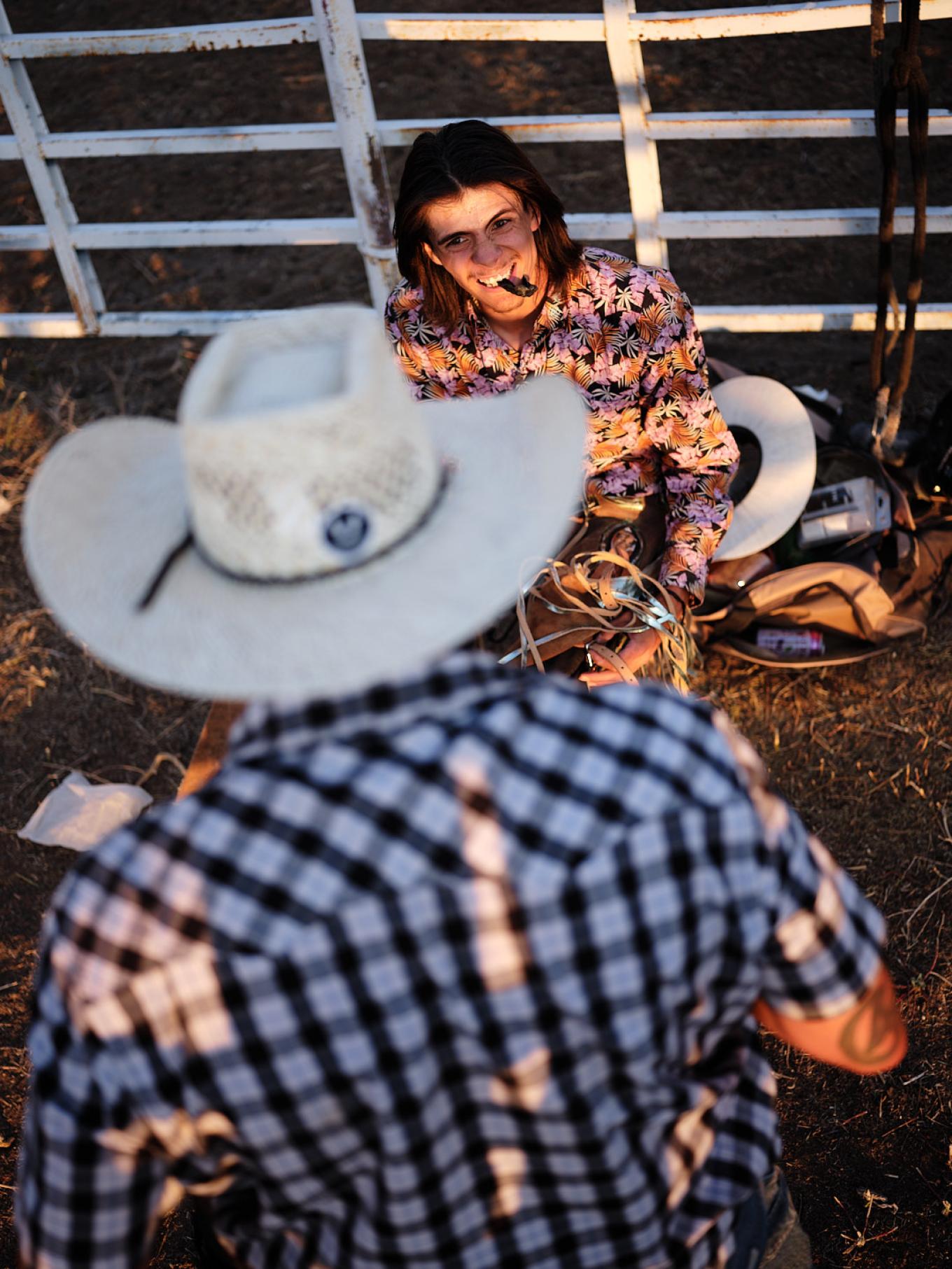
What allows me to work in these spaces is not just technical skill but empathy and access. I spend time with people, show up early, listen, and let relationships build. My grandfather’s history as a cowboy often serves as an entry point.
This project also grew out of my time in the Magnum Photography mentorship program. I had been uncertain about what direction my personal work should take, and I often defaulted to projects that mirrored my commercial assignments. Through conversations with my mentor, Mark Power, I realized that my work did not need to conform to client expectations. It needed to follow what I truly cared about. Rodeo, with its direct link to my family and to the mythology of the West, became that path. Without the mentorship, I might never have pursued it with the same clarity.
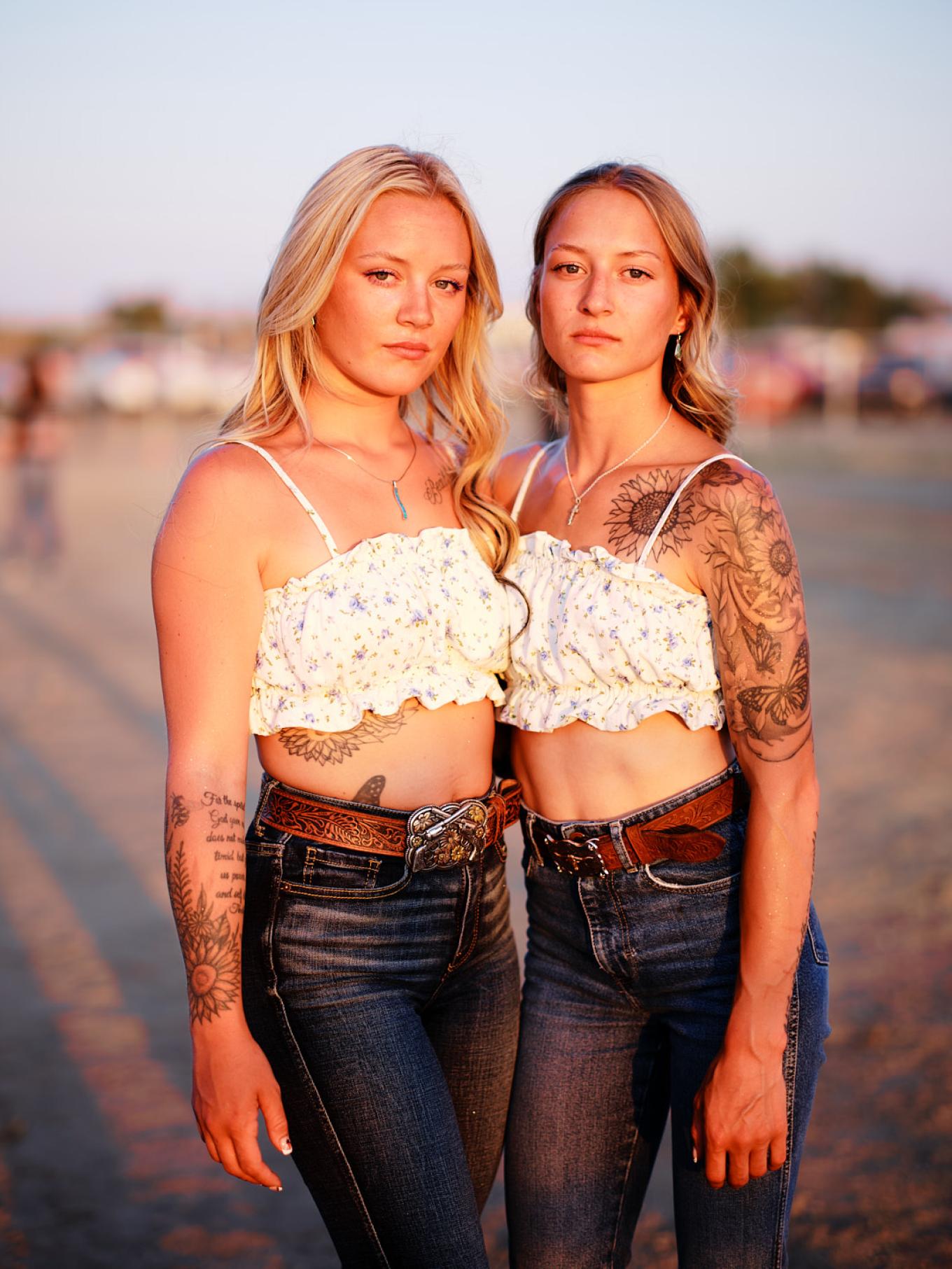
In the end, these photographs are about inheritance, community, and the ways we shape memory into story. Through them, I am both remembering where I come from and creating a vision of the West that is alive, dangerous, romantic, and deeply human