
The Mad Agriculture Journal
Regeneration Begins Upstream
Published on
January 21, 2026
Written by
Lauren Skbla
Photography by
Jesse Perkins
Along I-90 in southern Minnesota there is a farm marked by an effort to do right by the land.
“A lot of people driving on I-90 see whether my fields are yellow or green in the wintertime—that’s me.” That’s Tom Cotter and his 800-acre farm.
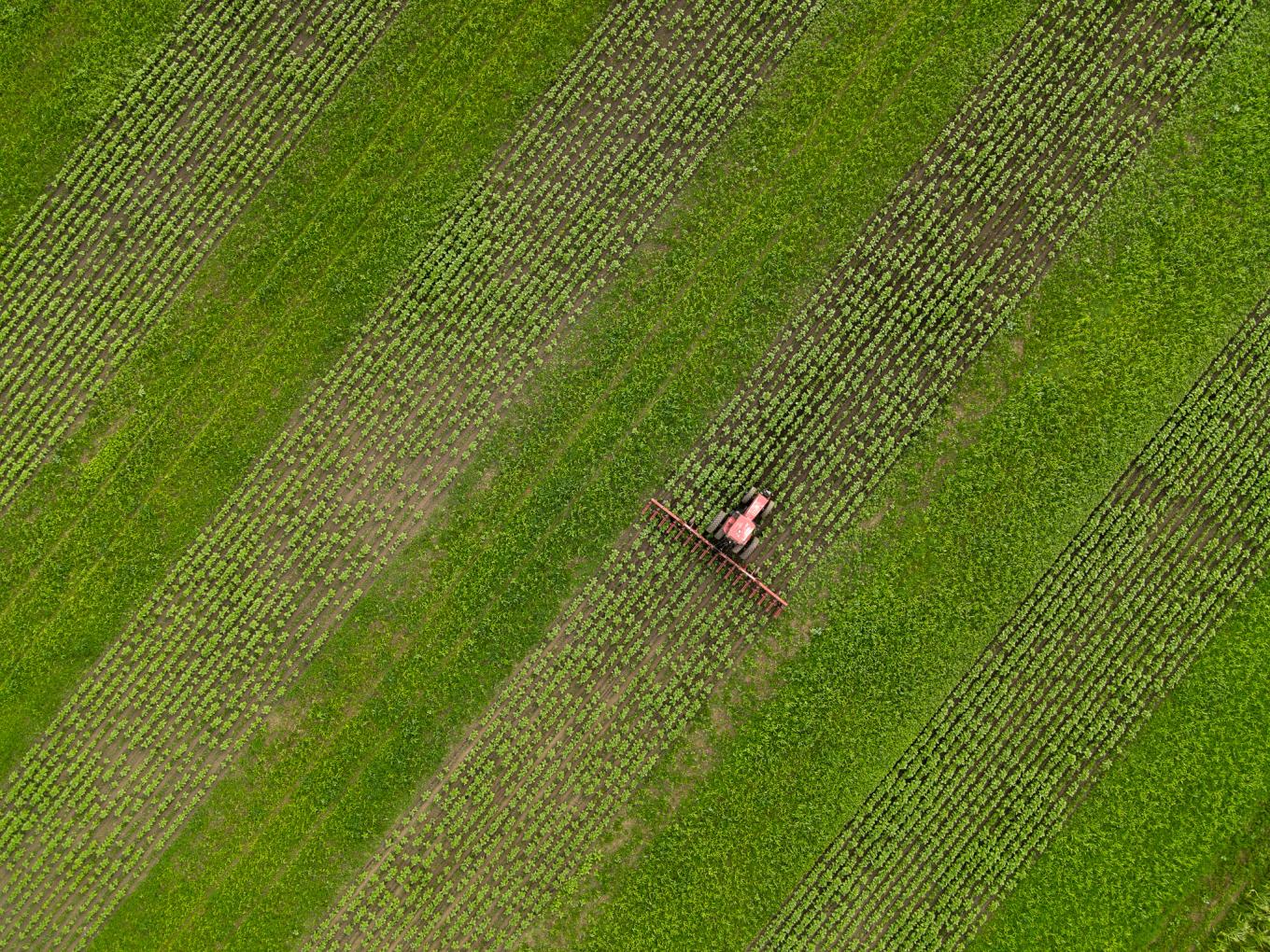
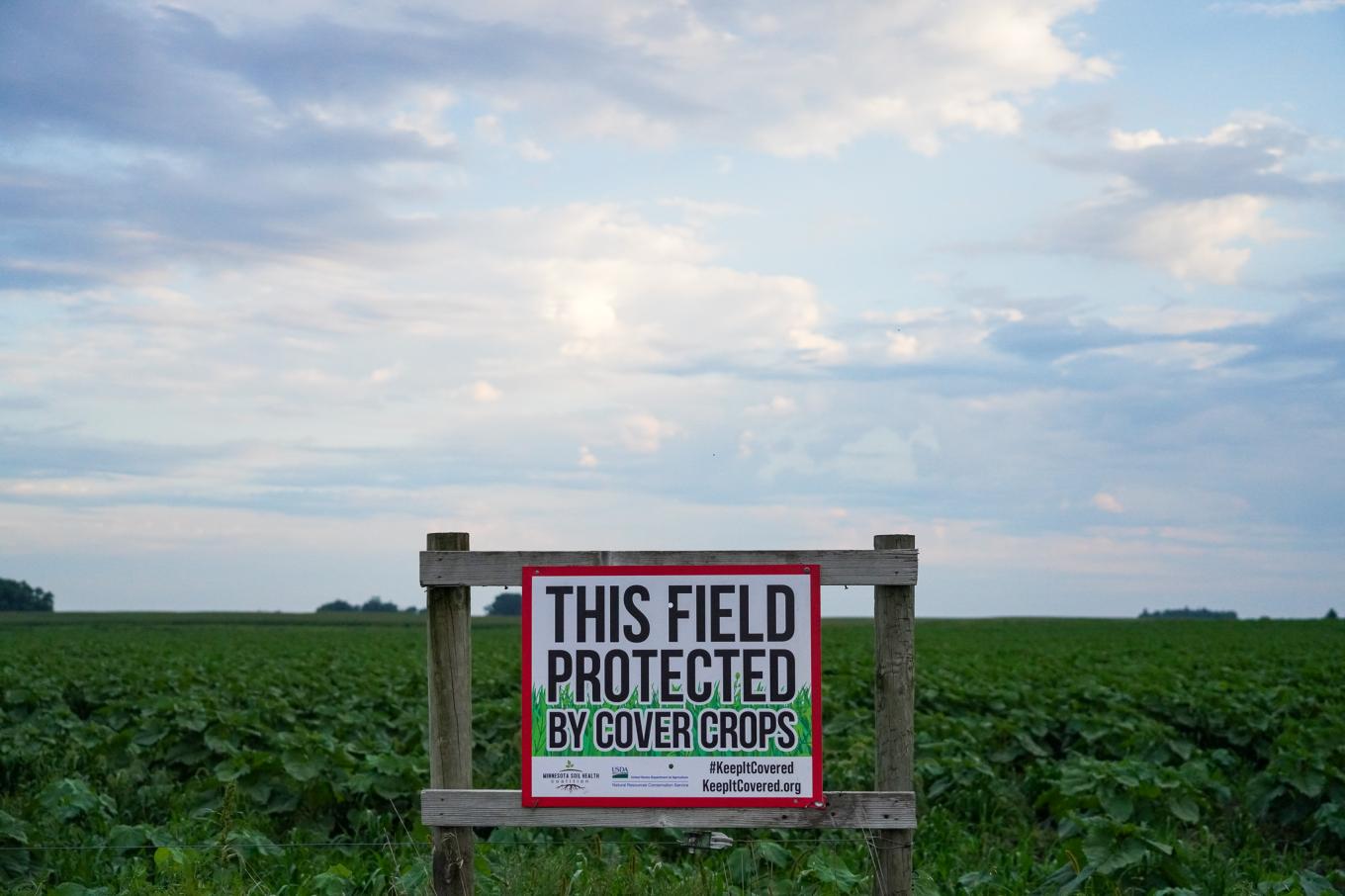
It’s unlike conventional farming operations in the winter, when fields are tilled and bare, waiting for another growing season to begin. On Cotter’s farm, it’s always a growing season, thanks to the use of cover crops, a regenerative practice aimed at enhancing soil health and preventing soil erosion.
“Cover crops keep living roots in the ground beyond the 100-day growing season, and that’s what builds soil structure,” Cotter said. “That structure allows rain to infiltrate, not run off.”
Situated in the Cedar River watershed, water that touches Cotter’s farm, and those nearby, eventually makes its way to the Mississippi River. Using cover crops allows Cotter to preserve his soil, prevent extensive runoff, and minimize downstream impacts.
The Mississippi River begins at Lake Itasca in northern Minnesota and flows to the Gulf of Mexico, carrying with it nutrient runoff and sedimentation from countless farms along the way. Those nutrients ultimately contribute to the gulf’s dead zone, an area marked by hypoxic, or oxygen-starved, water.
“The hypoxic zone is the result of pollution, and the pollution specifically is nutrient pollution in the Mississippi River,” said Cassandra Glaspie, associate professor of marine ecology at Louisiana State.
“And that comes from a variety of sources, but one of those is from farming practices. So if farming practices are such that nutrients tend to be washed out of the soil into the river, then they’re contributing to the nutrient pollution problem that’s causing the dead zone.”
The nutrients can stimulate an overgrowth of algae, which deplete oxygen in the water when they die. It leads to a condition called hypoxia, and many forms of marine life are unable to survive in hypoxic waters.
“There’s really nothing that’s using that water,” Glaspie said, referring to the lack of life in hypoxic water columns.
How big is the dead zone? This year, it was measured at 4,402 square miles, a measurement resulting from Glaspie’s own research in the Gulf of Mexico. That’s a bit smaller than Connecticut, about 5,543 square miles, or slightly larger than Los Angeles County, which is 4,084 square miles.
Glaspie said the result is habitat reduction, making many organisms more vulnerable to predators as they attempt to share what limited space is available.
While the size of this year’s dead zone is average compared to previous years, according to Glaspie, there has been a reduction in nutrients making their way to the gulf.
While that is some good news, Glaspie said nitrogen needs to trend in the same direction and the reduction needs to be even greater to see a true reversal in the dead zone’s size.
“The progress is there, it just might not be visible through the dead zone just yet,” Glaspie said.
Progress includes the steps being taken on Cotter’s farm upstream in Minnesota.
Cotter first introduced regenerative practices with an initial planting of 30 acres of a simple, singular cover crop—dwarf essex rapeseed—in 1997. He said he noticed a night-and-day difference in his soil the next year.
“More worms, better smelling.”
He also noticed greater weed control and water infiltration, both huge benefits for him and his farm, prompting him to grow beyond the initial 30-acre experiment. Cover crops have since been planted on hundreds of acres of Cotter’s farmland, some of them turning into cash crops in their own right. That’s true of Cotter’s sunflowers.
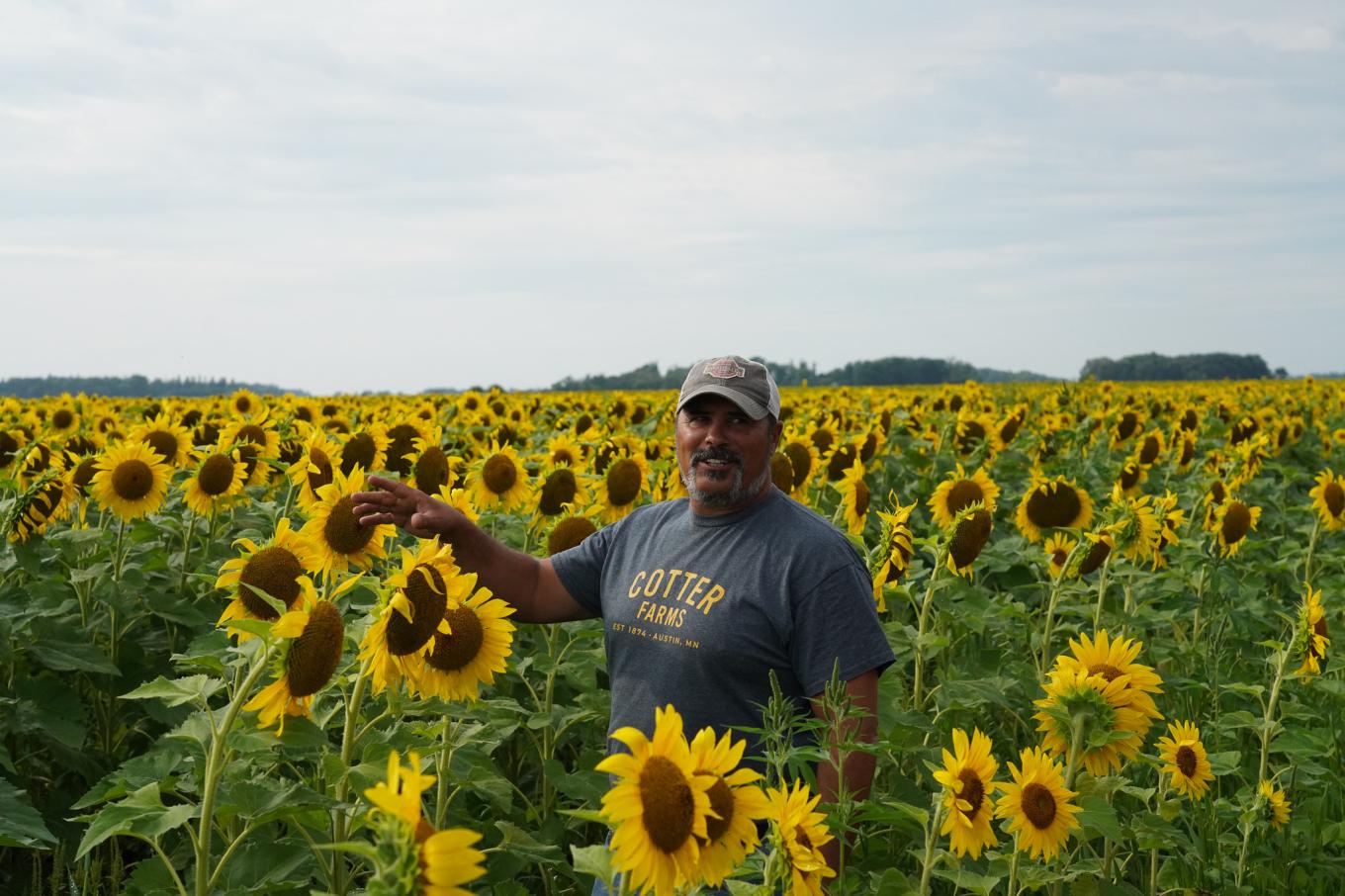
His sunflowers were initially part of a cover crop species blend. He found himself fascinated by the diverse mix of plants while driving down the road, but his wife wanted something a little more stunning to look at too.
“I really started putting sunflowers in there to bring joy to her,” Cotter said.
Sunflowers led to a greater presence of pollinators and productive predators, and they allowed Cotter’s cover crops to grow longer into the spring.
“With sunflowers, I only harvest the top. The stalks—five feet of them—stay standing. It looks like a jungle. That jungle traps snow, stops wind, shelters cover crops, and feeds wildlife. The residue feeds the soil biology. The more microbes I have, the hungrier the soil gets, and I feed it with diversity and cover crops.”
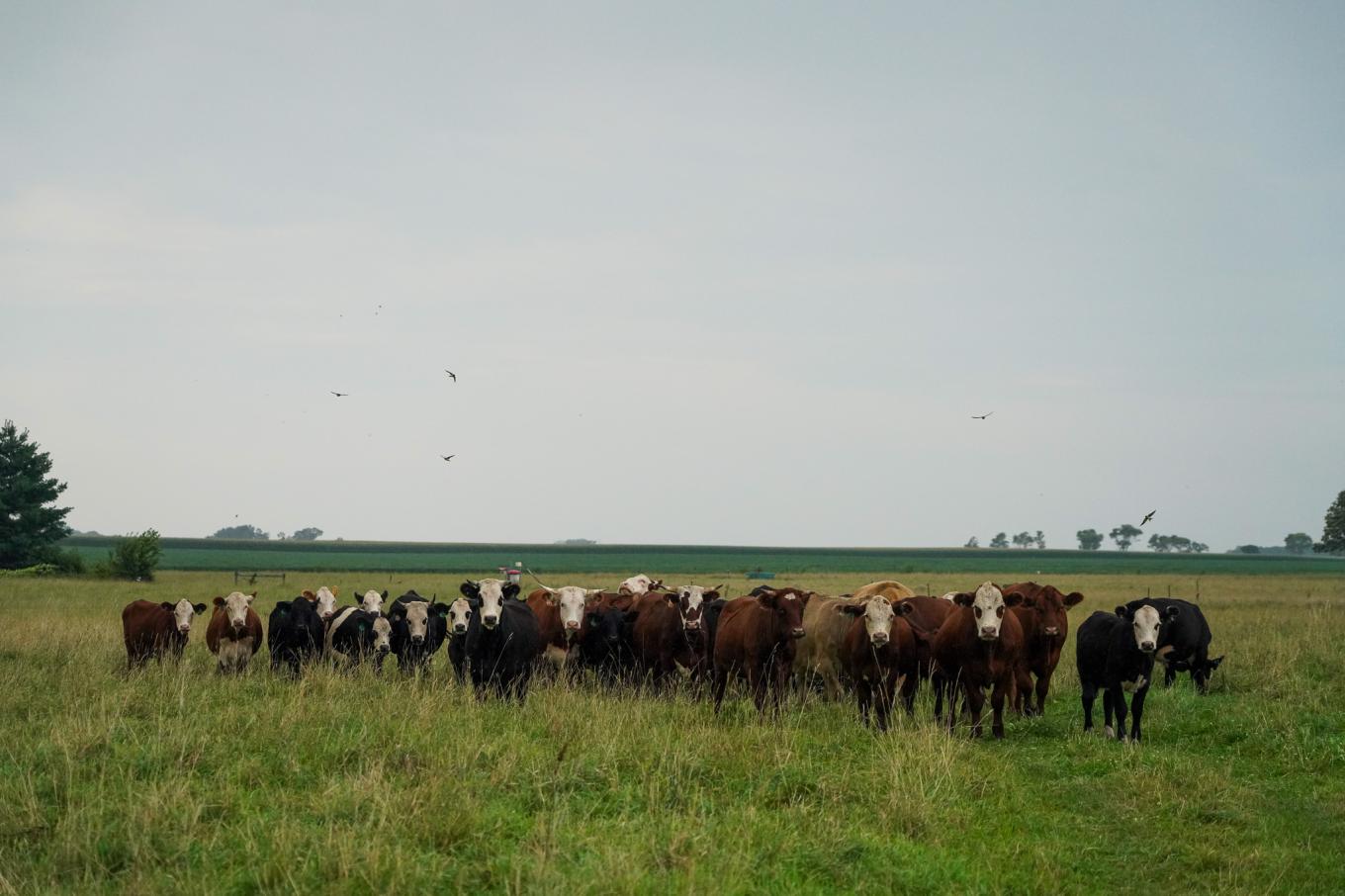
Those cover crops then provide food for his cattle without stripping the plants or the soil of productive roots. Cotter says the acres where his sunflowers grow are grazed after harvest and until planting, a period that stretches longer than most other cash crops, like corn or soybeans, allow.
The presence of livestock itself is one more step in the regenerative sequence.
“Animals return biology to the soil through manure, saliva and trampling,” Cotter explained. “It’s a living cycle.”
Cotter calls that cycle “insurance, regeneration, and adaptation all in one” and believes it’s achievable for others in similar positions.
He recommends farmers take it slow, like he did, and network with local folks who are already working to integrate regenerative practices onto their land. His own mindset of thinking generations ahead–inspired by Indigenous wisdom–is also critical to making changes that may not result in immediate rewards.
“If we thought seven generations ahead, we wouldn’t use so much chemical or tillage,” Cotter says.
It’s a position Glaspie, who’s dedicated her career to studying the dead zone and its impacts, understands.
“There’s just a lot of choices that have to be made if you’re a farmer about the best way to make the money that you need to make,” Glaspie said.
That’s where brands like Seven Sundays come in.
Seven Sundays, a Minneapolis-based breakfast foods company, operates with the mission of restoring our food system for future generations.” That’s according to Brady Barnstable, the company’s co-founder and Chief Cultivation Officer. The company sources sunflowers for its cereals from Cotter amongst other Minnesota farmers prioritizing soil health.
Barnstable started the brand with his business and life partner, Hannah, as a simple muesli company, selling products at area farmers markets. They’ve since added cereals, granola and oatmeals to their offerings, now available at grocery chains across the country.
Before Seven Sundays and Cotter were formally connected, Barnstable said they were already familiar with one another, describing a “magnetic effect” existing between food brands and farmers who aim to do their work alternatively.
“Once we met, there was just sort of a natural mutual respect and appreciation for the hard work that truly makes change in the food system,” Barnstable said.
The Barnstables and Cotter operate with the same ultimate goal: to leave the planet better than they found it, ensuring greater health for generations ahead.
“I think our food system is really uniquely positioned to tackle both people-health and planet-health, and you can’t really solve one without solving the other,” Barnstable said.
“And that starts with the farm-level work,” Barnstable said. “And then it’s our job as a food company to be really intentional and purposeful about the ingredients that we select to support the farmers and what they’re doing.”
For Seven Sundays, that includes incentivizing farmers who are “doing the hard work at the ground level.”
Cotter is an active participant in Seven Sundays agronomic incentives program, which pays farmers to increasingly adopt regenerative principles on their farms through practices like cover crops, according to Barnstable. Seven Sundays works in partnership with Green America’s Soil Climate Initiative to provide continuous improvement verification and technical assistance. Cotter calls his partnership with Seven Sundays “above and beyond.”
It’s an opportunity to collaborate and learn from each other–about what consumers want and about what farmers themselves want to grow.
“They want to do right by their land … but they need markets for it,” Barnstable said.
That also requires outreach to consumers to educate them on regenerative practices and their own purchasing power.
This project was created in partnership with Seven Sundays