
The Mad Agriculture Journal
Listening at the Margins of the Earth
Published on
December 17, 2025
Written by
Massima Bell
Header photo by
Omar de Kok-Mercado
This collaboration began when Massima reached out and invited Wilding Director, Omar de Kok-Mercado to contribute to TRANSA, a project exploring the voices and visions of trans artists and thinkers. What followed was an open conversation that gave shape to this reflection on land, identity, and listening. Written during a period of return to Iowa, it considers how place and memory can offer grounding in uncertain times. Omar’s photo of a prairie planting in a row crop field appears alongside the essay, holding themes of resilience and durability.
-1766005283.png)
On a dewy late-spring morning in 2020, I dig my hands into the dirt, a rich dark soil — soil I had often heard described as the black gold of this land that I was born in, Iowa. In our contemporary life, where the image or symbol of something often overtakes any sense of reality (picture the cyclical reemergence of plastic christmas trees every winter), it always struck me as some bit of twisted humor that black and gold surround Iowa City, my hometown, not in reference to the soil that signifies abundant biodiversity and fertility, but pride for the colors of the Hawkeyes football team.
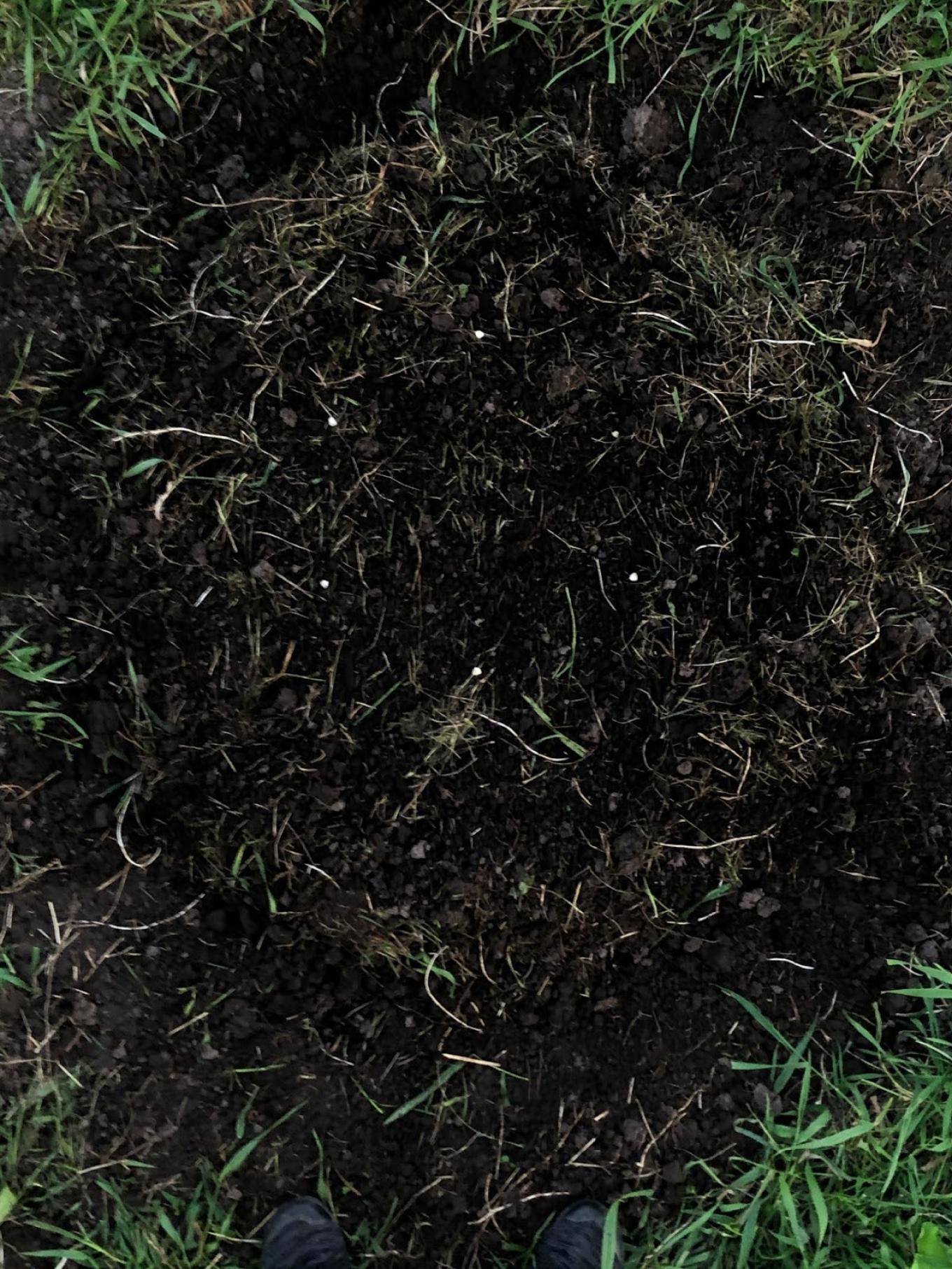
I mark out spaces in a small mound that form a circle and plant six kernels of corn — the life-giving symbol of this land, the starting point of what’s called a three sisters garden. This is a method and mythology of planting that acknowledges the gifts that the three sisters — corn, squash and beans — bring to the planting: corn, the oldest sister, provides the support for the beans, the giving sister, who both stabilizes the corn’s shallow roots and fixes nitrogen in the soil to the benefit of all, and then the squash, the youngest sister, grows outsized with large prickly leaves that shade the soil and keep out weeds and pests.
Chance had brought me to this moment, after leaving my long-time home, New York, in the middle of the pandemic and spiraling about my place in life. I was disillusioned with the fashion industry, both from my experience being a model who’s trans (and all the complexities that come with that), but particularly as I witnessed in real-time the pressures of capital to resume a breakneck calendar of production, shows, and spectacle as soon as possible, rather than take the opportunity of a collective pause to reevaluate how we go about the whole damn industry.
I had the first time in my life where I was afforded this seemingly infinite length of time back home, and it was in this expanse that I could do something I had always wanted — really try to put myself in“right relationship” with the land that shaped me. Trans people can often have fraught relationships with their families, their homes and moreover the land that they’re from — because it is denied to them. But in gently folding these sister seeds into the earth, walking in the woods around the farmhouse, I knew in my heart that there was a place for me, and I could trust in the naturalness of my being.
Each morning I would go and check on the plantings, listening to the music of Beverly Glenn-Copeland, an artist who I seemed to find at just the right time, whose words speak of renewal at any age, and tell us that we are made in the image of love. Glenn talks about his music as transmissions, a way I’ve heard a lot of artists (especially queer ones) describe the process of creating music. It comes from some place beyond the self, a download from somewhere — the universe, the divine, the collective unconscious, etc.
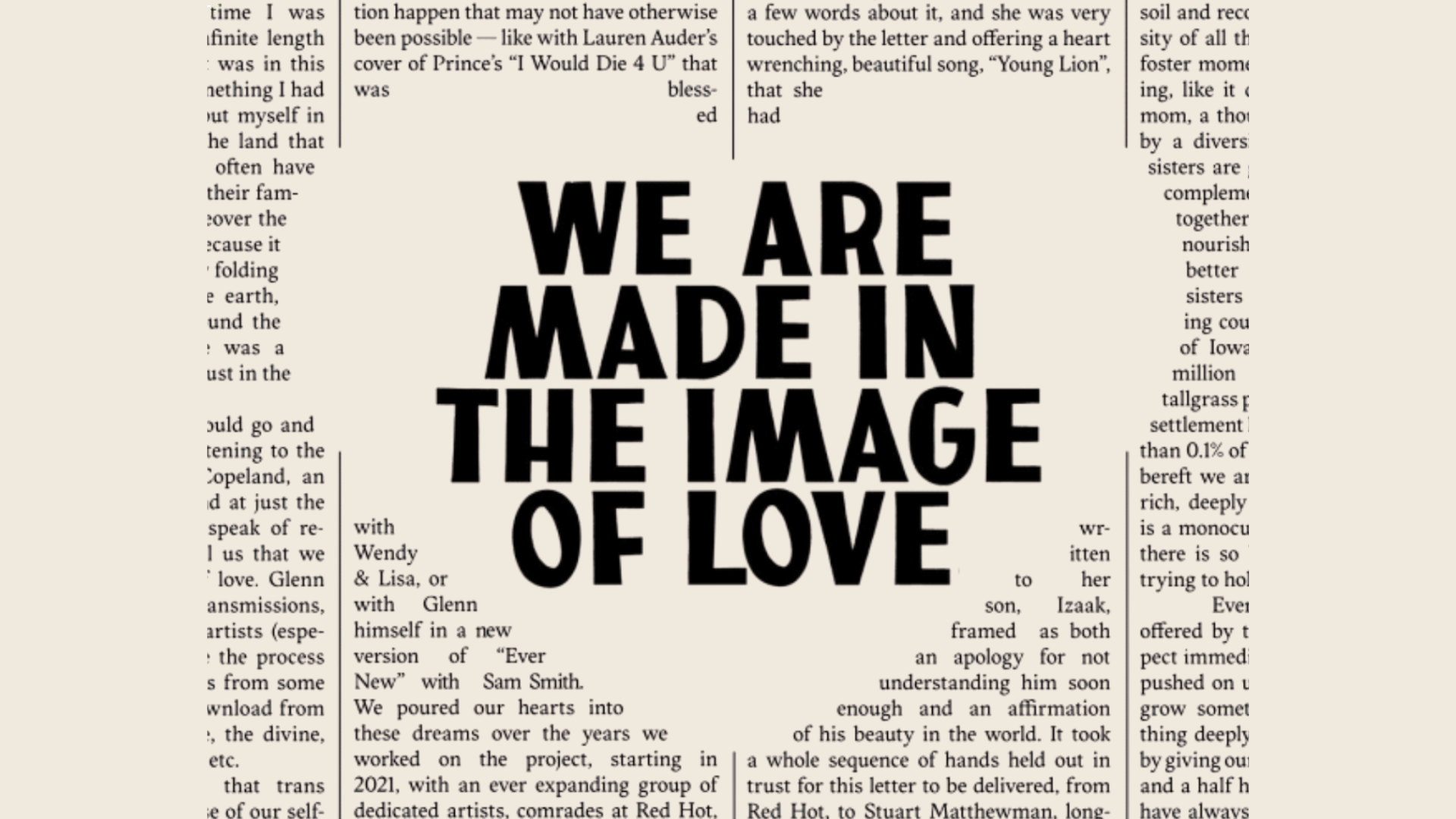
Heart lettering by Olive Panter
This is a power that trans people have — in the course of our self-embodiment, we cross the bridge between worlds — and in so doing, are always close to that somewhere else, where we develop an acute sensitivity and knowledge that I believe is valuable to share with all of us. At a time when it’s so easy to tune out the earth, when many of the original caretakers of the land, the indigenous peoples whose traditions trained their ears and hearts to those frequencies have been pushed out, we need to cultivate a greater capacity to listen at the margins and heed the call of the earth.
By chance, on a short film shoot in the fall of 2020 about returning to nature, I met Dust Reid, who at Red Hot had helmed a beautiful project focused on the legendary musician Arthur Russell (coincidentally also from Iowa). When they asked if I would work with them on concepting a project, Transa, that focused on the gifts that trans people bring to society, I felt so ready. I knew we had to build this project from the dreams of the trans people we invited on to it, whether that was helping realize a new version of a treasured song, or make a connection happen that may not have otherwise been possible — like with Lauren Auder’s cover of Prince’s “I Would Die 4 U” that was blessed with Wendy & Lisa, or with Glenn himself in a new version of “Ever New” with Sam Smith. We poured our hearts into these dreams over the three years we worked on the project, starting in 2021, with an ever expanding group of dedicated artists, comrades at Red Hot, and community in the industry that stuck their necks out for the project from the get-go.
I came out to myself as trans – or at least, as having something going on with my gender in 2012, when I was 20. A catalyst for me around that time was volunteering at Bluestockings, a cooperative bookstore in New York, where I have the distinct memory of being asked for the first time, what are your pronouns? This invitation changed something in me; it expanded the scope of what could be possible in my world – that I could have an answer for myself instead of always having an answer put on me.
Transa is all about that kind of open invitation – for the listeners who we hope can find even the smallest kernel of something that helps expand themselves, and also in the way we built out the project – there have been so many moments of offering, inviting artists onto the project, to ask them to consider adding a new voice and dimension to the story of this record.
Mid-way through this process, I wrote a personal letter to Sade asking her onto the project, even just to write a few words about it, and she was very touched by the letter and offering a heart wrenching, beautiful song, Young Lion, that she had written to her son, Izaak, framed as both an apology for not understanding him soon enough and an affirmation of his beauty in the world. It took a whole sequence of hands held out in trust for this letter to be delivered, Red Hot, to Stuart Matthewman, long-time collaborator and member of the band, who gave it to her, and also from its origin. I wrote this letter in a hospital waiting room while one of my best friends was undergoing gender-affirming surgery, while I was thinking about our child selves. Growing up, the world around us didn’t have space for us to be ourselves – there were no hands held out then inviting us to dance in the way we were meant to. I knew that hearing Sade’s voice, as the parent of a trans kid and a singular soldier of love – could chart out a path for parents to better love and understand their trans kids. Everything came full circle for me this summer when I had the gift of playing Young Lion for my partner and his mom on the day of his top surgery while we drove past the Santa Monica Mountains (with the literal lyrics “So run down the mountains / Run down the hills of your dreams / You are everything.”) The tears in the car that morning spoke everything about the need for this song to exist in the world.
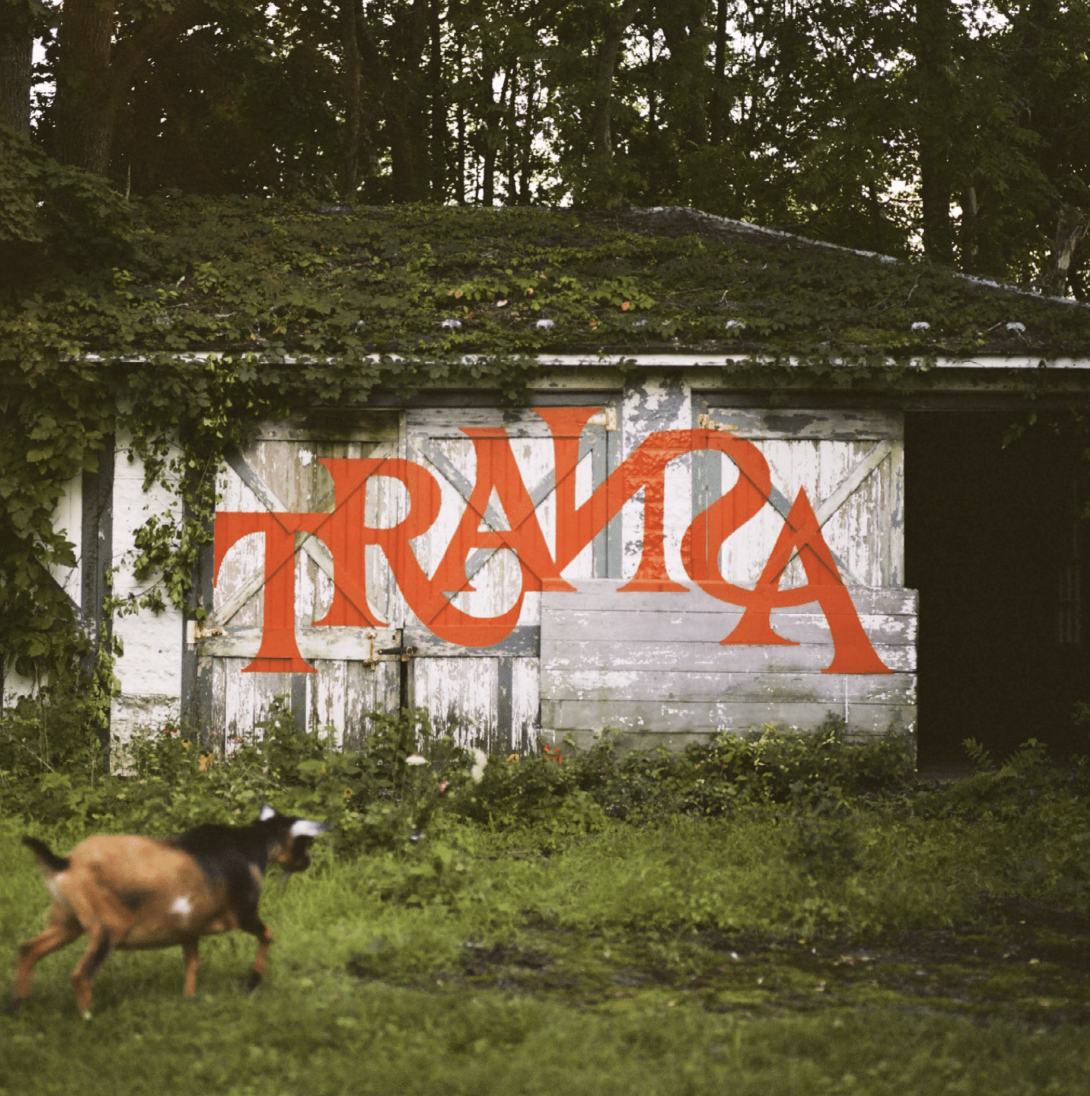
I hope Transa can be beyond “groundbreaking” — deeply a call to recognize our history, to look gently at the soil and recognize the beauty and necessity of all the life around us, that it can foster moments of connection and healing, like it did for my partner and his mom, a thousand fold. We are enriched by a diversity of life. When the three sisters are grown, they each contribute complimentary amino acids that together make a complete protein nourishing human life, while doing better for all the land around the sisters than any monocrop planting could. When I look at the fields of Iowa, once covered in over 30 million acres of richly biodiverse tallgrass prairie, which since European settlement has now been reduced to less than 0.1% of its original extant, I see how bereft we are. Just steps away from the rich, deeply alive soil that I held, there is a monoculture corn field, and the soil there is so barren in the hand it’s like trying to hold death.
Everything in its time – a truth offered by tending to a garden. We expect immediacy in the consumer culture pushed on us by capitalism, but we can grow something else – through something deeply heartfelt, like Transa, or by giving our time to listen deeply to three and a half hours of music. Trans people have always existed, under many different names throughout time and culture, often as spiritual healers and leaders, and to begin to right our relationship to each other and our earth that we inhabit, we must learn to recognize the gifts all around us: the gifts trans people bring to the earth, the gifts that the squash brings to the corn and bean, to enrich all of us, by expanding the complexity and diversity of life; in the remnant prairie there are the seeds of another world, where we can hear ourselves as part of earth’s symphony if we just listen and tend to what we hear.
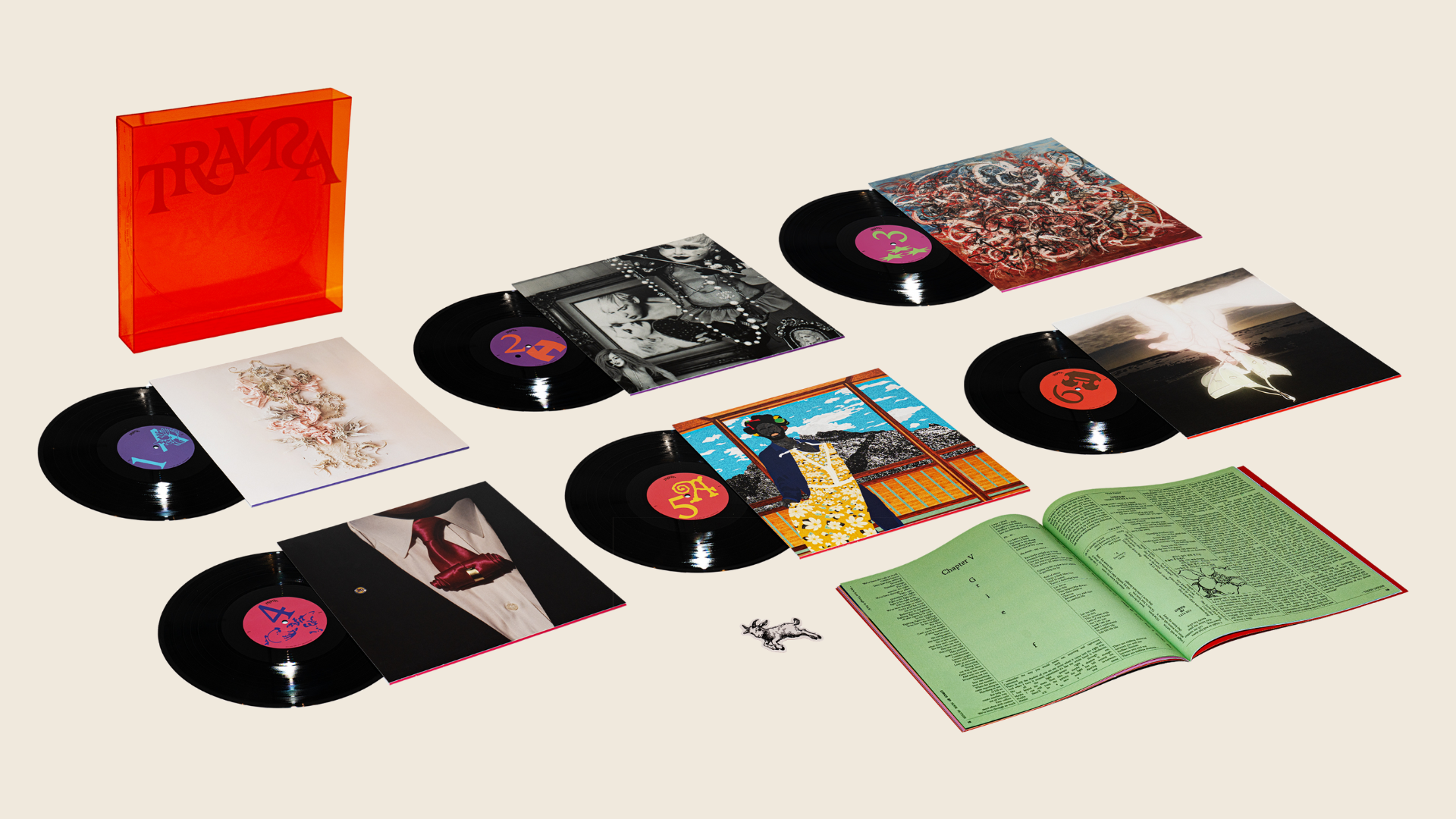
Listening at the Margins of the Earth” appears also in a collection of essays that anchors the limited edition TRANSA 6LP box set, which can be found here.
Prairie strip planting in Iowa, photo credit NRCS & SWCS, photo Lynn Betts