
The Mad Agriculture Journal
Seed is Story
Published on
March 27, 2026
Written by
Loren Cardeli
Phil Taylor
Art by
Arina Abbott
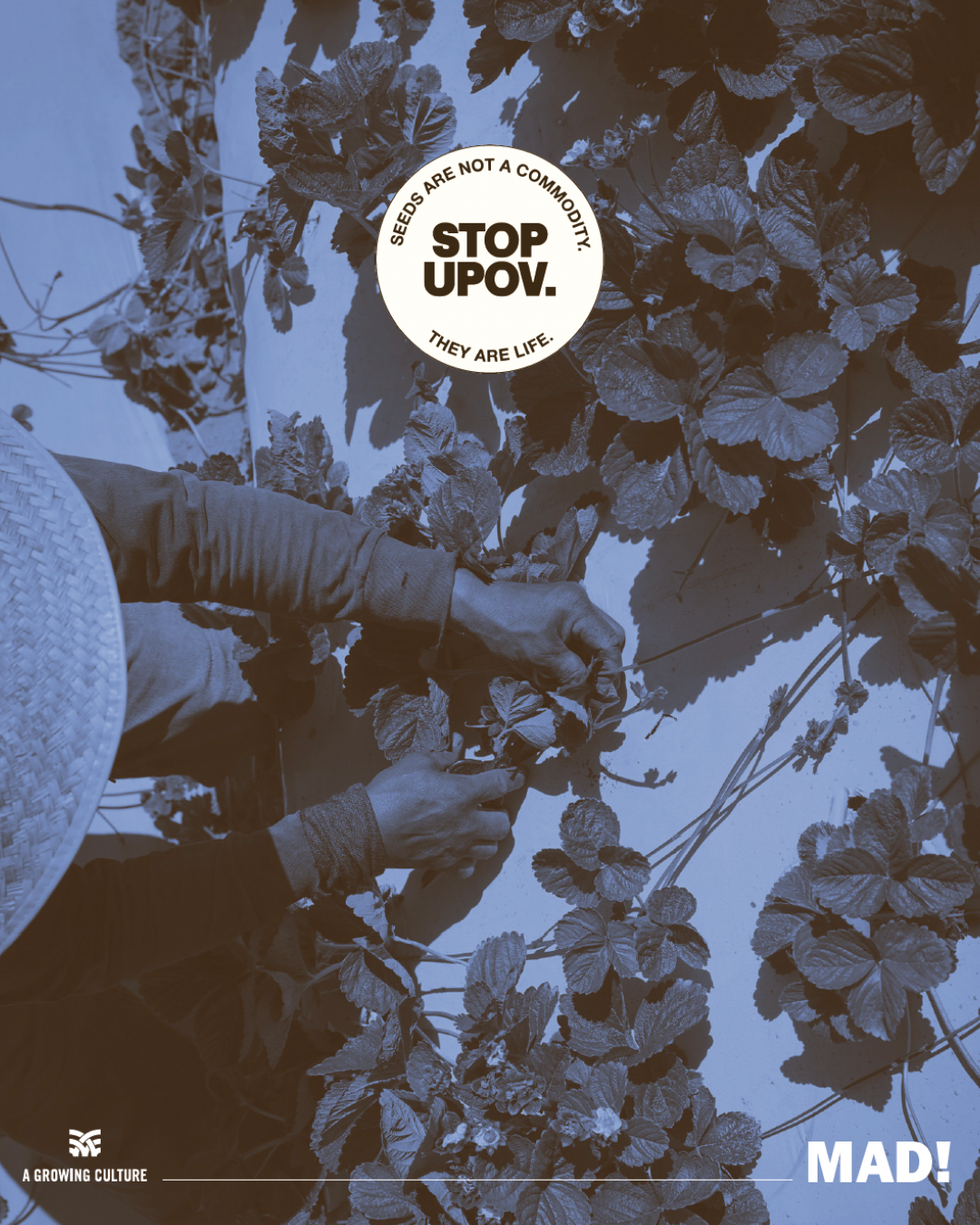
This essay by Loren Cardeli and Philip Taylor was originally published as the prologue to a limited-run zine created in support of two aligned efforts: Stop UPOV and Free the Seed. While the print edition now circulates hand to hand, this version brings the conversation into a wider, digital space.
Together, these initiatives respond to a growing global reality: the increasing consolidation and regulation of seed, and the quiet erosion of farmers’ rights to save, share, and steward the genetic foundation of our food system. Stop UPOV focuses on challenging international legal frameworks that restrict seed saving and expand corporate control. Free the Seed works to reimagine a future where seed remains a shared inheritance, rooted in biodiversity, cultural memory, and collective care.
What can feel distant or technical, buried in policy and trade agreements, is in fact immediate and material. It shapes what is grown, what is available, and who holds power within the food system.
Cardeli and Taylor’s essay situates this moment within a longer arc. It traces how we arrived here, not through a single decision, but through a series of gradual concessions that have narrowed both biodiversity and imagination. It also asks what responsibility now falls to those working within the natural and organic movement, an industry built, in part, on resisting that narrowing.
As we share this piece beyond the printed page, it serves as both context and provocation. A reminder that seed is not just the starting point of agriculture, but a living record of culture, resilience, and possibility, and that its future is still being decided.
Jonnah Perkins, Media Director, Mad Agriculture
There are times in history when the ground vanishes beneath our feet—when we realize, often too late, what we have already surrendered. The seduction of convenience narrows our vision until abundance quietly becomes a single option. Power can be taken, but it can also be conceded.
Modern agriculture, for all its brilliance, has followed a long trajectory of that same acquiescence. As societies have increasingly reoriented towards industrialised, monocultured, chemical intensive farming methods, health declined, with death and disease rising as diversified, nutrient-rich diets were replaced with high-caloric, low-nutrition foods. Over time, our food system has only become more uniform, less nutritious, and more consolidated. Vast monocultures now stretch across both our lands and our imaginations. In just the last century over 75% of plant genetic diversity has been permanently lost. To put this in perspective, three quarters of the food we consume today comes from only 12 plant species and 5 animal species. It is estimated that more than half of the U.S. diet is derived, directly or indirectly, from corn.
What if the very system we believed could nurture us was actually imprisoning us? What if, in the name of security, we have lost our sovereignty? What if, instead of being part of the food chain, we have become food-chained? What if the system that we’re told feeds the world is actually killing us and the ecosystems that we are part and parcel of?
The natural and organic industry has long understood this bitter truth.
For decades, our community has rejected industrial agriculture’s imposition of uniformity. Where industrial agriculture prized homogeneity, scale, and short term profits, we have defended biodiversity, interdependence, and long term stewardship of the land. We dared to be different, and to show the world that in our sacred diversity was a world of taste, colour, and nutrition.
Everything we produce begins with a seed. Our imagination was born from the refusal to accept a sea of sameness. That desire to cultivate another way of caring for both soil and community was held sacred, as founders, small enterprises, and brands dared to build companies rooted in their values: sustainability, regeneration, justice, and equity. We believed the food system still held the power to heal, and we chose to help build that future together.
Today, that very industry is faced with a choice: to remain a movement protecting the world’s sacred biodiversity, or to slowly fold into homogeneity.
Our brands, our legacies, and our future are under threat. Today, just four companies now control over half the world’s seed, and consolidation continues. International legal regimes and corporate pressure are criminalising the very human act of seed saving. Farmers are being fined and jailed for bringing Indigenous and traditional seeds to market, seeds that carry history, ritual, and memory. Medicinal seed. Climate-resilient seed. Seed that our ancestors cultivated for millennia.
This threat is not distant. It sits at the foundation of our industry. If we fail to recognize that this struggle is also ours, we may one day wake up wondering how we quietly surrendered the ground beneath our feet. How can we continue to innovate in a culture of sameness? Will we still be different from what we set out to separate ourselves from? The defense of seed diversity is no longer only a concern of the food sovereignty movement; it has become a defining leadership responsibility for the natural and organic industry.
And yet, as the movements that grow the world’s food continue to face unimaginable violence, they carry a rallying cry: ‘They tried to bury us, but forgot we were seeds.’ In that saying rests our greatest opportunity. Our sacred connection to seed is not something we must learn, but something we must remember. That is the power of seed. Our ontological connection may have been buried by the empire of Industrial agriculture, but it sat there patiently, waiting for the smallest fissures of light.
Those of us who built businesses rooted in regeneration and integrity now face a defining question: will we defend the biological foundation of our work, or allow it to be consolidated beyond our reach? The future of our industry will not be decided only by markets or policy, but by whether we choose to stand alongside the farmers, Indigenous communities, and seed stewards, who have protected the diversity that makes our products,and our promises, possible. This struggle is the foundation of every ingredient we source, every product we create, and every value we claim to uphold.
If we act together, we can ensure that the seeds of diversity, resilience, and sovereignty remain in the hands of those who cultivate them. We saved seed because seed saved us, and the responsibility to defend it now rests with all of us.
Loren Cardeli’s Free the Seed playlist
If you listen quietly, you will hear the roar of what refuses to disappear—the murmur of seeds beneath the soil, the breath of ancestors carried in wind and water, the quiet insistence of life returning where it was once buried. Every movement for land, dignity, and liberation has always grown from the rhythms of place: from people who understood that survival is not only resistance, but celebration. The songs gathered here are part of that living archive, sounds shaped by struggle, migration, memory, and hope. Like seed, they travel across borders, take root in unexpected ground, and remind us that even in the dark, something is always preparing to rise.
LISTEN here: FREE THE SEED